CM Fadnavis Seeks Central Funds for Mumbai-Vadhavan Expressway Sea Link
Synopsis
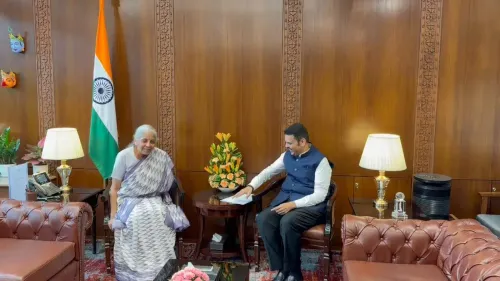
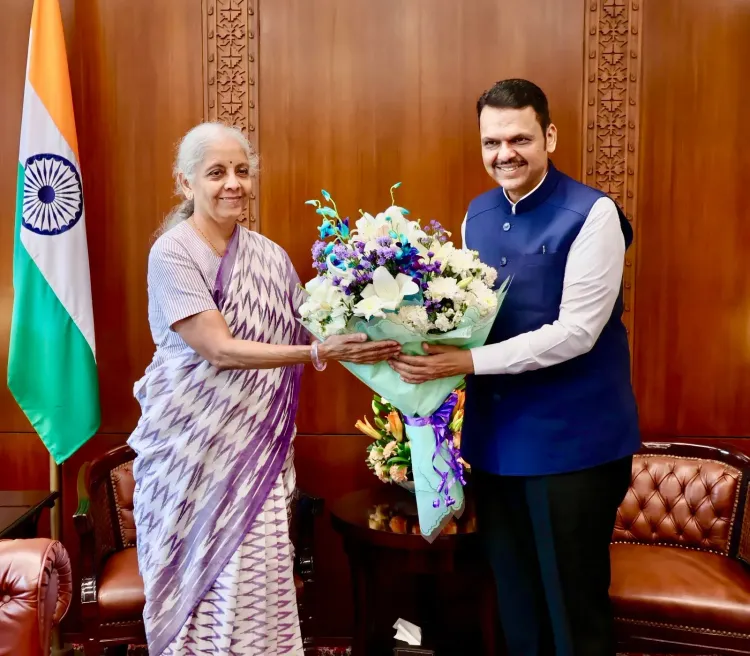
Maharashtra CM Devendra Fadnavis met Union Finance Minister Nirmala Sitharaman in New Delhi on August 17, 2026, requesting Finance Ministry approval for JICA funding for the Uttan-Virar Sea Link — a key connector for the Mumbai-Vadhavan Expressway. Sitharaman assured positive consideration of the proposal.
Key Takeaways
CM Devendra Fadnavis met Finance Minister Nirmala Sitharaman in New Delhi on August 17, 2026 .
Maharashtra sought Union Finance Ministry approval for JICA financial assistance for the Uttan-Virar Sea Link .
The sea link is the connectivity component of the Mumbai-Vadhavan Expressway project.
Sitharaman assured the proposal would 'definitely be considered positively.' JICA funding for state projects requires a sovereign guarantee from the Government of India , making Finance Ministry approval a prerequisite.
The expressway is designed to connect Mumbai with the upcoming deep-water Vadhavan Port in Dahanu.
A critical connectivity gap along Maharashtra's coastline moved closer to resolution on Monday, August 17, 2026, when Maharashtra Chief Minister Devendra Fadnavis met Union Finance Minister Nirmala Sitharaman in New Delhi to seek central financial backing for the Uttan-Virar Sea Link — the connector that would stitch the Mumbai-Vadhavan Expressway into the broader coastal grid.
At the meeting, CM Fadnavis formally requested that the Union Finance Ministry grant approval for financial assistance through JICA (Japan International Cooperation Agency) for the expressway connectivity project. Finance Minister Sitharaman responded with a clear assurance: the proposal would 'definitely be considered positively,' according to the Chief Minister's post on X.
What the Uttan-Virar Sea Link Would Unlock
The Uttan-Virar Sea Link is the coastal connector designed to bridge the Mumbai-Vadhavan Expressway with the broader metropolitan transport network. Without it, the expressway — intended to link Mumbai with the upcoming Vadhavan Port in Dahanu — would terminate without a seamless urban connection, blunting the port's logistics potential. The sea link would reduce travel time along the congested western coastal corridor and ease freight movement between the port and the city.
JICA, the Japanese government's development finance arm, has a long track record of funding large-scale infrastructure in India, including metro rail and highway projects. Routing the funding through JICA rather than domestic budgetary allocation allows the state to access concessional long-term loans — typically at lower interest rates than commercial borrowing — making the project financially more viable for Maharashtra.
Why the Finance Ministry's Nod Matters
JICA financing for state infrastructure projects requires sovereign guarantee from the Government of India, which means the Union Finance Ministry must formally approve and back the borrowing. That is precisely what CM Fadnavis was seeking: a green light from North Block to allow Maharashtra to proceed with the JICA loan application. Sitharaman's positive signal — while not yet a formal sanction — clears the political path for the bureaucratic process to advance.
The Vadhavan Port, once operational, is projected to be one of India's largest deep-water ports, designed to handle ultra-large container vessels that cannot dock at Mumbai's JNPT. Road and expressway connectivity directly feeding the port is therefore not a peripheral concern — it is the artery that determines whether the port's capacity translates into actual trade throughput.
For Maharashtra, securing this funding is a test of centre-state coordination on infrastructure — and today's meeting suggests the channel is open. The real milestone will come when the Finance Ministry's formal approval is issued and the JICA process begins in earnest.
Point of View
While not a formal sanction, is a meaningful political signal that the BJP-governed state enjoys a cooperative channel with the Union government on capital-intensive projects. The JICA route reflects a broader pattern of Indian states seeking Japanese development finance to bypass tight domestic capital budgets. The real test will be the speed and conditionality of the formal Finance Ministry approval that must follow.
NationPress
17 Aug 2026
Frequently Asked Questions
What is the Uttan-Virar Sea Link project?
The Uttan-Virar Sea Link is a proposed coastal bridge corridor that would connect the Mumbai-Vadhavan Expressway to the broader Mumbai metropolitan transport network, easing freight and passenger movement along the western coast.
Why did CM Fadnavis meet Nirmala Sitharaman in August 2026?
CM Devendra Fadnavis met Finance Minister Nirmala Sitharaman on August 17, 2026, to request Union Finance Ministry approval for JICA financial assistance for the Uttan-Virar Sea Link, a key component of the Mumbai-Vadhavan Expressway.
What is JICA and why is it involved in this project?
JICA, the Japan International Cooperation Agency, is Japan's development finance body that provides concessional long-term loans for infrastructure projects in India. Maharashtra is seeking JICA funding because it offers lower interest rates than commercial borrowing, but requires a sovereign guarantee from the Government of India.
What did Nirmala Sitharaman say about the Maharashtra sea link proposal?
Finance Minister Nirmala Sitharaman assured CM Fadnavis that the proposal for JICA funding for the Uttan-Virar Sea Link would 'definitely be considered positively,' according to the Chief Minister's post on X.
What is the Mumbai-Vadhavan Expressway and why is it important?
The Mumbai-Vadhavan Expressway is a road corridor designed to connect Mumbai with the upcoming Vadhavan deep-water port in Dahanu, which is projected to handle ultra-large container vessels that cannot dock at JNPT, making road connectivity critical to the port's trade potential.