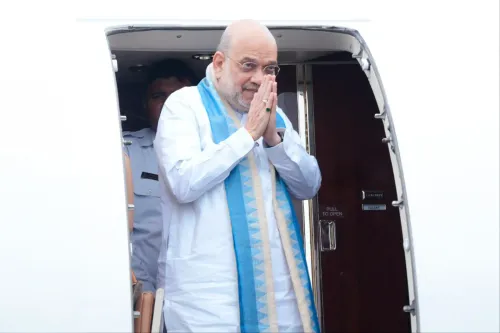
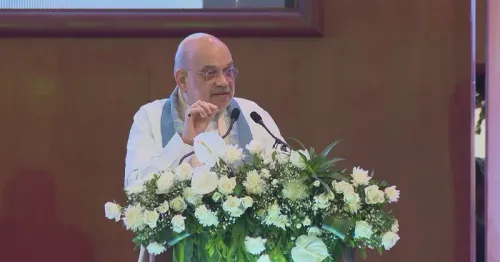
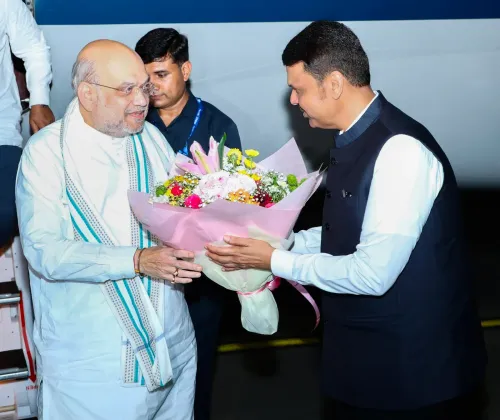
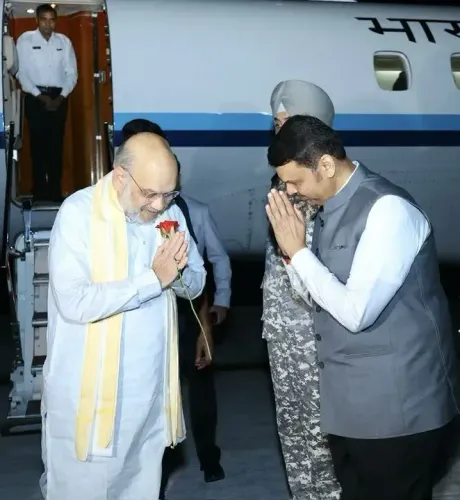
CM Fadnavis thanks Amit Shah for shifting cooperative umbrella HQ to Maharashtra
Synopsis
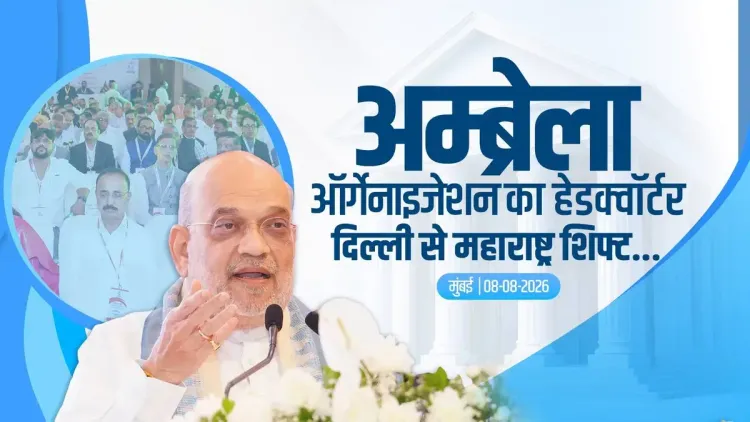
At the Sahakar Nav-Kranti Melava in Mumbai on 8 August 2026, CM Devendra Fadnavis thanked Union Minister Amit Shah for deciding to relocate an umbrella cooperative organisation's headquarters from Delhi to Maharashtra, deepening the Centre's cooperative sector push.
Key Takeaways
CM Devendra Fadnavis publicly thanked Amit Shah on 8 August 2026 for the headquarters relocation decision.
The announcement was made at the Sahakar Nav-Kranti Melava in Mumbai , a major cooperative sector rally.
The umbrella cooperative organisation's headquarters will move from Delhi to Maharashtra .
Maharashtra hosts one of India's largest cooperative networks, including sugar factories, dairy cooperatives, and urban cooperative banks.
The Ministry of Cooperation was established in July 2021 to provide dedicated focus to the sector under Amit Shah .
The relocation aligns with the Centre's broader push to decentralise cooperative governance to states with established networks.
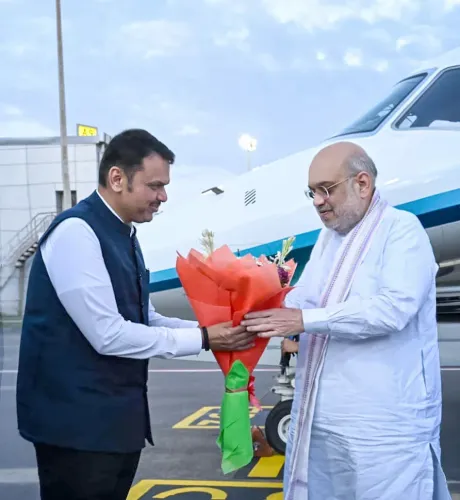
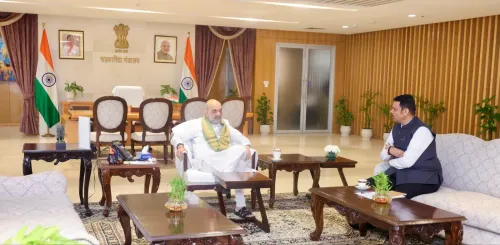
A major institutional win for Maharashtra's cooperative sector landed on Saturday, 8 August 2026, as Maharashtra Chief Minister Devendra Fadnavis publicly thanked Union Home and Cooperation Minister Amit Shah for deciding to relocate the headquarters of an umbrella cooperative organisation from Delhi to Maharashtra — a move announced at the Sahakar Nav-Kranti Melava in Mumbai.
Posting in both Marathi and Hindi, CM Fadnavis expressed gratitude directly to Amitbhai Shah — 'अंब्रेला ऑर्गनायझेशनचे मुख्यालय दिल्लीहून महाराष्ट्रात स्थलांतरित करण्याचा निर्णय' ('the decision to shift the umbrella organisation's headquarters from Delhi to Maharashtra') — signalling that the announcement was made at the gathering itself, not in a routine circular.
Why Maharashtra and why now
Maharashtra is not just any cooperative state. It hosts one of India's oldest and most expansive cooperative networks — spanning sugar factories, dairy cooperatives, and urban cooperative banks that have shaped the state's rural economy for decades. Bringing a national-level cooperative body's headquarters here is less a symbolic gesture and more a structural acknowledgement of where the sector's real weight lies.
The backdrop matters. The Ministry of Cooperation, carved out as a standalone central ministry in July 2021 under Amit Shah, was designed precisely to give the sector dedicated political and administrative attention it had long lacked under the agriculture ministry. Since then, the Centre has pursued digitisation of primary agricultural credit societies and worked to deepen the cooperative movement beyond its traditional strongholds. Relocating an umbrella body to a state with deep cooperative roots fits squarely within that decentralisation push.
Sahakar Nav-Kranti Melava: the stage for a big call
The venue itself carries weight. A Sahakar Nav-Kranti Melava — a cooperative new-revolution rally — is not a bureaucratic review meeting. It is a political-cum-policy platform designed to energise cooperative stakeholders: farmers, society members, bank directors, and rural leaders. Announcing a headquarters shift at such a gathering maximises its political resonance while also signalling operational intent to the sector's ground-level workers.
For Maharashtra's cooperative societies and the farmers who depend on them, the relocation means the apex body governing their sector will now be closer — geographically and, the government hopes, administratively — to where the action is.
The fine print — timelines, transition logistics, and any new central schemes announced at the melava — will determine whether Saturday's announcement becomes a landmark or a headline. But the direction is unambiguous: the Centre is doubling down on Maharashtra as the nerve centre of India's cooperative future.
Point of View
It reinforces the Ministry of Cooperation's narrative of active decentralisation rather than Delhi-centric governance. For Fadnavis, publicly crediting Shah at a high-visibility rally is as much coalition management as policy celebration — binding the state and central BJP leadership on a terrain, the cooperative sector, that has historically been dominated by rival political families in Maharashtra. The real test will be whether the relocation translates into faster policy responsiveness for the state's millions of cooperative members, or remains a headline win.
NationPress
8 Aug 2026
Frequently Asked Questions
What is the umbrella cooperative organisation being shifted to Maharashtra?
The post refers to a national-level umbrella cooperative organisation whose headquarters is being relocated from Delhi to Maharashtra, though the precise name of the body was not specified in the announcement at the Sahakar Nav-Kranti Melava on 8 August 2026.
Why is the cooperative headquarters being moved from Delhi to Maharashtra?
Maharashtra has one of India's largest and oldest cooperative networks, spanning sugar factories, dairy cooperatives, and urban cooperative banks. The Centre's decentralisation approach under the Ministry of Cooperation favours relocating national cooperative bodies closer to states with strong cooperative foundations.
What is the Sahakar Nav-Kranti Melava?
The Sahakar Nav-Kranti Melava, meaning 'Cooperative New Revolution Rally,' is a large gathering of cooperative sector stakeholders — farmers, society members, and rural leaders — used as a platform to announce and energise cooperative policy initiatives.
What is India's Ministry of Cooperation and when was it formed?
The Ministry of Cooperation is a standalone central ministry established in July 2021 under Union Minister Amit Shah to provide dedicated focus to India's cooperative sector, which was previously managed under the agriculture ministry.
What does this headquarters shift mean for Maharashtra's cooperative sector?
Relocating the umbrella body's headquarters to Maharashtra could bring the apex cooperative governance structure closer to the state's large network of cooperative societies and farmers, potentially improving administrative responsiveness for millions of cooperative members.