Amit Shah: Shared Cyber Hubs to Shield Urban Co-op Banks

Synopsis
Union Home Minister Amit Shah announced that shared Cyber Security Operations Centres, digital forensics infrastructure, and cyber security training facilities will serve as a new protective layer for India's Urban Cooperative Banks, continuing the government's push to modernise and secure the cooperative banking sector.
Key Takeaways
Union Home Minister Amit Shah announced shared cyber security infrastructure for Urban Cooperative Banks on August 8, 2026 .
The shared facilities include a Cyber Security Operations Centre , digital forensics tools, and cyber security training .
The pooled model allows smaller UCBs to access enterprise-grade protection without bearing individual infrastructure costs.
The initiative follows the 2020 Banking Regulation Act amendment and the 2021 formation of the Ministry of Cooperation under Shah.
Implementation guidelines from the RBI or the Ministry of Cooperation and budgetary allocations are the key next steps to watch.
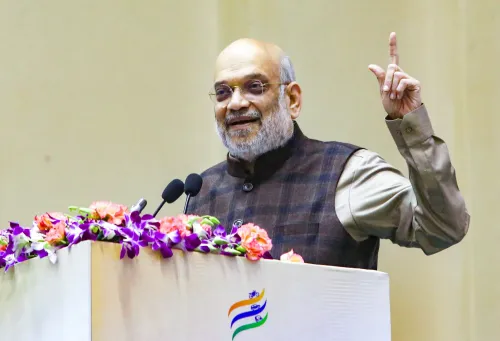
A new security architecture is taking shape for India's urban cooperative banking sector. Union Home Minister and Minister of Cooperation Amit Shah on Saturday, August 8, 2026, announced that shared facilities — including a Cyber Security Operations Centre, digital forensics infrastructure, and cyber security training — will form a protective shield for Urban Cooperative Banks (UCBs) across the country.
What the shared cyber shield means for cooperative banks
Shah's post, in Hindi, stated: 'Cyber Security Operation Centre, digital forensics aur cyber security training jaisi saajha suvidhaen Urban Cooperative Banks ke liye naya suraksha kavach banengi' — ('Shared facilities such as a Cyber Security Operations Centre, digital forensics, and cyber security training will become a new security shield for Urban Cooperative Banks.')
The logic is straightforward: most UCBs are small, community-level institutions with limited individual budgets for sophisticated cybersecurity infrastructure. A pooled, shared model allows them to access enterprise-grade protection — a Cyber Security Operations Centre (CSOC) that monitors threats in real time, forensic tools to investigate breaches, and training pipelines to keep staff current — without each bank bearing the full cost alone.
The fraud history that made this urgent
This announcement does not arrive in a vacuum. India's urban cooperative banking sector has been repeatedly shaken by high-profile fraud cases over the past decade, exposing the vulnerability of smaller institutions to both internal misconduct and external cyber threats. The 2020 amendment to the Banking Regulation Act brought UCBs under tighter Reserve Bank of India oversight, and the Ministry of Cooperation — established in July 2021 under Shah's charge — was designed precisely to give the sector focused policy attention it had long lacked.
The RBI has issued successive circulars pushing cooperative banks toward stronger IT governance and cybersecurity compliance. The shift toward shared infrastructure continues that trajectory — moving smaller entities away from patchwork individual setups toward pooled, professionally managed resources.
Depositors and the broader cooperative ecosystem
At stake is the confidence of millions of depositors who bank with UCBs, often in tier-2 and tier-3 cities where these institutions are the primary formal banking option. A single successful cyberattack on a cooperative bank — data theft, ransomware, or fraudulent transfers — can wipe out depositor trust in an entire district. The proposed shared CSOC model addresses this systemic fragility directly.
The immediate question now is implementation: whether the Ministry of Cooperation or the RBI will issue operational guidelines, and whether a dedicated budgetary allocation will follow to fund the shared centres. Those details will determine whether this becomes a landmark upgrade or a well-intentioned announcement awaiting execution.
India's cooperative banks have waited a long time for a security architecture built to their scale. The blueprint is now on the table — the clock starts on delivery.
Point of View
State-level patchwork toward a nationally governed, technologically hardened framework. For Shah personally, who holds both the Home and Cooperation portfolios, cyber security sits at the intersection of his two briefs: internal security and cooperative reform. The shared-infrastructure model is a pragmatic acknowledgement that individual compliance mandates have not worked for small UCBs, and that the government must now provide the scaffolding itself. Whether this translates into funded, operational centres — or remains a policy signal — will be the true test of the Ministry of Cooperation's institutional weight.
NationPress
8 Aug 2026
Frequently Asked Questions
What is the Cyber Security Operations Centre announced for Urban Cooperative Banks?
It is a proposed shared facility that will monitor cyber threats in real time for Urban Cooperative Banks, allowing smaller institutions to access enterprise-grade security infrastructure without individual investment.
Why do Urban Cooperative Banks need special cyber security measures?
UCBs are typically small institutions with limited IT budgets, making them vulnerable to cyberattacks and fraud. Several high-profile fraud cases in the sector have highlighted the need for stronger, professionally managed security systems.
What is the Ministry of Cooperation and what does it do?
The Ministry of Cooperation was created in July 2021 to provide focused policy support for India's cooperative sector, including cooperative banks. It is headed by Union Home Minister Amit Shah .
How are Urban Cooperative Banks regulated in India?
Urban Cooperative Banks are primarily regulated by the Reserve Bank of India , with oversight from state and central cooperative laws. A 2020 amendment to the Banking Regulation Act significantly expanded RBI's supervisory powers over these banks.
Who will benefit from the shared cyber security facilities for cooperative banks?
Urban Cooperative Banks and their depositors — particularly in tier-2 and tier-3 cities — will be the primary beneficiaries, as the shared model protects smaller banks that cannot afford individual cybersecurity setups.