Khattar meets Punjab CM Mann, discusses power supply for paddy season
Synopsis
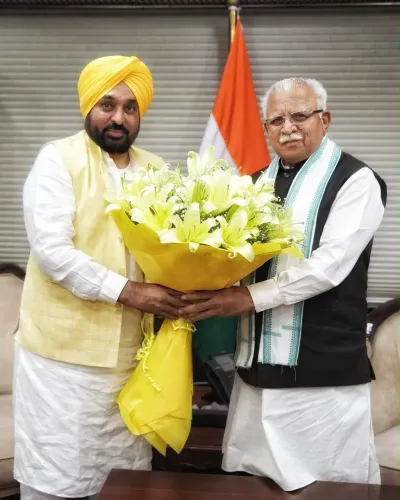
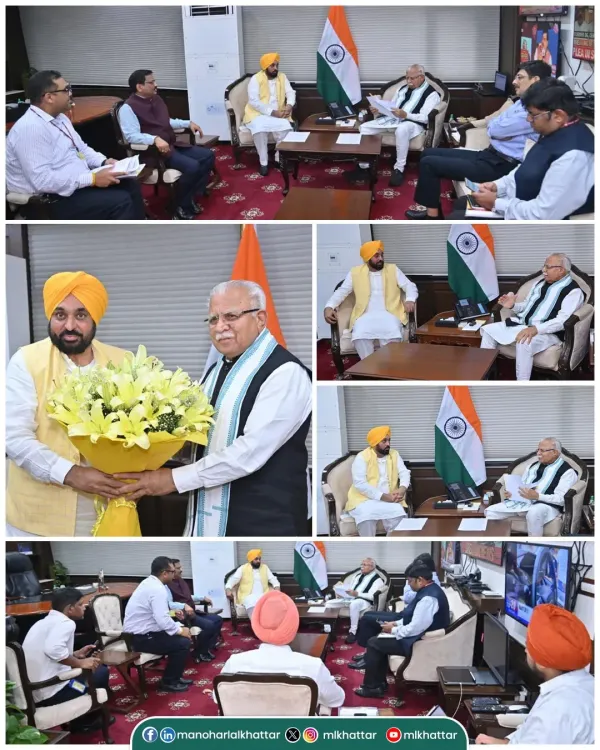
Union Power Minister Manohar Lal Khattar met Punjab Chief Minister Bhagwant Mann in Delhi on 8 August 2026, holding detailed talks on strengthening Punjab discom finances and securing additional electricity supply for farmers during the paddy transplantation season.
Key Takeaways
Union Power Minister Manohar Lal Khattar and Punjab CM Bhagwant Mann met at Khattar's New Delhi office on 8 August 2026 .
Talks focused on two core issues: the financial health of Punjab's state power distribution companies (discoms) and ensuring extra electricity supply during paddy transplantation season.
Punjab's discoms carry persistent losses linked to decades of free or subsidised power for agricultural tubewells .
The UDAY scheme (2015) was the central government's earlier attempt to restructure discom debt and improve state utility efficiency.
Paddy transplantation creates a sharp, predictable seasonal electricity demand spike driven by intensive groundwater pumping .
No specific outcomes or allocations were announced; follow-up measures on power supply and discom restructuring are the key developments to watch.
With Punjab's paddy transplantation season driving a sharp surge in agricultural electricity demand, Union Power Minister Manohar Lal Khattar sat down with Punjab Chief Minister Bhagwant Mann at his New Delhi office on Saturday, 8 August 2026 for what both sides described as a substantive and constructive exchange on the state's power sector challenges.
Khattar posted on X that the meeting covered two pressing concerns: strengthening the financial position of Punjab's state power distribution companies (discoms), and ensuring adequate electricity supply to meet the heightened demand from farmers during the paddy planting period — 'धान की रोपाई के समय किसानों की बढ़ी हुई बिजली मांग' ('the increased power demand of farmers during paddy transplantation').
Why Punjab's discoms are in the red — and why it matters now
Punjab's state discoms have long carried the financial weight of a generous agricultural power subsidy regime. The state has provided free or heavily subsidised electricity to farm tubewells through successive budgets, a policy stretching back decades. The result: recurring losses that have repeatedly tested the utilities' balance sheets and their ability to invest in infrastructure.
The central government's UDAY (Ujwal DISCOM Assurance Yojana) scheme, launched in 2015, was designed precisely to address this cycle — restructuring discom debt and nudging states toward operational efficiency. Punjab's story is a live example of the tension that scheme was built to resolve: popular farm subsidies versus financially viable utilities.
Paddy season's power crunch — a recurring pressure point
Every year, as Punjab's farmers flood their fields for paddy transplantation, groundwater pumps run around the clock. The electricity grid feels it immediately. This seasonal peak is not a surprise — it is a known, recurring stress test — but meeting it requires advance coordination between the state and central power agencies on additional allocations.
That is precisely what Saturday's meeting appears to have addressed. Central-state consultations of this kind are a regular feature of India's power sector governance, but they carry particular weight when a state's discoms are financially stretched and simultaneously facing a demand spike they cannot easily absorb.
The ball is now in both governments' courts: any follow-up announcements on additional power allocations or fresh discom restructuring measures will signal how far Saturday's conversation actually moved the needle.
Point of View
Discoms bleeding losses, and a Union ministry holding the levers on additional allocations. For the BJP-led Centre and the AAP government in Punjab, cooperation here is politically pragmatic — farmers cannot be left in the dark during sowing season, and discom insolvency is a liability neither side can afford. The meeting signals that despite the political distance between the two parties, functional coordination on essential services remains intact. Whether it translates into concrete allocations or a fresh restructuring framework will determine its real significance.
NationPress
8 Aug 2026
Frequently Asked Questions
Why did Manohar Lal Khattar meet Bhagwant Mann?
Union Power Minister Manohar Lal Khattar met Punjab Chief Minister Bhagwant Mann on 8 August 2026 to discuss strengthening Punjab's state power distribution companies financially and ensuring additional electricity supply for farmers during the paddy transplantation season.
Why do Punjab farmers need extra electricity during paddy season?
Paddy transplantation requires intensive groundwater irrigation, which means tubewells run continuously, creating a sharp seasonal spike in electricity demand that strains Punjab's power grid every year.
What is the financial problem with Punjab's discoms?
Punjab's state power distribution companies (discoms) have long faced recurring financial losses, largely because the state provides free or heavily subsidised electricity to agricultural tubewells — a policy maintained across successive governments.
What is the UDAY scheme and how does it relate to Punjab?
UDAY (Ujwal DISCOM Assurance Yojana) was a central government scheme launched in 2015 to restructure state discom debt and improve operational efficiency. Punjab's discoms, burdened by farm power subsidies, are among the utilities the scheme was designed to help stabilise.
What outcomes came from the Khattar-Mann power meeting?
No specific allocations or restructuring measures were announced publicly after the 8 August 2026 meeting. Both sides described the discussion as positive and substantive; follow-up announcements on additional power supply or discom reforms are expected.