CM Mann's Punjab Govt Rolls Out Multi-Scheme Farm Welfare Push
Synopsis
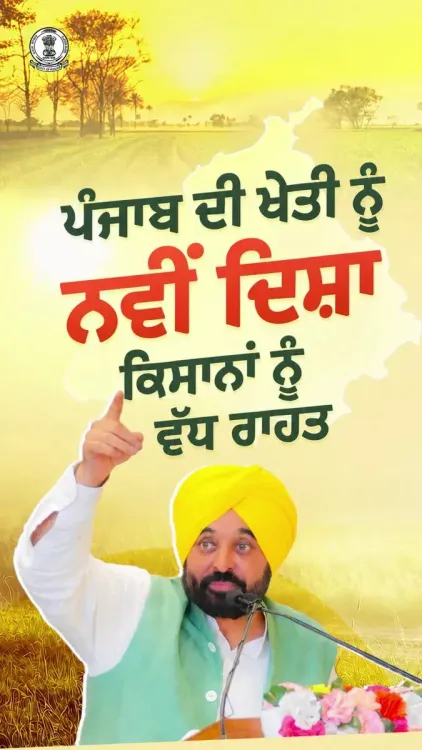
The Chief Minister's Office of Punjab says CM Bhagwant Mann's government has benefited farmers through Bt cotton subsidies, DSR promotion, maize cultivation schemes, the highest sugarcane procurement price, and subsidised straw management machinery — all aimed at boosting agricultural prosperity in the state.
Key Takeaways
The Punjab government under CM Bhagwant Mann has announced a multi-scheme agricultural welfare package effective for the Kharif 2026 season.
A subsidy on Bt cotton has been extended to support cotton growers and reduce input costs.
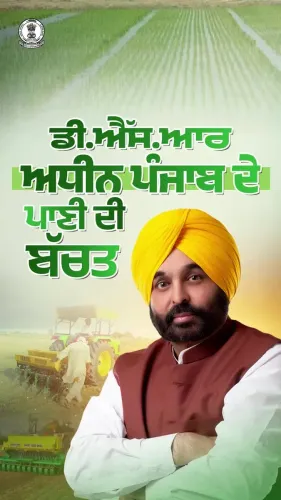
Incentives for Direct Seeded Rice (DSR) aim to reduce groundwater consumption in paddy cultivation.
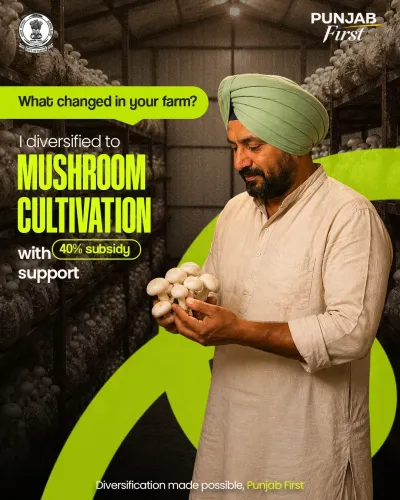
Special schemes for maize cultivation are designed to promote crop diversification away from the paddy-wheat cycle.
The state has announced the highest procurement price for sugarcane , providing income security for cane farmers.
Subsidised straw management machines are being provided to reduce paddy residue burning and its associated air pollution.
The Chief Minister's Office of Punjab announced on Monday, June 8, 2026 that the state government led by Chief Minister Bhagwant Mann has extended a package of agricultural welfare measures aimed at boosting farmer prosperity across the state, covering subsidies on Bt cotton, incentives for Direct Seeded Rice (DSR), special schemes for maize cultivation, the highest price for sugarcane, and subsidised machines for paddy straw management.
The official post, written in Punjabi, stated: 'ਕਿਸਾਨਾਂ ਦੀ ਖੁਸ਼ਹਾਲੀ ਲਈ' ('for the prosperity of farmers'), the Mann government's decisions on these five fronts have delivered significant benefits to the farming community.
Context
Punjab remains one of India's most agriculturally intensive states, with farming households heavily dependent on the paddy-wheat rotation that has driven groundwater depletion and soil stress over decades. The announcement consolidates several ongoing policy interventions under a single welfare narrative ahead of the Kharif 2026 sowing season. Chief Minister Bhagwant Mann, who has led the Aam Aadmi Party government in Punjab since March 2022, has repeatedly framed agricultural reform as a centrepiece of his administration.
Policy Backdrop
Direct Seeded Rice (DSR) promotion has been a feature of Punjab's agricultural policy since 2019-20, designed to reduce water consumption in paddy cultivation by eliminating the transplanting stage that demands heavy irrigation. The state has also expanded subsidies for straw management equipment — including the Happy Seeder and similar machinery — to curb open-field burning of paddy residue, a practice that contributes significantly to seasonal air pollution across northern India.
Crop diversification incentives for maize and cotton have featured in Punjab's agricultural planning since the early 2010s, when groundwater stress first prompted serious policy attention. The current package continues a pattern of combining input subsidies with technology-based promotion seen across multiple administrations in the state. The announcement of the highest-ever state procurement price for sugarcane signals continued support for cane farmers in districts where the crop is commercially significant.
Stakeholders and Impact
The measures directly affect Punjab's cotton growers, who stand to benefit from reduced input costs through the Bt cotton subsidy, and paddy farmers who may shift to DSR to access state incentives while conserving groundwater. Sugarcane farmers in the state's cane belt gain from the enhanced procurement price, which provides income certainty at the time of sale. Straw management machine subsidies address both the economic burden on farmers and the environmental externality of residue burning, benefiting communities across the Indo-Gangetic Plain affected by stubble-fire smoke.
Crop diversification away from the dominant paddy-wheat cycle is a long-term structural goal for Punjab, and schemes promoting maize cultivation are intended to reduce pressure on aquifers while opening alternative income streams for smallholders.
What's Next
The practical impact of these measures will depend on farmer uptake during the Kharif 2026 season and the pace of subsidy disbursement at the district level. Shifts in acreage under cotton, maize, and DSR paddy will serve as early indicators of scheme effectiveness. Budget allocations for agriculture in Punjab's 2026-27 state budget and any formal scheme notifications from the agriculture department will be closely watched by farming bodies and policy observers in the coming weeks.
Point of View
A move that carries clear political value for the AAP government as it positions itself as farmer-friendly ahead of future electoral cycles. The five-pronged package — spanning input subsidies, price support, technology promotion, and environmental compliance — reflects the structural tension Punjab has long faced between maximising farm incomes and reversing the ecological costs of Green Revolution-era monoculture. The emphasis on DSR and straw management also signals continued pressure from central environmental mandates on the state to curb stubble burning. Whether the package translates into measurable acreage diversification or remains largely aspirational will determine its long-term policy credibility.
NationPress
23 Oct 2026
Frequently Asked Questions
What agricultural schemes has the Punjab government announced for farmers in 2026?
The Punjab government under CM Bhagwant Mann has announced subsidies on Bt cotton, incentives for Direct Seeded Rice (DSR), special maize cultivation schemes, the highest state procurement price for sugarcane, and subsidised straw management machines to reduce paddy residue burning.
What is Direct Seeded Rice (DSR) and why is Punjab promoting it?
Direct Seeded Rice (DSR) is a paddy cultivation technique that eliminates the water-intensive transplanting stage, significantly reducing groundwater use. Punjab has promoted DSR since 2019-20 to address severe groundwater depletion in its central districts caused by decades of conventional paddy farming.
Why is Punjab giving subsidies on straw management machines?
Punjab provides subsidised straw management machines such as the Happy Seeder to help farmers handle paddy residue without burning it in the fields. Open-field stubble burning is a major source of seasonal air pollution across northern India, and these subsidies aim to reduce the practice while lowering the cost burden on farmers.
Who is Bhagwant Mann and which party governs Punjab?
Bhagwant Mann is the Chief Minister of Punjab, leading the Aam Aadmi Party (AAP) government that came to power in the state in March 2022. His administration has prioritised agricultural welfare and crop diversification as key policy goals.
How does the Punjab government's sugarcane price support benefit farmers?
The Punjab government's announcement of the highest state procurement price for sugarcane guarantees cane farmers a better return at the time of sale, reducing income uncertainty and making sugarcane cultivation more economically viable compared to the dominant paddy-wheat rotation.