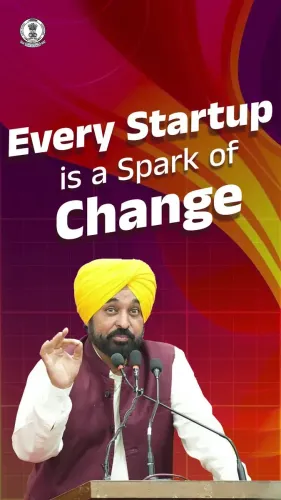
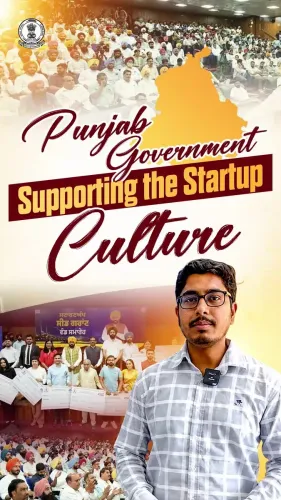
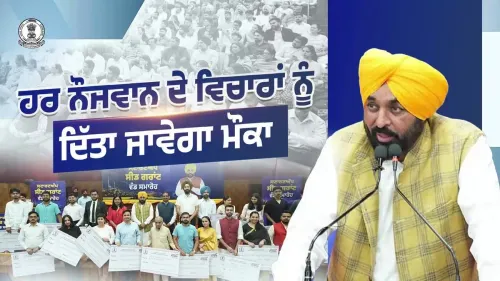
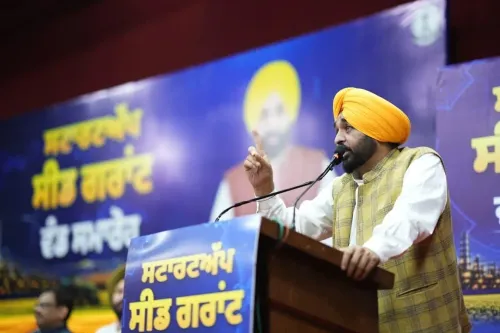
CM Bhagwant Mann Distributes Seed Grants to Punjab Youth Entrepreneurs
Synopsis
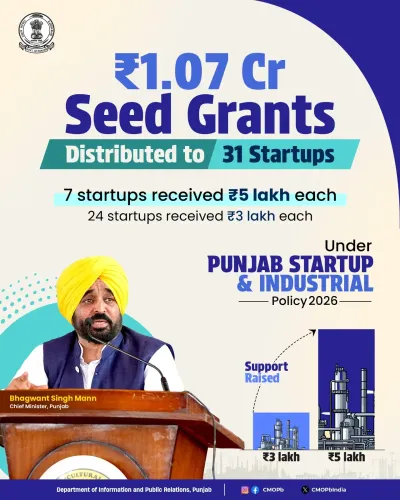
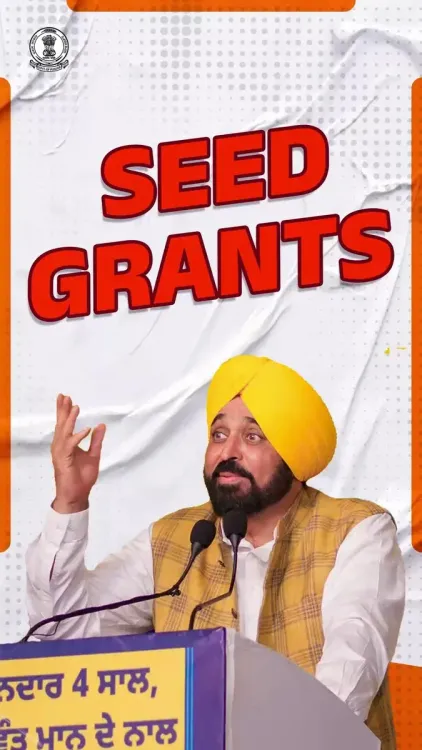
Chief Minister Bhagwant Mann distributed Seed Grants to young entrepreneurs in Punjab on June 12, 2026, backing innovations including a rice-straw-to-biofuel project that addresses both agricultural waste and air pollution from paddy stubble burning.
Key Takeaways
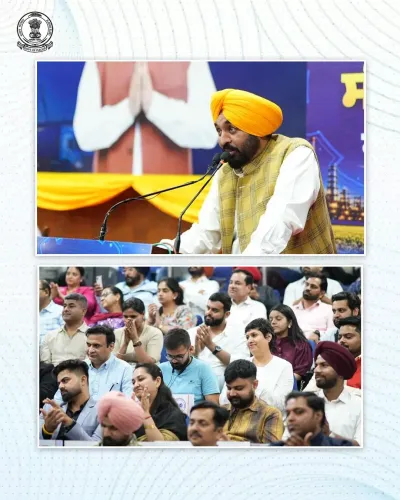
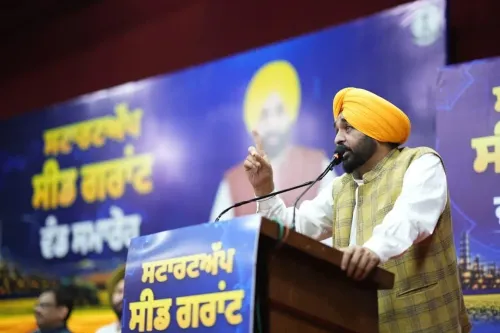
Chief Minister Bhagwant Mann distributed Seed Grants to young entrepreneurs on June 12, 2026 under Punjab's innovation and youth enterprise drive.
A grant recipient is working on converting rice straw into biofuels , directly targeting the paddy stubble burning problem that causes seasonal air pollution across northern India.
The beneficiary publicly expressed gratitude to the Punjab Government for supporting his idea, signalling early-stage state-entrepreneur engagement.
The initiative aligns with the National Policy on Biofuels (2018) , which promotes agricultural residue conversion as a fuel source.
Punjab farmers stand to benefit if a biofuel market for rice straw emerges, converting a disposal burden into a potential revenue stream.
The seed-grant model mirrors agri-tech and green entrepreneurship drives seen in other states of the Indo-Gangetic plains region.
The Chief Minister's Office of Punjab announced on Friday, June 12, 2026, that Chief Minister Bhagwant Mann distributed Seed Grants to young entrepreneurs as part of the state's push to build an innovation-led growth economy anchored in youth enterprise.
Context
The announcement highlighted a standout beneficiary: a young entrepreneur working on the problem of paddy straw burning who received state support to develop a process for converting rice straw into biofuels. The grant recipient expressed gratitude to the Punjab Government for believing in and backing his idea. The CMO described Punjab as 'scripting a new growth story driven by innovation, entrepreneurship, and youth-led enterprise.'
Policy Backdrop
Paddy straw burning is a seasonal crisis in Punjab, where farmers have historically set fire to rice stubble after harvest to clear fields quickly before the wheat-sowing window. The practice releases thick smoke that degrades air quality across the Indo-Gangetic plains every October and November, affecting millions of people. State governments have run crop residue management programmes with machinery subsidies since the mid-2010s, while the Government of India's National Policy on Biofuels (2018) explicitly promotes the conversion of agricultural residues — including rice straw — into fuel, providing a national policy anchor for exactly the kind of startup the seed grant is backing.
The intersection of startup support and environmental problem-solving reflects a broader pattern visible across wheat-rice belt states, where governments are channelling early-stage funding toward agri-tech and green entrepreneurship rather than relying solely on regulatory enforcement or machinery subsidies to address stubble burning.
Stakeholders and Impact
Young entrepreneurs in Punjab gain direct financial backing and institutional credibility through the seed-grant mechanism, lowering the barrier to commercialising ideas that address local agricultural challenges. Farmers stand to benefit indirectly: a viable biofuel market for rice straw would give them an economic reason to sell residue rather than burn it, turning a waste disposal problem into a revenue stream. The dual benefit — entrepreneurship support and pollution reduction — is central to the CMO's framing of the initiative.
Chief Minister Bhagwant Mann, who has led the Aam Aadmi Party government in Punjab since March 2022, has consistently positioned youth employment and governance reform as signature priorities. Seed grants for startups addressing real agricultural pain points fit squarely within that political and policy identity.
What's Next
The immediate test for biofuel-focused seed-grant recipients will come during the next paddy harvest season, when straw burning typically peaks and the scale of any alternative solution becomes visible on the ground. Observers will watch whether the state expands the seed-grant mechanism in subsequent budget cycles, and whether early-funded projects attract follow-on private investment or central government support under the National Policy on Biofuels. A successful demonstration project could strengthen the case for a larger, institutionalised green-entrepreneurship fund in Punjab.
Point of View
Rather than treating them as separate budget lines. Backing a straw-to-biofuel startup is a low-cost, high-visibility way to demonstrate that market-based solutions to stubble burning are feasible without alienating farmers through punitive regulation. If even one funded project scales commercially before the next harvest season, it hands the government a concrete counter-narrative to the annual criticism over air quality in the region. The broader question is whether the seed-grant mechanism will be institutionalised and adequately funded, or remain a periodic announcement without a systematic pipeline.
NationPress
20 Sept 2026
Frequently Asked Questions
What is the Punjab Seed Grant for young entrepreneurs?
The Punjab Seed Grant is early-stage financial support distributed by the state government under Chief Minister Bhagwant Mann to young entrepreneurs developing innovative solutions, including those addressing agricultural and environmental challenges.
How does converting rice straw into biofuel help Punjab farmers?
Converting rice straw into biofuel creates a market for agricultural residue that farmers currently burn to clear fields. If scaled, it gives farmers an economic incentive to sell straw rather than burn it, reducing both costs and the air pollution associated with stubble burning every harvest season.
What is the National Policy on Biofuels and how does it relate to this?
The Government of India's National Policy on Biofuels, approved in 2018, promotes the production of fuel from agricultural residues and non-food biomass. Punjab's seed grant for a rice-straw-to-biofuel startup directly aligns with this national framework.
Why is paddy straw burning a problem in Punjab?
After the rice harvest, Punjab farmers burn leftover straw to quickly clear fields before sowing wheat. This releases large amounts of smoke, causing severe air pollution across the Indo-Gangetic plains every October and November and contributing to health emergencies in the region.
Who is Bhagwant Mann and what party does he represent?
Bhagwant Mann is the Chief Minister of Punjab, leading the Aam Aadmi Party government since March 2022. He has made youth employment, startup support, and governance reform central themes of his administration.