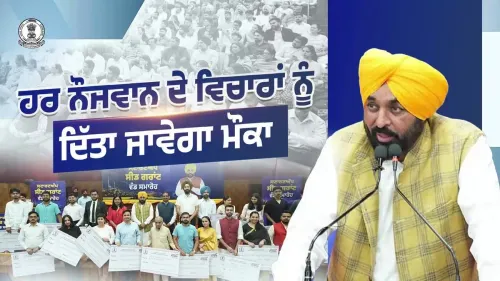
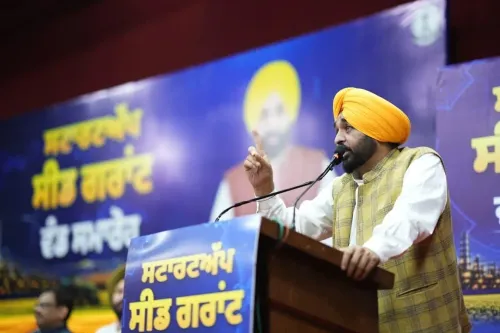
CM Bhagwant Mann Distributes Seed Grants to Young Punjab Entrepreneurs
Synopsis
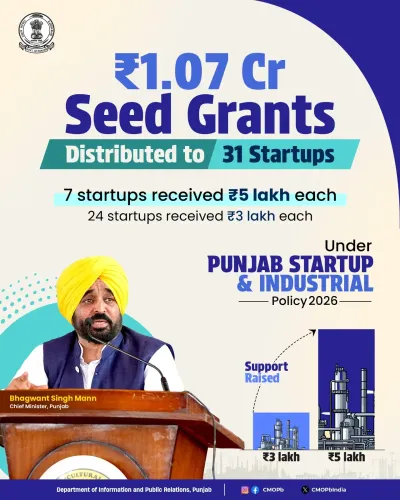
Punjab Chief Minister Bhagwant Mann distributed Seed Grants to young entrepreneurs on June 9, 2026, framing the initiative as a tool to reduce business risk and position Punjab as a national startup hub alongside its education legacy.
Key Takeaways
Punjab CM Bhagwant Mann distributed Seed Grants to young entrepreneurs on June 9, 2026 .
The grants are designed to reduce early-stage financial risk so viable business ideas do not fail due to lack of funding.
Mann declared Punjab is becoming a leading startup hub in addition to its established education reputation.
The initiative builds on the AAP government's post-2022 state startup policy and supplements the central Startup India programme launched in 2016.
Mann urged Punjab's youth to become job-givers rather than job-seekers, with the government pledging support at every step.
Key metrics to watch include total grants disbursed, startups registered, and future state budget allocations for the fund.
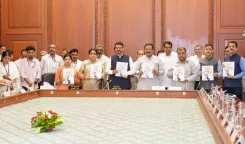
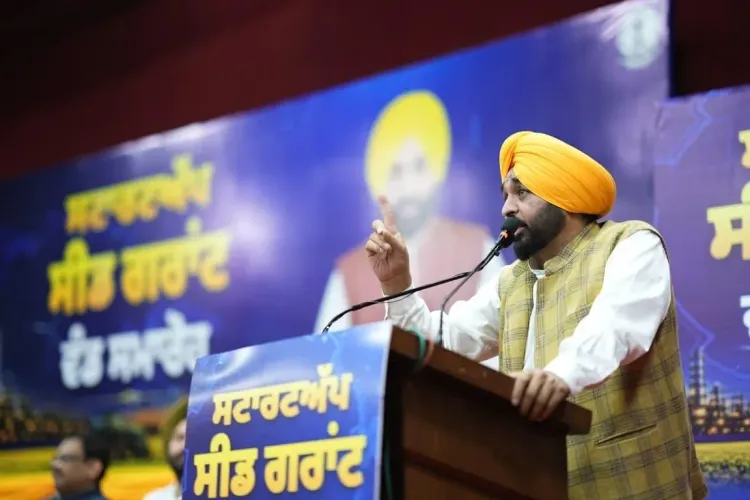
Punjab Chief Minister Bhagwant Mann on Tuesday, June 9, 2026, distributed Seed Grants to young entrepreneurs, pledging state support to help promising business ideas overcome early-stage funding barriers. The initiative is part of the Aam Aadmi Party government's push to transform Punjab into a leading startup hub alongside its established reputation in education.
What the Chief Minister Said
Posting in Punjabi on X, Mann declared: 'ਅੱਜ ਨੌਜਵਾਨ ਉੱਦਮੀਆਂ ਨੂੰ ਸੀਡ ਗ੍ਰਾਂਟ ਵੰਡ ਕੇ ਉਨ੍ਹਾਂ ਦੇ ਕਾਰੋਬਾਰੀ ਸੁਪਨਿਆਂ ਨੂੰ ਨਵੀਂ ਉਡਾਣ ਦਿੱਤੀ' ('Today, by distributing Seed Grants to young entrepreneurs, I have given new flight to their business dreams'). He added that the grant is 'not merely financial aid, but a means to reduce the entrepreneurial risk of the youth, so that no brilliant idea dies due to lack of money.' Mann urged young people to become job-givers rather than job-seekers, assuring them that 'your government stands with you at every step with complete honesty.'
Context
Punjab has historically depended on agriculture as the backbone of its economy, but the sector's declining returns and rising youth unemployment have pushed successive state governments to explore diversification. The AAP government, which came to power in the March 2022 assembly elections with a large majority, identified startup promotion and youth entrepreneurship as priority areas in its governance agenda. The Seed Grant scheme is designed to provide early-stage capital to young founders, reducing the financial risk that causes many viable ventures to fail before they can scale.
Policy Backdrop
The central government's Startup India programme, launched in 2016, created a national framework of tax benefits, simplified compliance and funding support for new ventures. Several state governments, including Punjab, have since layered their own schemes on top of this foundation. Punjab's post-2022 startup policy announced state-level innovation hubs and direct early-stage capital as tools to retain local talent and curb youth out-migration — a persistent social and economic challenge for the state. The Seed Grant distribution fits squarely within this policy lineage, with the state supplementing central incentives through direct disbursement to individual entrepreneurs.
Stakeholders and Impact
The immediate beneficiaries are young entrepreneurs and startup founders across Punjab who received grants at Tuesday's event. For a state where a significant share of educated youth has traditionally sought employment in government jobs or abroad, the programme signals an attempt to shift the aspirational default toward self-employment and wealth creation. Mann's framing — that 'the world's largest companies started from small ideas' — echoes a broader national narrative that has gained traction since the Startup India launch, and positions the state government as an active enabler rather than a passive bystander in the entrepreneurship ecosystem.
What's Next
Attention will now turn to the official figures on the total quantum of grants disbursed, the number of beneficiary startups, and how the scheme is tracked for outcomes. The Punjab government's ability to demonstrate measurable results — registered startups, jobs created, revenue generated — will determine whether the initiative builds lasting credibility or remains a symbolic gesture. Subsequent state budget allocations for the startup fund will be a key indicator of long-term political and fiscal commitment to the programme.
Point of View
The AAP administration is borrowing the emotional vocabulary of Silicon Valley origin stories and applying it to a Punjabi political context. The 'job-giver not job-seeker' framing is now common across the political spectrum, but for AAP in Punjab it carries additional weight as the party faces pressure to deliver tangible youth employment outcomes ahead of future electoral cycles. Whether the scheme produces verifiable startup success stories will determine if this becomes a durable policy legacy or a recurring photo-opportunity.
NationPress
26 Oct 2026
Frequently Asked Questions
What is the Punjab Seed Grant scheme for startups?
The Punjab Seed Grant is an early-stage financial support programme run by the state government to provide young entrepreneurs with capital, reducing the risk that promising business ideas fail due to lack of funding.
How much money does the Punjab Seed Grant give to entrepreneurs?
The exact amount per beneficiary has not been officially confirmed in publicly available data as of the June 2026 distribution event; the government is expected to release official figures separately.
What did Bhagwant Mann say about Punjab becoming a startup hub?
CM Bhagwant Mann stated that Punjab is now becoming a leading startup hub alongside its reputation in education, and that the government stands with young entrepreneurs at every step with complete honesty.
How does Punjab's Seed Grant relate to the central Startup India scheme?
Punjab's Seed Grant is a state-level initiative that supplements the central government's Startup India programme, which was launched in 2016 to provide tax benefits, compliance relief and funding support to new ventures nationwide.
Why is Punjab focusing on startups and entrepreneurship?
Punjab's economy has historically depended on agriculture, and declining farm returns combined with high youth unemployment and out-migration have pushed the AAP government to promote entrepreneurship as a way to create non-agricultural jobs and retain local talent.