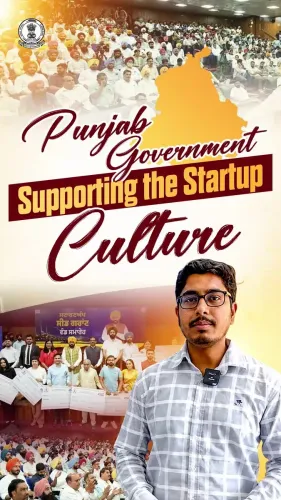
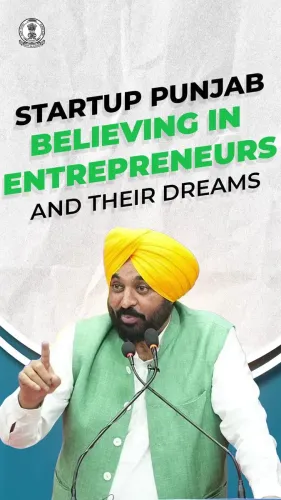
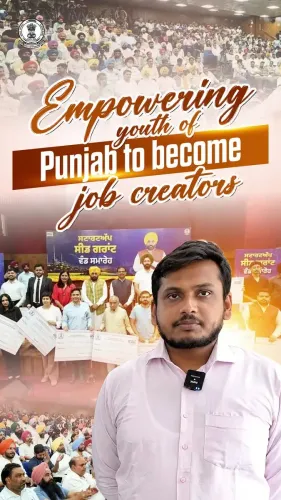
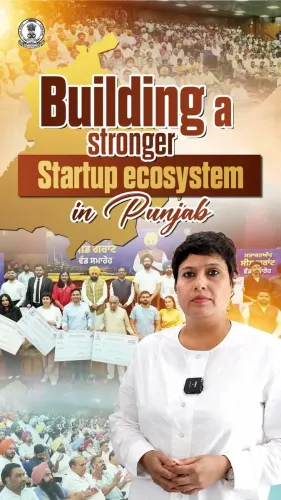
CM Bhagwant Mann's Punjab Govt Backs Startups With Grants
Synopsis
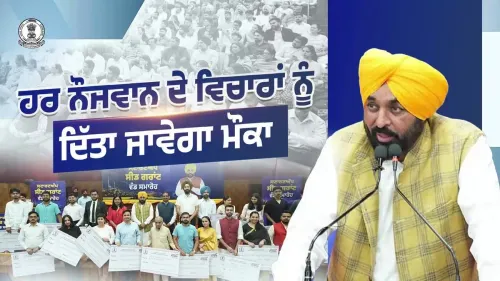
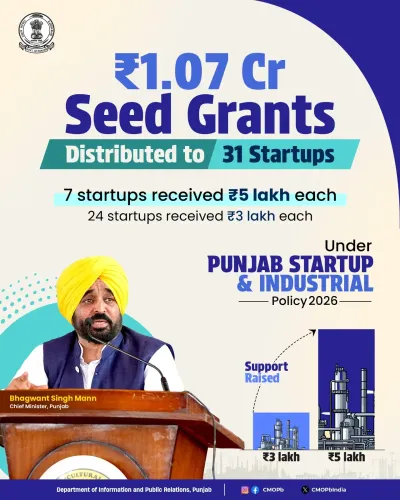
The Chief Minister's Office of Punjab reaffirmed on June 16, 2026 that CM Bhagwant Mann's government is backing startups through grants, dedicated support, and opportunities aimed at driving innovation, creating employment, and diversifying Punjab's economy beyond agriculture.
Key Takeaways
The Chief Minister's Office of Punjab announced on June 16, 2026 that the state government is actively supporting startups through grants and dedicated opportunities.
Chief Minister Bhagwant Mann leads the Aam Aadmi Party government in Punjab, which has been in office since March 2022 .
The initiative aims to drive innovation, create employment, and make startups meaningful contributors to Punjab 's economy.
Punjab's startup push complements the central government's Startup India programme launched in 2016 , following a broader national pattern of state-level support.
The policy is designed in part to retain skilled talent within Punjab and diversify the state's economy beyond its agricultural base.
Detailed grant guidelines, budget allocations, and incubator partnerships are expected to follow as the programme takes operational shape.
The Chief Minister's Office of Punjab, representing the Aam Aadmi Party-led state government headed by Chief Minister Bhagwant Mann, on Tuesday, June 16, 2026, reaffirmed its commitment to nurturing the startup ecosystem in Punjab through dedicated grants, support mechanisms, and entrepreneurial opportunities.
Context
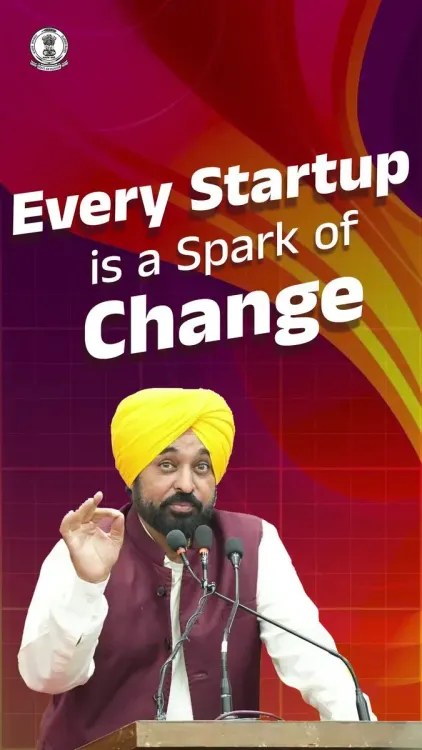
The official post from the Chief Minister's Office described startups as beginning 'as a spark' and positioned the state government as providing 'the fuel needed to ignite that spark into a thriving enterprise.' The message underscores the Mann government's intent to make Punjab a fertile ground for innovation-led economic growth, with an emphasis on employment creation and economic contribution by new ventures.
The communication signals that the government views startup support not merely as a welfare measure but as a strategic economic lever — one aimed at diversifying Punjab's economy beyond its traditionally dominant agricultural base and retaining skilled talent within the state.
Policy Backdrop
Punjab's engagement with startup promotion predates the current administration. The state's Industrial Policy 2017 and subsequent measures under earlier governments sought to broaden the economic base by attracting investment in technology and services. The Bhagwant Mann government, in office since March 2022, has continued and sought to deepen this trajectory.
At the national level, the Startup India initiative, launched by the central government in 2016, created a policy framework that state governments have been encouraged to complement through their own incubation programmes, grant schemes, and regulatory simplifications. Punjab's current push fits squarely within this broader pattern of state-level policies working in tandem with central initiatives to build a robust startup culture across India.
The focus areas articulated by the government — grants, dedicated support, and opportunity creation — align with established best practices in startup ecosystems: early-stage funding access, mentorship infrastructure, and easing regulatory friction for new businesses.
Stakeholders and Impact
The primary beneficiaries of this push are Punjab's startup founders and young entrepreneurs, particularly those operating in technology, services, and innovation-driven sectors. For a state where agriculture has long dominated livelihoods, the creation of non-farm employment pathways carries significant social and economic weight.
By channelling grants and institutional support toward startups, the government aims to retain talent that might otherwise migrate to larger metropolitan hubs such as Bengaluru, Delhi, or Hyderabad. A thriving local startup ecosystem would also attract external investment and position Punjab more competitively within India's emerging innovation geography.
Broader stakeholders include educational institutions, private incubators, and industry bodies whose collaboration would be essential to converting policy intent into on-ground outcomes for entrepreneurs across the state.
What's Next
Observers and startup founders will be watching for the release of detailed grant guidelines, specific budget allocations for startup funds, and any new memoranda of understanding the Punjab government may sign with national or private incubators. These operational details will determine whether the stated commitment translates into measurable outcomes.
The government's ability to streamline application processes, ensure timely disbursement of grants, and build credible mentorship networks will be critical to the ecosystem's growth. As Punjab works to position itself as a serious startup destination, the coming months are likely to bring further policy announcements fleshing out the contours of this initiative.
Point of View
Particularly around non-farm livelihoods, runs deep. By invoking the language of innovation and employment creation, the government is attempting to build a narrative of economic modernisation that complements its existing welfare messaging. However, the credibility of this commitment will hinge on specifics: grant sizes, disbursement timelines, and institutional infrastructure. Until those details are public and verifiable, the announcement sits closer to aspiration than achievement — though it does continue a meaningful policy lineage that predates the current government.
NationPress
15 Sept 2026
Frequently Asked Questions
What is the Punjab government doing to support startups?
The Punjab government, led by Chief Minister Bhagwant Mann, is providing grants, dedicated support mechanisms, and entrepreneurial opportunities to help startups grow, innovate, and create employment in the state.
Who is Bhagwant Mann and what is his role in Punjab's startup policy?
Bhagwant Mann is the Chief Minister of Punjab, heading the Aam Aadmi Party government since March 2022. His administration has positioned startup support as a key pillar of the state's economic development strategy.
How does Punjab's startup support connect to the central government's Startup India scheme?
Punjab's state-level grants and support programmes complement the central government's Startup India initiative launched in 2016, which created a national framework for incubation, funding access, and regulatory ease for new businesses.
Why is Punjab focusing on startups given its strong agricultural base?
Punjab is actively promoting startups to diversify its economy beyond agriculture, create non-farm employment for young people, retain skilled talent within the state, and attract technology and services investment.
What should startup founders in Punjab watch for next?
Founders should watch for the release of detailed grant guidelines, specific budget allocations, and any new partnerships the Punjab government announces with national or private incubators that will define how the support is actually delivered.