CM Fadnavis Thanks PM Modi for Words on Youth's Future
Synopsis
Maharashtra Chief Minister Devendra Fadnavis publicly thanked Prime Minister Narendra Modi on 25 July 2026 for his inspiring words on India's youth and students, posting in English, Marathi, and Hindi, and aligning Maharashtra's state messaging with the national BJP government's youth-centric policy agenda.
Key Takeaways
Maharashtra Chief Minister Devendra Fadnavis thanked Prime Minister Narendra Modi on 25 July 2026 for his address to students and youth.
The post was published in three languages — English, Marathi, and Hindi — reflecting deliberate outreach to Maharashtra's diverse population.
Fadnavis described Modi's words as 'inspiring' and credited his 'vision and guidance' with building confidence in India's young generation.
The acknowledgement aligns with the National Education Policy 2020 and the Skill India Mission , which targets training over 400 million youth.
Maharashtra is a key state for NEP curriculum rollout, and political messaging of this kind typically precedes or accompanies formal policy announcements.
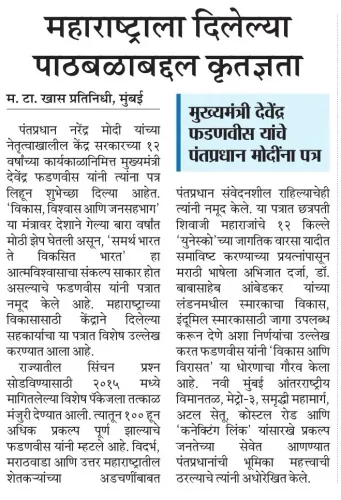
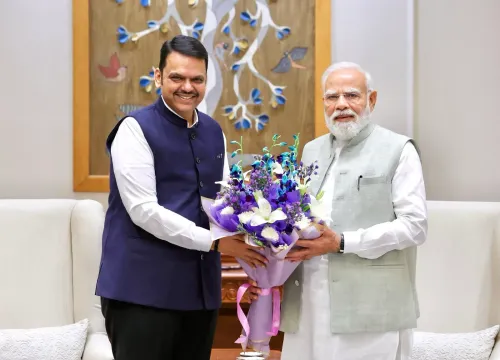
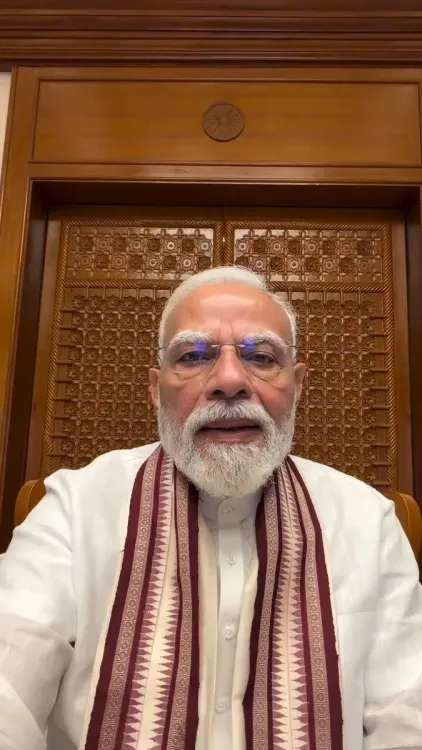
Maharashtra Chief Minister Devendra Fadnavis on Saturday, 25 July 2026, publicly thanked Prime Minister Narendra Modi for what he described as inspiring words addressed to India's students and youth, expressing gratitude across three languages — English, Marathi, and Hindi — on the social media platform X.
In his post, Fadnavis wrote in English: 'Grateful to our Hon PM Narendra Modi Ji for these inspiring words for the future of our students and youth. Your vision and guidance continue to inspire confidence in India's young generation.' He echoed the same sentiment in Marathi — आपली दूरदृष्टी आणि मार्गदर्शन भारताच्या युवा पिढीला नवे ध्येय गाठण्याचा आत्मविश्वास देत राहते ('Your foresight and guidance continue to give India's young generation the confidence to achieve new goals') — and in Hindi, thanking the Prime Minister for his 'heartfelt concern and inspiring words' for students and youth.
Context
The post is a direct response to a public address or statement by Prime Minister Modi directed at students and youth, though the specific speech or event was not identified in the post itself. Fadnavis, as Maharashtra's Chief Minister and a senior BJP leader, has consistently aligned state-level communication with the national party's youth-centric messaging. The trilingual format of the post — reaching English, Marathi, and Hindi-speaking audiences simultaneously — underscores the deliberate outreach to Maharashtra's diverse demographic.
Policy Backdrop
The acknowledgement sits within a sustained policy framework that the central government has built around India's youth. The National Education Policy 2020 laid out a holistic, skill-oriented education architecture aimed at preparing students for a rapidly evolving economy. The Skill India Mission, launched in 2015, set an ambitious target of training over 400 million youth to improve employability across sectors.
Maharashtra, as one of India's most industrialised and populous states, plays a central role in translating these national frameworks into ground-level outcomes. The Fadnavis administration has been tasked with rolling out NEP-aligned curricula in state schools and colleges, a process that requires sustained political signalling alongside administrative action.
Stakeholders and Impact
The primary stakeholders in this exchange are India's students and youth, who form the demographic dividend that both central and state governments have repeatedly cited as the country's most significant long-term asset. Public messaging of this nature — senior leaders amplifying the Prime Minister's words on youth — serves to reinforce institutional confidence in government-backed skilling, education, and entrepreneurship programmes.
For Maharashtra specifically, where a large urban youth population is navigating competitive education and employment markets, such messaging from the Chief Minister carries weight in framing the state government's priorities. It also signals coordination between Mumbai and New Delhi on youth policy at a time when NEP implementation timelines are under close watch.
What's Next
Observers will watch for concrete follow-through at the state level, including announcements on NEP-aligned curriculum rollouts in Maharashtra schools and colleges, as well as any new central youth employment or skilling initiatives expected in the next Union Budget cycle. The pattern of high-visibility political messaging on youth, when paired with scheme announcements, has historically preceded formal policy rollouts in this domain. Whether this post signals an imminent Maharashtra-specific youth initiative remains to be seen.
Point of View
Building a narrative of continuity between New Delhi's vision and Maharashtra's execution. The timing, ahead of potential budget-cycle announcements on skilling and education, suggests this may be more than ceremonial — it could be laying the ground for a coordinated state-centre youth policy push. The choice of three languages also signals an intent to reach the broadest possible audience within Maharashtra, not just the English-speaking political class.
NationPress
25 Jul 2026
Frequently Asked Questions
Why did Devendra Fadnavis thank PM Modi on 25 July 2026?
Fadnavis thanked Prime Minister Narendra Modi for his inspiring words addressed to India's students and youth, expressing gratitude in English, Marathi, and Hindi on X.
What did PM Modi say about India's youth that Fadnavis referred to?
The specific content of Modi's address was not detailed in Fadnavis's post; he described it broadly as inspiring words about the future of students and youth.
What is Maharashtra's role in the National Education Policy 2020?
Maharashtra is responsible for rolling out NEP-aligned curricula in its schools and colleges, making it one of the key states for the policy's ground-level implementation.
What is the Skill India Mission?
The Skill India Mission, launched in 2015, is a central government initiative aimed at training over 400 million youth in India to improve their employability across various sectors.
What does Fadnavis's post mean for Maharashtra's youth policy?
The post signals alignment between the Maharashtra government and the central BJP government on youth-centric priorities, and observers will watch for follow-up announcements on skilling or education schemes at the state level.