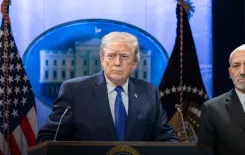
Nvidia CEO Jensen Huang Meets South Korea's President on AI
Synopsis
Nvidia CEO Jensen Huang met South Korean President Lee Jae-myung in San Francisco ahead of the AI Summit on 25 July 2026, with both sides focused on deepening cooperation behind South Korea's national AI ambitions. The meeting pairs a leading AI hardware firm with one of the world's top semiconductor-manufacturing nations.
Key Takeaways
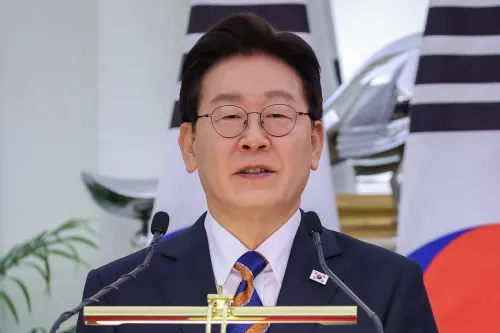
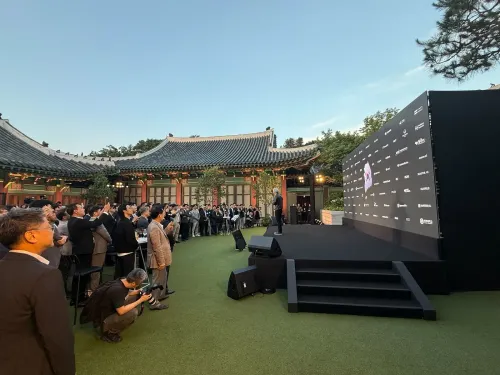
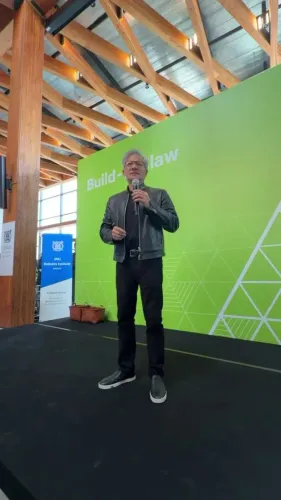
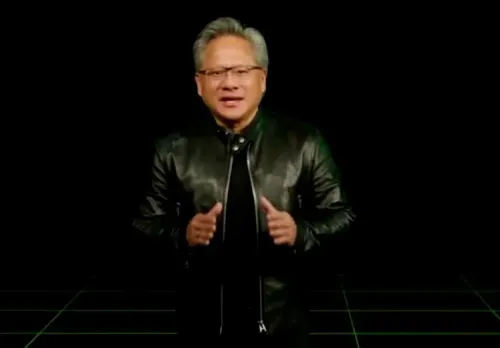
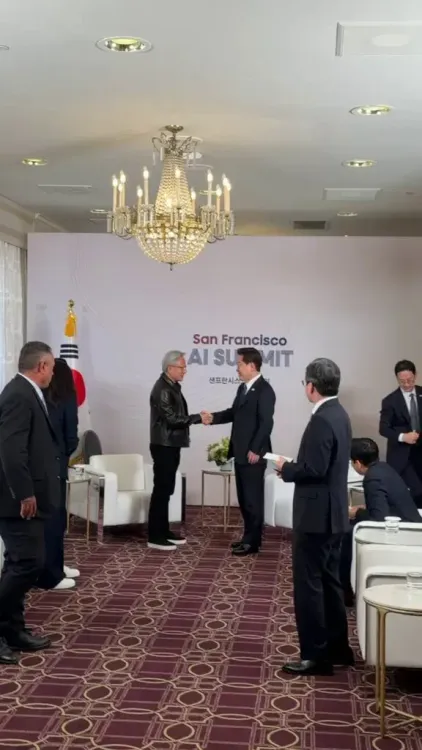
Jensen Huang , CEO of chip giant Nvidia , met South Korean President Lee Jae-myung in San Francisco on 25 July 2026 ahead of the San Francisco AI Summit .
Nvidia described South Korea as a 'technology leader' with the 'talent, industrial strength, and drive to help shape the AI era.' Discussions focused on 'deepening the partnership' behind South Korea's national AI ambitions , signalling government-level AI diplomacy.
South Korea launched its National Strategy for Artificial Intelligence in 2019 , targeting R&D investment and AI adoption across industries by 2030 .
Korean firms Samsung Electronics and SK Hynix supply high-bandwidth memory critical to Nvidia's AI accelerators, making the bilateral relationship strategically significant.
Follow-up commitments and joint projects from the San Francisco AI Summit will be closely watched as indicators of the partnership's depth.
Chip giant Nvidia announced on Saturday, 25 July 2026 that its chief executive Jensen Huang met with South Korean President Lee Jae-myung in San Francisco ahead of the San Francisco AI Summit, with discussions centred on deepening the partnership underpinning South Korea's national AI ambitions. The meeting signals a significant step in aligning one of the world's foremost AI hardware companies with a leading semiconductor-manufacturing nation.
Context
Nvidia's official post described South Korea as 'a technology leader, with the talent, industrial strength, and drive to help shape the AI era.' The bilateral conversation between President Lee Jae-myung and Jensen Huang took place on the sidelines of the San Francisco AI Summit, underscoring how global AI governance forums are increasingly becoming venues for high-level corporate-government diplomacy. Nvidia framed the engagement as forward-looking, focused on 'deepening the partnership' rather than announcing a concluded deal.
South Korea has long occupied a critical position in global technology supply chains, home to memory-chip giants Samsung Electronics and SK Hynix, which supply the high-bandwidth memory essential to Nvidia's flagship AI accelerators. The convergence of Korean manufacturing depth with Nvidia's AI computing platforms makes the pairing strategically logical for both sides.
Policy Backdrop
South Korea released its National Strategy for Artificial Intelligence in 2019, laying out targets for research and development investment, talent cultivation, and broad AI adoption across industries by 2030. The strategy has since been updated to reflect the rapid acceleration of large-language-model infrastructure and sovereign AI computing capacity. A direct meeting between the country's head of state and Nvidia's CEO suggests the national AI roadmap is now being pursued at the highest diplomatic level.
The encounter also fits a broader allied-country pattern of diversifying AI infrastructure while managing technology export controls. Washington has tightened semiconductor export rules in recent years, making government-to-company engagement increasingly important for countries seeking assured access to advanced AI chips and related software stacks.
Stakeholders and Impact
Korean semiconductor firms, AI research institutions, and domestic cloud providers stand to benefit most directly from any expanded Nvidia partnership. For Samsung Electronics and SK Hynix, deeper collaboration with Nvidia could translate into more stable, long-term demand signals for next-generation memory products. For Korean AI startups and research labs, it could mean improved access to Nvidia's developer ecosystem and computing credits.
From Nvidia's perspective, South Korea represents both a critical supplier and a growing end-market for AI data-centre infrastructure. Cementing a government-level relationship provides Nvidia with political goodwill in a jurisdiction that sits at the intersection of US-allied technology policy and East Asian industrial capacity.
What's Next
Attention will now turn to whether the San Francisco AI Summit produces concrete follow-up commitments — joint projects, investment pledges, or updates to Korea's national AI roadmap and related budget allocations. Any formal memorandum of understanding or supply-chain agreement between Nvidia and Korean institutions would mark a tangible outcome from the presidential-level meeting. The summit itself is expected to draw government and industry leaders focused on AI governance, safety standards, and infrastructure investment, making it a likely venue for further announcements.
Point of View
Not just in corporate boardrooms. For South Korea, securing a direct line to the world's dominant AI chip supplier is both an industrial-policy move and a hedge against supply-chain uncertainty in an era of tightening US export controls. For Nvidia, cultivating government relationships in allied semiconductor hubs like South Korea reinforces its position as an indispensable partner in national AI strategies worldwide. The San Francisco AI Summit is fast becoming a parallel track to traditional diplomatic forums — one where CEOs carry as much weight as trade ministers.
NationPress
25 Jul 2026
Frequently Asked Questions
Why did Jensen Huang meet South Korea's President Lee Jae-myung?
Jensen Huang met President Lee Jae-myung in San Francisco ahead of the AI Summit to discuss deepening the partnership behind South Korea's national AI ambitions, as announced by Nvidia on 25 July 2026.
What is South Korea's national AI strategy?
South Korea released its National Strategy for Artificial Intelligence in 2019, setting targets for R&D investment, talent cultivation, and widespread AI adoption across industries by 2030.
What is the connection between Nvidia and South Korean chipmakers?
South Korean firms Samsung Electronics and SK Hynix produce the high-bandwidth memory chips that are essential components in Nvidia's AI accelerators, making South Korea a critical node in Nvidia's supply chain.
What is the San Francisco AI Summit?
The San Francisco AI Summit is a high-level forum drawing government leaders and technology industry executives to discuss AI governance, safety standards, and infrastructure investment. The Nvidia-South Korea meeting took place on its sidelines on 25 July 2026.
What could come out of the Nvidia and South Korea partnership talks?
Potential outcomes include joint AI infrastructure projects, investment pledges, updates to South Korea's national AI roadmap, or formal agreements between Nvidia and Korean research institutions or semiconductor firms.