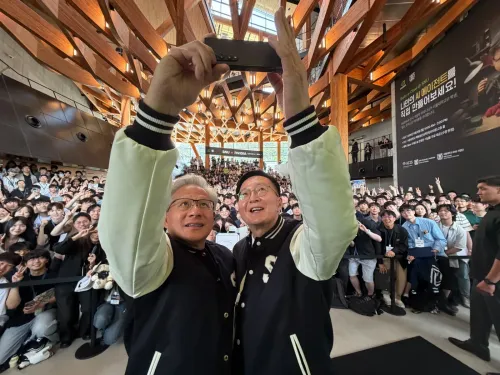
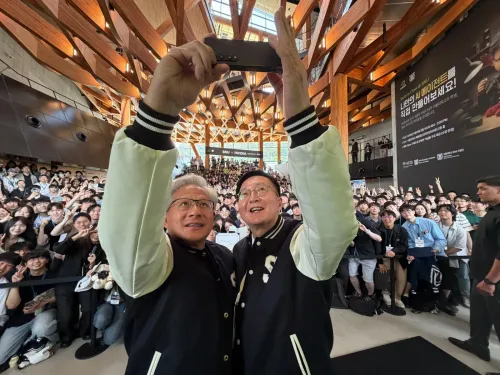
Nvidia CEO Jensen Huang Visits Seoul National University for AI Builder Pop-Up
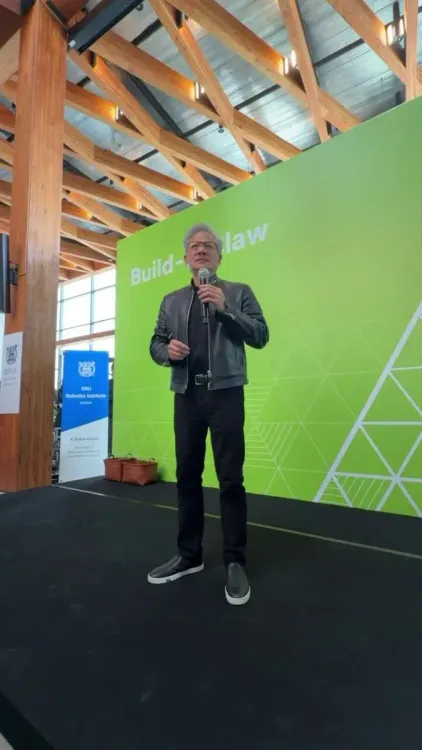
Synopsis
Nvidia CEO Jensen Huang visited Seoul National University on 8 June 2026 for a 'Build-a-Claw' pop-up event, engaging students, developers, and AI researchers in hands-on intelligent agent building — part of Nvidia's broader East Asia developer outreach strategy.
Key Takeaways
Jensen Huang , CEO of Nvidia , visited Seoul National University on 8 June 2026 for a developer pop-up event.
The event, called 'Build-a-Claw', focused on building intelligent AI agents from the ground up.
Attendees included students, developers, and AI researchers from the university.
The visit is part of Nvidia's broader pattern of university engagement across East Asia , the US , Europe , and Taiwan .
The event underscores Nvidia's strategic push to embed its AI platforms early among the next generation of developers.
South Korea is a key semiconductor and AI hub, making Seoul National University a high-value engagement target for Nvidia.
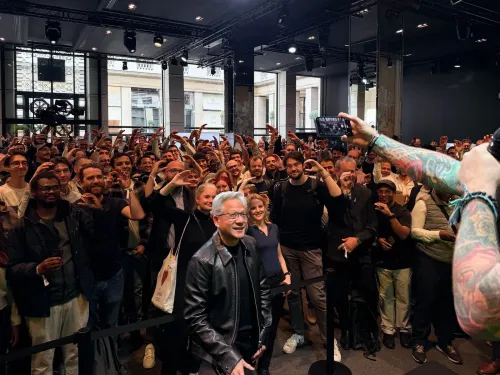
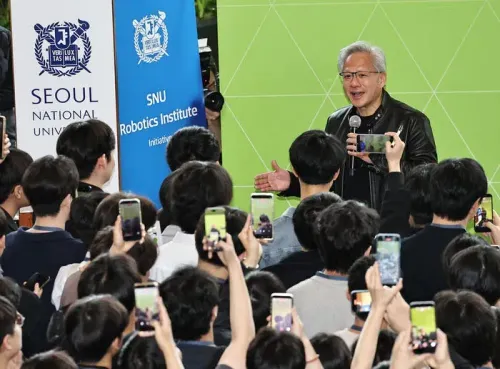
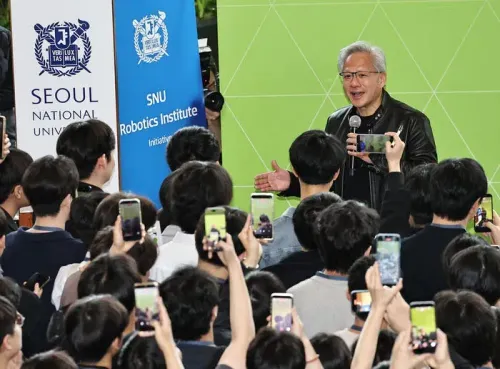
Chip giant Nvidia announced on Monday, 8 June 2026 that its chief executive Jensen Huang visited Seoul National University for a hands-on AI developer event called 'Build-a-Claw', bringing together students, developers, and AI researchers focused on building intelligent agents from the ground up.
Nvidia's official post described the gathering as a pop-up packed with 'the next generation of AI builders', noting that Huang stopped by the South Korean university's campus to engage directly with the developer community. The event centred on constructing intelligent agents, reflecting Nvidia's growing emphasis on agentic AI as a core use case for its platforms.
Context
Seoul National University is South Korea's premier research institution, with internationally recognised departments in electrical engineering, computer science, and artificial intelligence. The university has long been a pipeline for talent into the global semiconductor and AI industries, making it a natural stop for Nvidia's executive outreach in East Asia.
Huang, who co-founded Nvidia Corporation in 1993 and has led it since, has become one of the most visible technology executives globally, particularly as demand for Nvidia's GPUs and AI infrastructure has surged. His campus appearances are relatively rare and tend to draw significant attention from the developer community.
Policy Backdrop
Nvidia's university engagement in East Asia takes place against a backdrop of intensifying competition for AI talent and shifting semiconductor supply chains. Export controls and geopolitical realignments have pushed major chip and AI companies to deepen relationships with allied-nation universities and research institutions.
South Korea has positioned itself as a key node in the global semiconductor ecosystem, home to major chipmakers and a government actively investing in AI research capacity. Hands-on developer events of this kind serve both a talent-pipeline function and a platform-adoption purpose, as Nvidia seeks to embed its CUDA ecosystem and AI agent frameworks early in the careers of the next generation of engineers.
Stakeholders and Impact
The primary beneficiaries of the 'Build-a-Claw' pop-up are AI students and researchers at Seoul National University, who gained direct access to Nvidia's tools and, notably, to Huang himself. For Nvidia, such events reinforce developer loyalty to its platforms at a moment when rival AI infrastructure providers are competing aggressively for mindshare.
Broader stakeholders include South Korea's AI research community and the global developer ecosystem that Nvidia has been cultivating through its CUDA platform and more recently through frameworks designed for agentic AI workflows. Campus events of this format mirror similar Nvidia outreach conducted in the United States, Europe, and Taiwan.
What's Next
Nvidia has not publicly detailed the full schedule of Huang's Asia visit or whether additional university stops are planned. The company's next announced developer programmes or conferences in the region will indicate how far it intends to scale the hands-on 'Build-a-Claw' format beyond this Seoul event.
As agentic AI moves from research to production, Nvidia's ability to establish its infrastructure as the default platform for the next cohort of AI builders could have lasting commercial implications — making university outreach a strategic, not merely ceremonial, investment.
Point of View
Nvidia signals that agentic AI — not just GPU compute — is now the centrepiece of its developer narrative. South Korea's position as both a semiconductor manufacturing power and a government-backed AI investment destination makes Seoul National University a strategically significant venue. The visit fits a broader arc in which chip companies treat developer mindshare at elite universities as a long-term moat against rivals building competing AI infrastructure stacks.
NationPress
24 Oct 2026
Frequently Asked Questions
What is the Build-a-Claw event that Jensen Huang attended at Seoul National University?
'Build-a-Claw' is a hands-on AI developer pop-up organised by Nvidia at Seoul National University, where students, developers, and researchers built intelligent agents using Nvidia's AI platforms.
Why did Jensen Huang visit Seoul National University in June 2026?
Jensen Huang visited Seoul National University on 8 June 2026 to engage directly with the next generation of AI builders as part of Nvidia's university developer outreach in East Asia.
What is Nvidia's strategy with university events in South Korea?
Nvidia uses campus events to promote its CUDA and AI agent frameworks, recruit talent, and build developer loyalty in key semiconductor and AI hubs like South Korea amid global competition for skilled engineers.
Is Jensen Huang's Seoul visit part of a larger Asia tour?
Nvidia has not publicly confirmed the full itinerary, but the Seoul stop fits a pattern of Nvidia executive engagement at universities across East Asia, Europe, the US, and Taiwan.
What is agentic AI and why is Nvidia focusing on it?
Agentic AI refers to AI systems that autonomously plan and execute multi-step tasks. Nvidia is emphasising this use case as a key growth area for its GPU and software platforms beyond traditional model training.