Saudi nuclear deal tied to Abraham Accords, Trump makes it a condition
Synopsis
Trump has drawn a hard line: no Abraham Accords membership, no US civilian nuclear deal for Saudi Arabia. By tying the long-discussed nuclear partnership to formal Israel normalisation, he has elevated the stakes of a geopolitical negotiation that will reshape the Middle East — and put Riyadh in an uncomfortable position between Washington's demands and its own domestic constraints.
Key Takeaways
President Donald Trump on 25 July declared that Saudi Arabia must join the Abraham Accords as a prerequisite for a US civilian nuclear agreement.
Trump confirmed: 'Saudi Arabia knew that if they didn't join the Abraham Accords, the deal's not — I'm not going to do the deal.' Any nuclear agreement would also require Congressional approval , Trump noted.
Trump claimed Iran had been 'severely weakened,' citing this as a reason Saudi hesitation over normalisation should ease.
The US is simultaneously pursuing nuclear negotiations with Iran , with VP JD Vance and Secretary of State Marco Rubio involved.
Four privately funded advanced reactor projects in the US reached critical milestones, Trump announced at the same event.
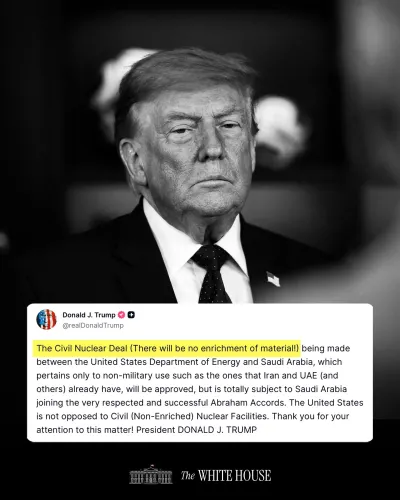
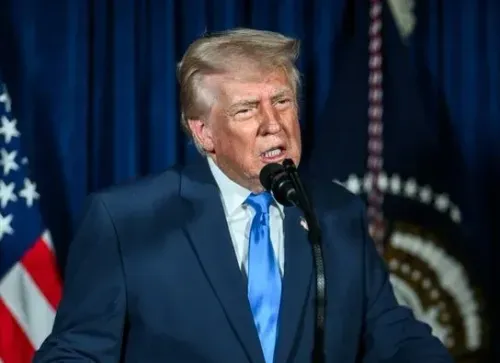
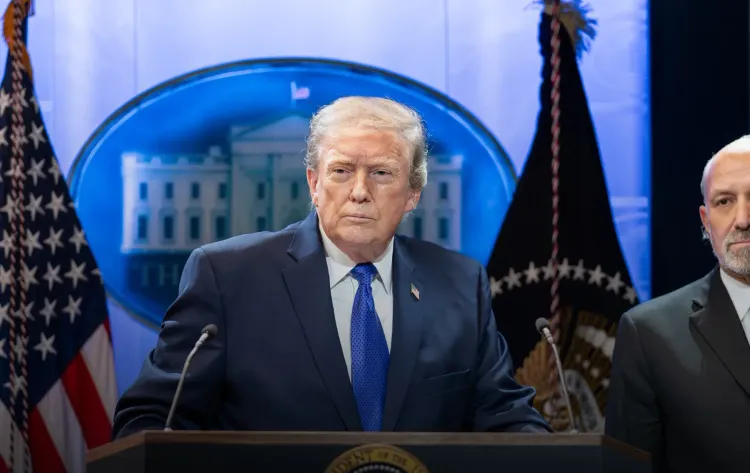
US President Donald Trump has publicly declared that Saudi Arabia must join the Abraham Accords before Washington proceeds with a civilian nuclear agreement with the kingdom, formally linking the long-discussed deal to Riyadh's normalisation of ties with Israel. The remarks, made on 25 July during an event marking a milestone in America's civilian nuclear programme, mark the clearest public articulation yet of the conditions attached to the proposed US-Saudi nuclear partnership.
What Trump Said
Speaking at the White House event, Trump was unequivocal about the prerequisite. 'No, nobody got out ahead. I mean, I just say that in order to do it, they have to be a member of the Abraham Accords,' he said, responding to reports that negotiations on the deal had been finalised before he imposed fresh conditions.
Trump later reinforced the point: 'Saudi Arabia knew that if they didn't join the Abraham Accords, the deal's not — I'm not going to do the deal.' He added that any agreement would also remain subject to Congressional approval.
The Iran Factor
Trump framed Saudi Arabia's path to the Accords partly through the lens of a diminished Iranian threat. He described Iran as 'the bully of the Middle East' but claimed the country had been severely weakened. 'You don't have a great power there anymore,' he said, suggesting that Riyadh's historical hesitation — rooted in its rivalry with Tehran — no longer carried the same weight.
Separately, Trump confirmed that his administration was continuing nuclear negotiations with Iran while simultaneously maintaining military readiness. 'We're locked and loaded and ready to go, but we're talking to them,' he said, adding that Iran 'cannot have a nuclear weapon.' He named Vice President JD Vance and Secretary of State Marco Rubio as among the senior officials involved in those talks.
US Nuclear Industry Milestone
The Saudi remarks came at an event where Trump announced that four privately funded advanced reactor projects had reached critical milestones, following executive orders signed last year aimed at accelerating reactor approvals and deployment. Trump claimed the United States was once again at the forefront of next-generation nuclear technology. 'We're leading the world in pioneering the next generation of nuclear power and there's nobody even close,' he said.
Russia, China, and the Broader Picture
Asked whether Russia and China were assisting Iran, Trump said both President Xi Jinping and President Vladimir Putin had indicated they would not become directly involved. 'I trust them,' Trump said, adding that any assistance from the two countries had 'not been major.'
This comes amid a broader US effort to reshape Middle East geopolitics through the Abraham Accords framework, which Trump brokered during his first term and has sought to expand in his second. Saudi Arabia's entry would be the most consequential addition to the framework, given Riyadh's religious and political weight in the Arab world. How the kingdom navigates the twin pressures of a US nuclear offer and domestic sensitivities around Israel normalisation will be a defining diplomatic question in the months ahead.
Point of View
And the US offer is its most credible pathway; yet formal normalisation with Israel remains politically fraught domestically for the kingdom. What mainstream coverage underplays is the contradiction at the heart of Trump's position: he is simultaneously negotiating with Iran and threatening military action, while telling Saudi Arabia its Iran anxiety is over. That is a hard sell. The real question is whether Washington has a credible fallback if Riyadh refuses — or whether Trump's condition quietly softens as the commercial and strategic stakes of a Saudi nuclear deal become clearer.
NationPress
25 Jul 2026
Frequently Asked Questions
What condition has Trump placed on the US-Saudi civilian nuclear deal?
Trump has stated that Saudi Arabia must formally join the Abraham Accords — the US-brokered regional normalisation framework with Israel — before Washington will proceed with a civilian nuclear agreement with the kingdom. He confirmed this was a non-negotiable prerequisite, alongside Congressional approval of any final deal.
What are the Abraham Accords and why does Saudi membership matter?
The Abraham Accords are a set of normalisation agreements between Israel and several Arab states, brokered by the Trump administration during his first term. Saudi Arabia's entry would be the most significant addition, given Riyadh's religious authority in the Muslim world and its political weight across the Arab region.
What did Trump say about Iran in the context of the Saudi deal?
Trump argued that Saudi Arabia's historical reluctance to normalise with Israel was partly driven by fear of Iran, but claimed that concern was now moot because Iran had been 'severely weakened.' He separately confirmed that US negotiations with Iran over its nuclear programme were ongoing, with senior officials including VP JD Vance and Secretary of State Marco Rubio involved.
What milestone did Trump announce for the US nuclear industry?
Trump announced that four privately funded advanced reactor projects in the United States had reached critical milestones, following executive orders aimed at accelerating reactor approvals. He said the US was leading the world in next-generation nuclear technology.
What did Trump say about Russia and China's role with Iran?
Trump said both President Xi Jinping and President Vladimir Putin had indicated they would not become directly involved in supporting Iran. He said he trusted their assurances and that any assistance from the two countries had 'not been major.'