Trump Declares Nuclear Pilot a 'HUGE SUCCESS' as Four Firms Deliver
Synopsis
The White House announced that President Trump's advanced nuclear reactor pilot has succeeded, with four companies delivering results ahead of a 4 July target set by Energy Secretary Wright — a milestone the administration is calling a major win for American energy.
Key Takeaways
The White House declared President Trump 's advanced nuclear reactor pilot a 'HUGE SUCCESS' on 25 July 2026 .
Secretary Wright launched the pilot with a goal of starting at least three advanced reactors safely by 4 July .
Four companies delivered, exceeding the original target of three.
The announcement reflects a broader Trump administration push to revive domestic nuclear energy production.
The Nuclear Energy Innovation and Modernization Act of 2019 updated NRC licensing to support advanced reactor designs, providing the regulatory foundation for this pilot.
Next steps include NRC licensing decisions and potential congressional funding for follow-on phases.
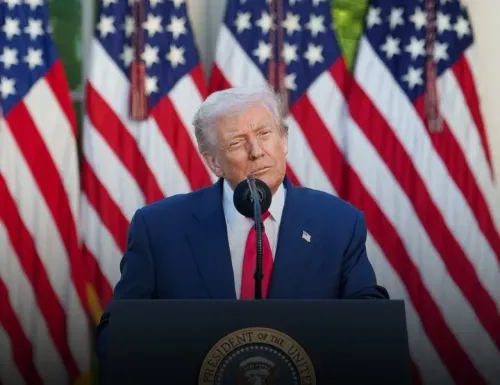
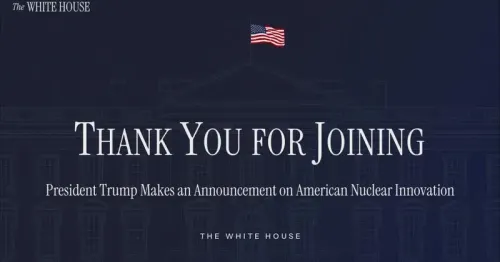
The White House announced on Friday, 25 July 2026 that President Donald J. Trump has declared a major milestone in his administration's push to revive domestic nuclear energy production, stating that four companies have successfully delivered on a pilot programme targeting advanced reactor deployment ahead of an Independence Day deadline.
Context
The White House post states that Secretary Wright launched a pilot programme for advanced reactors with an explicit mission to bring at least three online safely by 4 July. The administration now says four companies delivered — exceeding the original target — which the White House is calling a 'HUGE SUCCESS.' The announcement signals a deliberate effort by the Trump administration to position nuclear energy as a cornerstone of American energy independence.
The post credits the initiative to a coordinated push by the executive branch, with the Energy Secretary playing a central operational role in driving the pilot to completion ahead of schedule.
Policy Backdrop
US nuclear policy has long oscillated between ambition and caution. The Nuclear Energy Innovation and Modernization Act of 2019 updated licensing processes at the Nuclear Regulatory Commission (NRC) to accommodate advanced and small modular reactor designs, laying the regulatory groundwork for exactly the kind of pilot the Trump administration is now citing as a success.
Bipartisan interest in advanced reactors has grown steadily over the past decade, driven by concerns over baseload power reliability, carbon-free electricity generation, and technological competition — particularly with China and Russia, which have aggressively exported reactor technology globally. The Trump administration's framing of the pilot as a national achievement fits a broader pattern of using energy milestones as symbols of American industrial revival.
Stakeholders and Impact
The nuclear industry and energy utilities stand to benefit most directly from the pilot's success. Advanced reactor developers — a sector that has attracted significant private capital in recent years — gain regulatory and political validation that could accelerate further project approvals and investment.
For American consumers and grid operators, successful advanced reactor deployment promises a stable, carbon-free baseload power source that wind and solar cannot reliably provide. The outcome also carries geopolitical weight: a demonstrated US capability in next-generation nuclear technology reinforces the country's position in global energy diplomacy.
What's Next
Attention now turns to the NRC and whether the licensing and safety frameworks keep pace with the administration's ambitions. Congressional funding mechanisms for follow-on phases of the programme will also be closely watched, as will any executive actions to expand the pilot beyond the initial four companies.
The administration's willingness to set hard deadlines — and publicly celebrate when they are met — suggests further milestone-driven announcements on nuclear energy are likely as the Trump administration looks to cement its energy legacy.
Point of View
The White House can credibly claim the pilot was not just met but surpassed, lending the announcement extra political weight. The move also puts pressure on regulators and Congress to keep pace, effectively using a presidential declaration of success as a forcing function for the next phase of nuclear expansion. For a sector that has spent decades waiting for a sustained political tailwind, this kind of high-profile backing — regardless of the details still to be verified — represents a meaningful shift in the policy environment.
NationPress
23 Oct 2026
Frequently Asked Questions
What is Trump's advanced nuclear reactor pilot programme?
It is an initiative launched by Energy Secretary Wright under President Trump to deploy at least three advanced nuclear reactors safely by 4 July 2026 . The White House announced on 25 July 2026 that four companies delivered, exceeding the original target.
Which companies were part of Trump's nuclear reactor pilot?
The White House announced that four companies delivered on the pilot, but the specific names of the companies were not disclosed in the official post. Further details are expected as the programme progresses.
What is an advanced nuclear reactor?
Advanced nuclear reactors are next-generation designs — including small modular reactors — that aim to be safer, more efficient, and more flexible than conventional large-scale nuclear plants. The Nuclear Energy Innovation and Modernization Act of 2019 updated US regulatory processes to support their development.
Why is the US pursuing advanced nuclear energy?
The US is pursuing advanced nuclear energy to address baseload power reliability, provide carbon-free electricity, and compete with countries like China and Russia that have been aggressively expanding their nuclear technology exports.
What happens next after the nuclear pilot success announcement?
Attention shifts to the Nuclear Regulatory Commission (NRC) for licensing decisions, and to Congress for potential funding to expand the programme beyond the initial four companies. Further executive actions from the Trump administration on nuclear energy are also expected.