Trump touts US nuclear revival as 4 advanced reactors hit milestones
Synopsis
For the first time in over 50 years, privately funded advanced reactors have gone critical in the United States — four of them, beating Trump's own target of three by the Fourth of July. It is the most tangible nuclear milestone Washington has produced since 1974, and it arrives as Russia and China have spent decades filling the vacuum America left behind.
Key Takeaways
Four privately funded advanced reactors reached critical milestones in the United States , announced at the White House on 25 July .
The achievement is the first of its kind in over 50 years — the last privately funded reactor design went critical in 1974 , according to Michael Kratsios .
President Trump had set a target of at least three reactors by the Fourth of July via executive orders; the final count exceeded that at four .
Antares Nuclear plans to deploy reactors on US military installations before 2028 and has cited future space and undersea applications.
One participating company announced plans to raise $1 billion in 2025 and occupy a one-million-square-foot manufacturing facility, targeting data centres.
The US had gone without new privately funded advanced reactor development for over four decades , ceding ground to Russia and China in global nuclear markets.
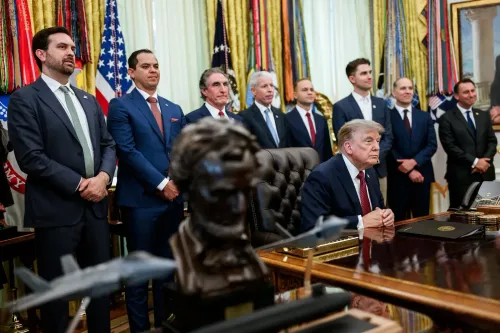
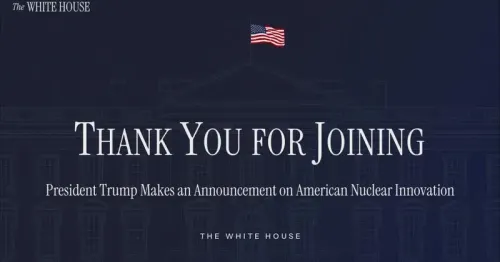
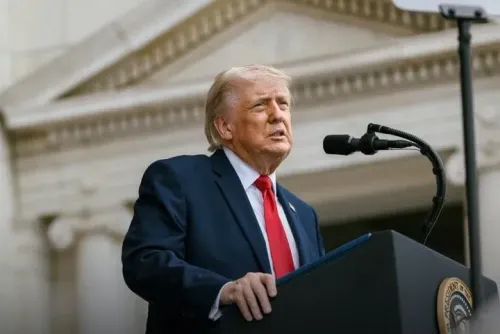
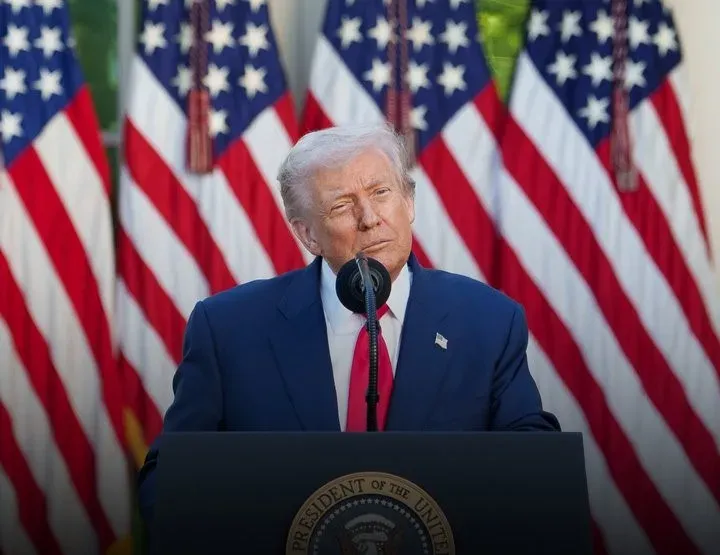
President Donald Trump on 25 July announced that four privately funded advanced reactors had reached critical milestones under an administration-backed programme designed to accelerate nuclear innovation in the United States. Speaking at the White House alongside senior officials and executives from four nuclear technology companies, Trump declared it the beginning of a new era for an industry that had stagnated for decades.
What Was Announced
Trump said the administration had exceeded a goal he set through four executive orders signed last year, which directed Energy Secretary Chris Wright to establish a pilot programme for advanced reactors and bring at least three cutting-edge reactors online safely by the Fourth of July. The final count reached four — the first privately funded advanced reactors to achieve criticality in the United States in over four decades, according to Trump.
Michael Kratsios, Director of the Office of Science and Technology Policy, placed the achievement in sharper historical context: 'The last time that a privately funded new reactor design went critical was in 1974 — so it was over 50 years ago, and we were able to achieve that and surpass it by having four.'
What the Companies Said
Executives from the participating firms credited the administration's deregulatory push with accelerating timelines that had previously stretched to six years or more for a single reactor design approval. One executive noted that his company's reactor reached criticality at 12:20 a.m. on the Fourth of July — cutting the deadline by minutes.
A representative of Antares Nuclear said the company's reactors could eventually support US military installations and future space missions, including powering assets under the Golden Dome programme, with deployment on military bases targeted before 2028. Another participating company announced plans to raise $1 billion this year and move into a one-million-square-foot manufacturing facility, with data centres identified as the primary target market.
The Administration's Broader Energy Argument
Energy Secretary Chris Wright framed the nuclear milestone within a wider energy strategy, claiming the US now has 'the lowest priced, most secure energy of any country in the world.' Interior Secretary Doug Burgum argued that private investment — rather than government subsidies — was the engine of the revival, describing nuclear power as central to the administration's 'energy dominance' agenda.
Trump was characteristically emphatic: 'America is building again. America is dreaming again, and we're leading the world in pioneering the next generation of nuclear power and there's nobody even close.'
Historical Context and Global Competition
The United States pioneered commercial nuclear technology in the 1950s and for decades operated the world's largest fleet of nuclear reactors. High construction costs, lengthy licensing procedures, and public opposition gradually choked new development, even as Russia and China expanded their nuclear industries both domestically and through overseas exports. The new milestones, if they translate into commercial deployment at scale, would represent the first meaningful reversal of that decades-long trend.
Whether the pilot programme's momentum can be sustained — and whether private capital continues to flow at the pace required — will be the defining question for US nuclear energy in the years ahead.
Point of View
Yet the companies involved are still pre-revenue and the data-centre market they are targeting is already being courted by established nuclear players globally. Russia and China did not build their nuclear export dominance on pilot programmes alone — they built it on standardised, mass-produced reactor designs backed by state financing. The US revival will only be strategic if it produces deployable, exportable technology at scale, not just a handful of headline-grabbing firsts.
NationPress
23 Oct 2026
Frequently Asked Questions
What did Trump announce about US nuclear reactors on 25 July?
President Trump announced that four privately funded advanced reactors had reached critical milestones under an administration-backed pilot programme — exceeding his original target of three reactors by the Fourth of July. It is the first time privately funded advanced reactors have gone critical in the United States in over 50 years.
When was the last time a privately funded reactor went critical in the US?
According to Michael Kratsios, Director of the Office of Science and Technology Policy, the last privately funded new reactor design to go critical in the United States was in 1974 — more than 50 years ago.
What is Antares Nuclear planning to do with its reactors?
Antares Nuclear said its reactors could support US military installations and future space missions, including powering assets under the Golden Dome programme. The company plans to deploy reactors on US military bases before 2028.
Which executive orders enabled the nuclear pilot programme?
Trump signed four executive orders last year directing Energy Secretary Chris Wright to establish a pilot programme for advanced reactors with a target of at least three operational reactors by the Fourth of July 2025. The programme ultimately delivered four.
Why had US nuclear development stalled for decades?
High construction costs, lengthy licensing procedures — which Trump said could take six years or more — and public opposition had slowed new reactor development since the 1970s. During this period, Russia and China expanded their nuclear industries domestically and through overseas exports, eroding the US lead in global nuclear markets.