US plans $150 million refinery boost using Defence Production Act funds

Synopsis
The Trump administration is deploying up to $150 million in defence-law funding to expand US refinery output — but the announcement is notable for what it leaves out: no named facility, no precise capacity target, no price-reduction estimate, and no project count. The initiative signals an aggressive use of Cold War-era industrial powers for civilian fuel policy, even as its real-world impact remains unquantified.
Key Takeaways
President Donald Trump announced up to $150 million in federal support for US refinery expansion on 23 October 2026 .
Funding draws on Title III of the Defense Production Act , framing energy infrastructure as a national security priority.
Projects are expected to increase refining output by millions of gallons a day across gasoline, diesel, and jet fuel — though no precise figure was given.
The broader funding pool stands at $1 billion appropriated under the Working Families Tax Cuts legislation for national-security energy projects.
A separate $42 million commitment for the 125-mile Constitution Pipeline was announced on 19 October under the same framework.
Project selections and financial terms have not yet been disclosed; the department said announcements would come 'in the near future.'
The United States Department of Energy on 23 October 2026 announced plans to provide up to $150 million to expand petroleum production, storage, and logistics at domestic refineries, invoking Title III of the Defense Production Act to strengthen national fuel supplies. President Donald Trump unveiled the initiative on Thursday, framing it as a strategic partnership between the federal government and private industry to rapidly bolster America's energy infrastructure.
What the Funding Covers
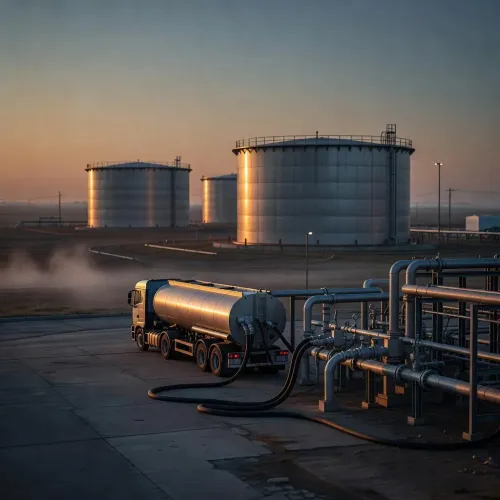
The proposed support targets the full refinery value chain — covering petroleum production, storage, and logistics at facilities across the country. The Energy Department projected that the supported projects would collectively increase US refining output by millions of gallons a day, adding capacity for gasoline, diesel, jet fuel, and other petroleum products. Notably, the department did not provide a precise capacity figure, a breakdown by fuel type, or a timeline for achieving that increase.
Although the department's release referred to restarting an American refinery, the announcement did not identify the facility or describe its current operating status. It also did not specify how much of the proposed funding would support a restart, as opposed to expanding capacity at existing refineries.
What Energy Secretary Chris Wright Said
Energy Secretary Chris Wright said the funds would be deployed 'strategically and in partnership with private industry to rapidly bolster America's existing energy infrastructure.' Wright also stated that the administration intended to expand supplies of refined petroleum products and reduce costs for consumers — though the announcement did not quantify any potential price reduction or provide an independent assessment of when consumers might see savings.
Funding Source and Legal Authority
The $150 million would draw from a broader $1 billion appropriated under legislation the department refers to as the Working Families Tax Cuts, earmarked for energy-related projects deemed critical to national security. Congress originally enacted the Defense Production Act in 1950 to give the president expanded authority to ensure industrial resources are available for national defence; its Title III provisions specifically support the development and expansion of domestic production capabilities.
This is not the first time the current administration has used this funding framework for energy infrastructure. On 19 October, Wright announced a commitment of up to $42 million to advance the proposed Constitution Pipeline — a 125-mile natural gas project running from Pennsylvania to New York.
What Happens Next
The Energy Department said it would announce project selections 'in the near future,' without disclosing the number of projects under consideration, financial terms of the assistance, or the level of private co-investment expected. The lack of specifics on timelines, project identities, and measurable output targets means the initiative's real-world impact remains difficult to assess until selections are made public.
Point of View
Bypassing the slower legislative route. Yet the announcement is conspicuously light on accountability: no named facility, no verified capacity targets, no independent price-impact estimate. The simultaneous Constitution Pipeline commitment suggests a pattern of using defence-funding authority as a fast-track energy tool, which raises legitimate questions about congressional oversight. Whether this translates into cheaper fuel at the pump — the administration's stated goal — depends entirely on project details that remain undisclosed.
NationPress
23 Oct 2026
Frequently Asked Questions
What is the US $150 million refinery funding announcement?
It is a federal initiative announced on 23 October 2026 by the US Department of Energy to provide up to $150 million to expand petroleum production, storage, and logistics at domestic refineries. The funding uses Title III of the Defense Production Act, which allows the government to support domestic industrial capacity deemed critical to national defence.
Why is the Defense Production Act being used for energy projects?
The Trump administration has framed domestic refinery capacity as essential to national security, allowing it to use Title III of the Defense Production Act — a 1950 law originally designed for wartime industrial mobilisation — to fund civilian energy infrastructure. This approach bypasses slower legislative channels and taps a $1 billion pool appropriated under the Working Families Tax Cuts legislation.
Will consumers see lower fuel prices as a result?
Energy Secretary Chris Wright stated the administration intends to expand refined petroleum supplies and reduce costs for consumers, but the announcement did not quantify any potential price reduction or provide an independent timeline for when savings might materialise. The actual impact will depend on project selections and scale of output increase, neither of which has been disclosed.
Which refineries or projects will receive the funding?
The Energy Department has not yet identified the specific refineries or projects. Although the department's release mentioned restarting an American refinery, no facility was named. The department said it would announce selections 'in the near future' without specifying the number of projects or financial terms.
Has the administration used this funding framework before?
Yes. On 19 October, Energy Secretary Wright announced up to $42 million for the proposed Constitution Pipeline, a 125-mile natural gas project from Pennsylvania to New York, using the same Defence Production Act and Working Families Tax Cuts funding structure.