Trump invokes Defence Production Act to control critical minerals exports
Synopsis
Trump has weaponised a Cold War-era industrial law to lock down America's critical minerals supply chain — not just by restricting exports, but by treating end-of-life batteries and magnets as a strategic reserve. With China dominating global rare earth processing, the Presidential Determination signals Washington is moving from policy rhetoric to binding legal authority.
Key Takeaways
President Trump issued a Presidential Determination on 31 July invoking the Defence Production Act to control recoverable critical minerals and materials.
The Commerce Department has been delegated authority to impose export restrictions on critical minerals and materials.
The order covers materials embedded in end-of-life products such as permanent magnets and lithium-ion batteries , targeting recovery and recycling as a supply strategy.
The determination follows executive orders in March 2025 and April 2025 aimed at boosting domestic mineral production and modernising defence acquisitions.
China 's dominance in rare earth processing is a key driver, with the US seeking to reduce import dependence across defence, EV, and semiconductor supply chains.
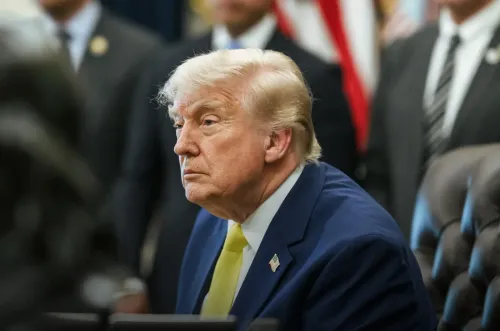
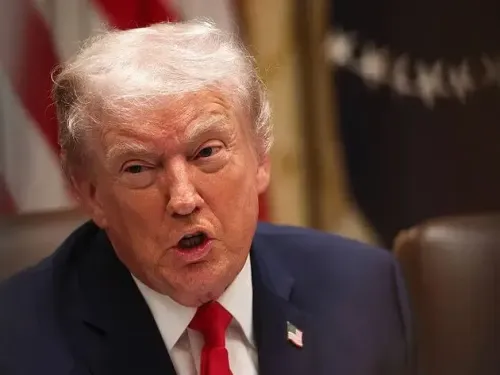
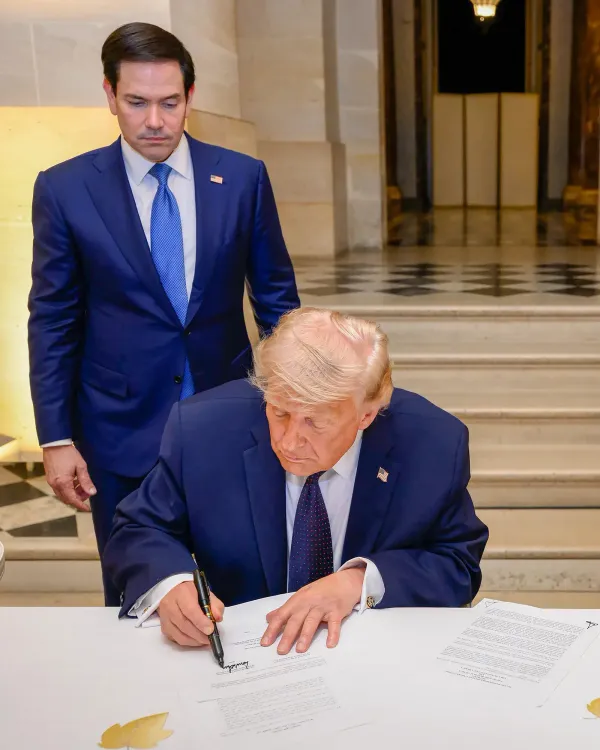
US President Donald Trump has invoked emergency powers under the Defence Production Act to assert federal control over recoverable critical minerals and materials (CMMs), authorising the Commerce Department to impose export restrictions as part of a sweeping effort to secure domestic supply chains deemed essential to national security. The Presidential Determination, issued to the Secretary of Commerce on Thursday, 31 July, marks one of the most direct uses of wartime industrial law to address America's dependence on imported strategic materials.
What the Presidential Determination Says
The determination formally declares that recoverable critical minerals and materials are 'industrial resources necessary to promote the national defence' and that the United States' 'inadequate supply of CMMs poses an increasing risk to our national defence and security.' It further warns that heavy reliance on overseas imports 'threatens serious, sustained supply chain disruptions.'
Invoking Section 101 of the Defence Production Act, Trump found that recoverable CMMs are 'scarce and critical materials essential to the national defence' and that defence requirements for these materials 'cannot otherwise be met without creating a significant dislocation of the normal distribution of such material in the civilian market.' The determination is to be published in the Federal Register and empowers the Commerce Secretary to issue regulations, rules, guidance, and procedures to implement it.
The Recycling Angle: Reclaiming Materials from End-of-Life Products
A notable dimension of the order is its focus on recoverable minerals — those embedded in finished products such as permanent magnets and lithium-ion batteries that have reached the end of their life cycle. The administration argued these materials can be reclaimed and recycled for industrial use, positioning domestic recycling infrastructure as a strategic asset alongside new mining.
The White House described such materials as 'crucial to maintaining and strengthening the function, security, and resilience of critical infrastructure sectors' and 'key inputs in advanced defence systems that support technological superiority, operational readiness, and an array of high-performance military equipment.'
How This Fits Trump's Broader Minerals Strategy
The determination builds on a sequence of executive actions. In March 2025, Trump signed an executive order to increase American mineral production, streamline permitting, and enhance national security. In April 2025, a second order modernised defence acquisitions and spurred innovation across the defence industrial base. The latest move extends that framework by explicitly targeting the export side of the equation.
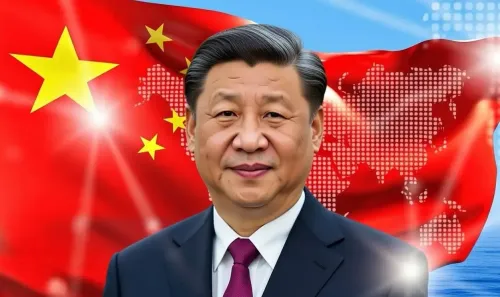
This comes amid intensifying global competition over critical mineral supply chains. China dominates a significant share of global processing and refining capacity for rare earth elements and other strategic materials, prompting the United States and its allies to accelerate efforts to diversify sourcing. Critical minerals are central inputs for defence technologies, electric vehicles, renewable energy systems, semiconductors, and advanced manufacturing.
What Happens Next
The Commerce Department now holds delegated authority to translate the Presidential Determination into binding export control regulations. Industry observers expect formal rulemaking to follow in the coming months, potentially affecting trade flows of materials including rare earths, lithium, cobalt, and other inputs in global supply chains. The administration has signalled that domestic mining, processing, recycling, and stockpiling will each form pillars of the long-term strategy.
Point of View
And using it to regulate critical mineral exports signals that Washington now treats supply chain vulnerability as an active threat, not a background policy concern. The focus on recoverable materials is strategically shrewd but administratively complex: building a domestic recycling-to-defence pipeline requires industrial infrastructure that does not yet exist at scale. The broader question is whether export controls alone can reduce dependence on China's processing dominance, or whether they merely redistribute the bottleneck without resolving it. Allies who export minerals to the US will be watching the Commerce Department's rulemaking closely — the line between protecting domestic supply and triggering a retaliatory trade spiral is narrow.
NationPress
14 Sept 2026
Frequently Asked Questions
What is the Defence Production Act and why did Trump invoke it for critical minerals?
The Defence Production Act is a US federal law that grants the President broad authority to direct industrial resources toward national defence priorities. Trump invoked it on 31 July to declare recoverable critical minerals and materials as scarce resources essential to national defence, enabling the Commerce Department to impose export restrictions and secure domestic supply chains.
What export restrictions can the Commerce Department now impose?
Under the Presidential Determination, the Commerce Secretary is authorised to issue regulations, rules, guidance, and procedures to restrict exports of recoverable critical minerals and materials. The specific commodities and trade partners affected will be defined through formal rulemaking expected to follow in the coming months.
Why are critical minerals considered a national security issue for the United States?
Critical minerals are essential inputs for defence systems, electric vehicles, semiconductors, and renewable energy infrastructure. The US currently relies heavily on imports, and China dominates global processing and refining capacity for several key materials, creating what the administration describes as a serious and sustained supply chain disruption risk.
What is the significance of focusing on 'recoverable' critical minerals?
The order specifically targets minerals that can be reclaimed from end-of-life products such as permanent magnets and lithium-ion batteries. This positions domestic recycling as a strategic supply source alongside new mining, reducing dependence on raw material imports by extracting value from existing industrial waste and consumer products.
How does this order relate to Trump's earlier executive actions on minerals?
The Presidential Determination is the third major executive action in the series. In March 2025, Trump signed an order to boost domestic mineral production and streamline permitting. In April 2025, a second order modernised defence acquisitions. The latest move adds export control authority, completing a framework that spans production, procurement, and trade.