CM Fadnavis unveils Shahu Maharaj statue in Kagal, pledges farmer power
Synopsis
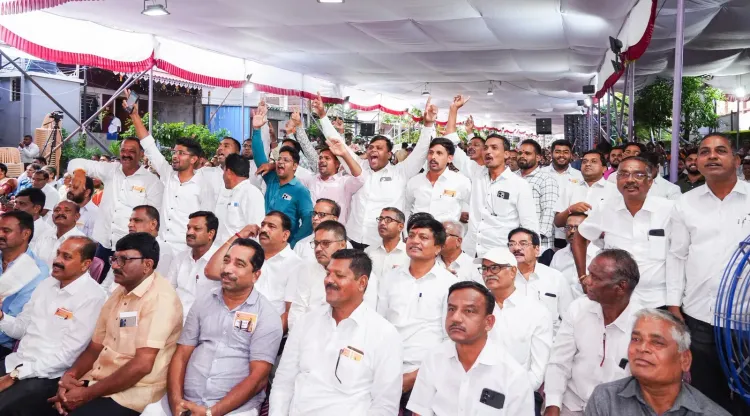
Chief Minister Devendra Fadnavis unveiled a full-length statue of Rajarshi Chhatrapati Shahu Maharaj in Kagal, Kolhapur on August 9, 2026, alongside the inauguration of a renovated school. He announced a farm loan waiver for 56,000 farmers, a push for 100% daytime free power, and India's first integrated CBG plant in Kolhapur district.
Key Takeaways
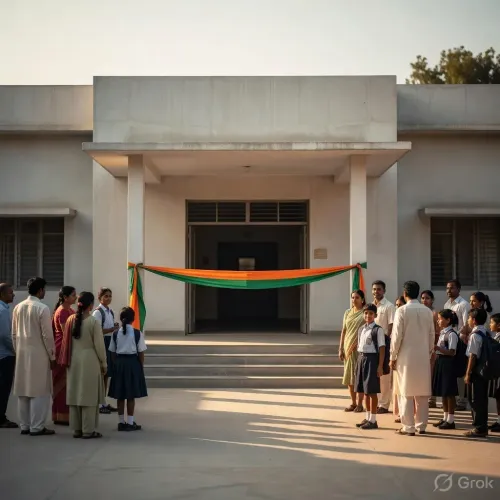
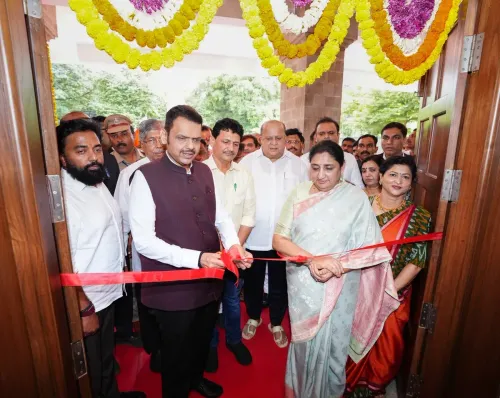
CM Devendra Fadnavis unveiled a full-length statue of Rajarshi Chhatrapati Shahu Maharaj and inaugurated the renovated Gyanadayini Hindurao Ghatage Vidyamandir school in Kagal, Kolhapur on August 9, 2026 .
The Maharashtra government stated it has delivered the largest-ever farm loan waiver, benefiting 56,000 farmers , and cleared ₹58,000 crore in outstanding electricity dues.
The state spends ₹25,000 crore annually to provide free electricity to farmers; 74% of farmers currently receive daytime power under the Solar Krishi Vahini Yojana , with 100% coverage targeted.
CM Fadnavis announced India's first integrated CBG processing plant will be established in Kolhapur district , using sugar mill by-products to generate gas and strengthen FRP payments to cane farmers.
Fadnavis invoked a 'trisutri' — the legacies of Shivaji Maharaj , Dr.
Babasaheb Ambedkar , and Shahu Maharaj — as the ideological framework guiding the state government.
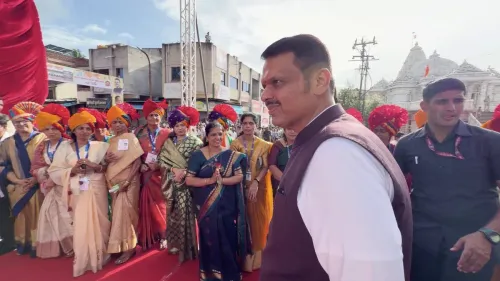
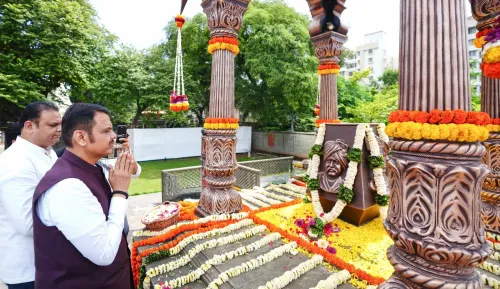
On the anniversary of the 1942 Quit India Movement, Maharashtra Chief Minister Devendra Fadnavis travelled to Kagal in Kolhapur district on Sunday, August 9, 2026, to unveil a full-length statue of Rajarshi Chhatrapati Shahu Maharaj — and to throw open the doors of a newly renovated school that bears a reformer's name. The moment was deliberate, layered, and unmistakably political in the best sense: honouring a 19th-century champion of the marginalised on the same day India remembers its boldest mass uprising.
A statue, a school, and a triple legacy
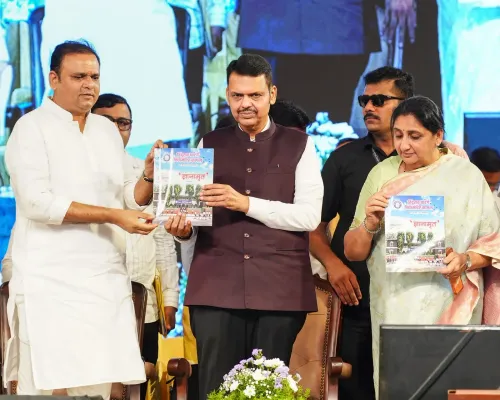
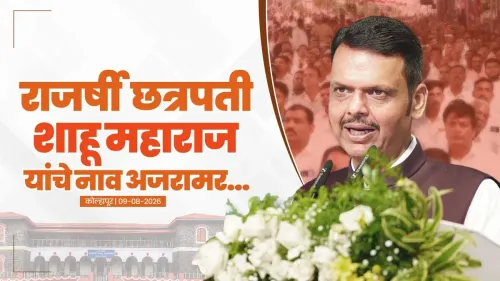
The Chief Minister's Office of Maharashtra announced that CM Fadnavis performed the inauguration of the life-size statue of 'Lokaraja Rajarshi Chhatrapati Shahu Maharaj' and formally dedicated the Gyanadayini Hindurao Ghatage Vidyamandir — a renovated school in Kagal — to the public. Fadnavis framed the occasion around what he called a 'trisutri' (triple thread): the legacy of Chhatrapati Shivaji Maharaj, the Constitution of Dr. Babasaheb Ambedkar, and the reformist thought of Shahu Maharaj. He said the state government works on the foundation of these three pillars.
Shahu Maharaj, who ruled the princely state of Kolhapur in the late 19th and early 20th centuries, introduced reservation in education and government employment for backward classes as early as 1902 — decades before the Indian Constitution codified such protections. He also introduced free education, declared untouchability a punishable offence, and opened doors of employment for communities long excluded from both. Fadnavis noted that the Radhanagari Dam — an irrigation landmark conceived and built under Shahu Maharaj's watch — continues to benefit farmers in the region today, a testament to a ruler who thought in generations.
Farmers, free power, and the road to 100%
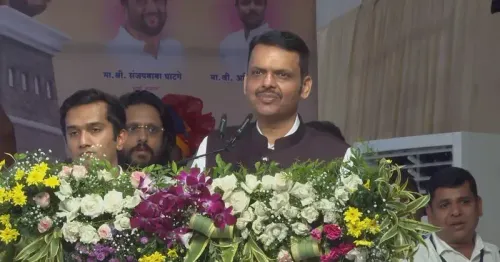
The event became a platform for a cluster of rural-economy announcements. CM Fadnavis stated that the government has delivered on its promise of the largest-ever farm loan waiver, benefiting 56,000 farmers. He said the state spends ₹25,000 crore annually to supply free electricity to farmers and has cleared ₹58,000 crore in outstanding dues — with every farmer set to receive a certificate confirming zero arrears.
On daytime power supply, Fadnavis said the Solar Krishi Vahini Yojana has already reached 74% of farmers, with a stated goal of achieving 100% daytime free power for the agricultural sector. The solar feeder scheme, designed to shift farm power supply from erratic night hours to predictable daytime slots, is one of the more tangible rural commitments the Fadnavis administration has made in western Maharashtra.
Sugar, ethanol, and Kolhapur's zero-waste ambition
The Chief Minister addressed the sugar sector directly — no small matter in a district where sugarcane defines the rural economy. He credited the ethanol policy with keeping sugar mills viable and enabling mills to pay the statutory Fair and Remunerative Price (FRP) to cane growers, noting that Kolhapur district has set new FRP records. Without ethanol blending, he argued, the sugar industry would struggle to survive.
Going further, Fadnavis announced that spent wash and press mud — by-products of sugar processing — will be converted into Compressed Bio-Gas (CBG) and Compressed Natural Gas (CNG) under a 'zero-waste' model. The revenue from these by-products is intended to strengthen mill finances and fund FRP payments. He declared that the country's first integrated CBG processing plant will come up in Kolhapur district — a move that, if executed, would make the region a national pilot for agro-industrial waste-to-energy.
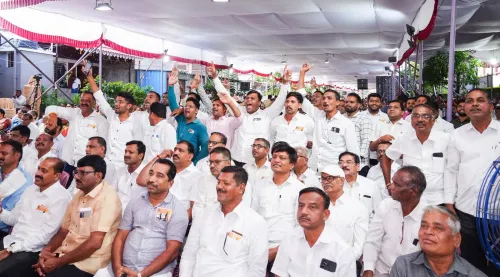
The event was attended by Legislative Assembly Speaker Adv. Rahul Narwekar, Deputy Chief Minister Sunetra Ajit Pawar, ministers Chandrakant Patil and Prakash Abitkar, Minister of State Madhuri Misal, MP Dhananjay Mahadik, and Kolhapur Mayor Ruparani Nikam, among others.
A reformer's statue in Kagal is now more than a tribute — it is the backdrop against which a sitting government has staked its rural credibility. Whether the solar feeders reach every farm and the CBG plant breaks ground will be the real measure of the day's promises.
Point of View
Particularly in western Maharashtra where the Maratha and OBC vote base is decisive. By anchoring farm-power and sugar-sector announcements to Shahu Maharaj's reformist legacy, the government signals continuity with a figure revered across caste lines — a politically durable framing. The '100% daytime free power' target and the CBG plant announcement are forward-looking commitments that will be closely watched as credibility tests ahead of local body elections. The invocation of the Shivaji-Ambedkar-Shahu 'trisutri' is a recurring ideological signature of the current dispensation, designed to project an inclusive identity that cuts across caste and community lines.
NationPress
10 Aug 2026
Frequently Asked Questions
Who is Rajarshi Chhatrapati Shahu Maharaj and why is he significant in Maharashtra?
Rajarshi Chhatrapati Shahu Maharaj was the ruler of the princely state of Kolhapur in the late 19th and early 20th centuries. He is revered for introducing reservation in education and government jobs for backward classes in 1902, providing free education, and banning untouchability — making him a foundational figure in India's social reform movement.
What was inaugurated by CM Fadnavis in Kagal on August 9, 2026?
CM Devendra Fadnavis unveiled a full-length statue of Rajarshi Chhatrapati Shahu Maharaj and inaugurated the renovated Gyanadayini Hindurao Ghatage Vidyamandir school in Kagal, Kolhapur district.
What is the Solar Krishi Vahini Yojana and how many farmers benefit from it?
The Solar Krishi Vahini Yojana is a Maharashtra government scheme to supply daytime electricity to farmers through solar feeders. As per the CM's statement, 74% of farmers currently receive daytime power under the scheme, with a goal to reach 100%.
What is the CBG plant announced for Kolhapur and what will it do?
CM Fadnavis announced that India's first integrated Compressed Bio-Gas (CBG) processing plant will be set up in Kolhapur district. It will convert sugar mill by-products — spent wash and press mud — into CBG and CNG, generating additional revenue to support mill finances and Fair and Remunerative Price payments to sugarcane farmers.
How many farmers benefited from Maharashtra's farm loan waiver?
CM Fadnavis stated that the Maharashtra government's farm loan waiver — described as the largest ever — has benefited 56,000 farmers, and the state has also cleared ₹58,000 crore in outstanding electricity dues owed to farmers.