CM Rekha Gupta meets newly appointed heads of Delhi language academies
Synopsis
Delhi CM Rekha Gupta met the newly inducted vice-presidents and members of seven language academies — Hindi, Sanskrit, Punjabi, Maithili-Bhojpuri, Garhwali, Kumaoni, and Jaunsari — pledging to energise Delhi's cultural heritage under PM Modi's 'Vikas bhi, Virasat bhi' philosophy.
Key Takeaways
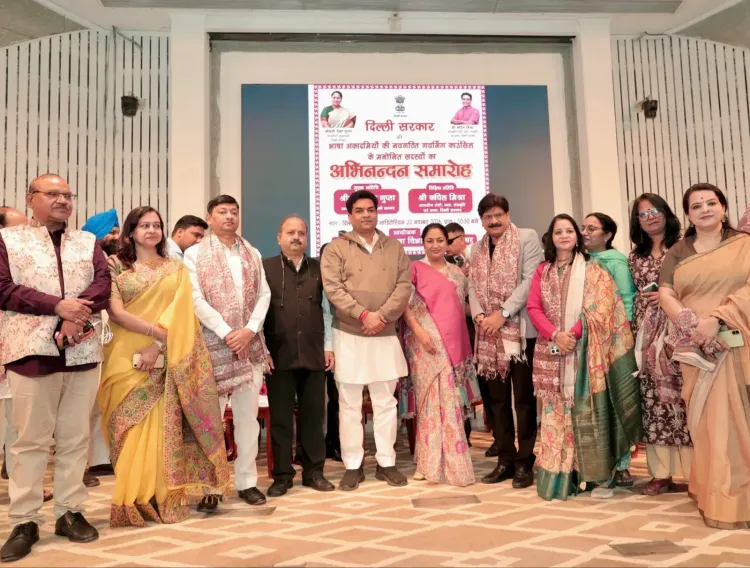
Delhi CM Rekha Gupta met newly appointed vice-presidents and members of seven language academies on November 20, 2026 .
The academies cover Hindi, Sanskrit, Punjabi, Maithili-Bhojpuri, Garhwali, Kumaoni, and Jaunsari languages.
CM Gupta pledged to give 'new energy' to Delhi's linguistic and cultural heritage and strengthen folk traditions.
She explicitly cited PM Narendra Modi 's slogan 'Vikas bhi, Virasat bhi' as the foundation of this resolve.
Cabinet minister Kapil Mishra was present at the meeting alongside other dignitaries.
The move fits a broader BJP pattern of using cultural institutions to connect younger generations with traditional heritage.
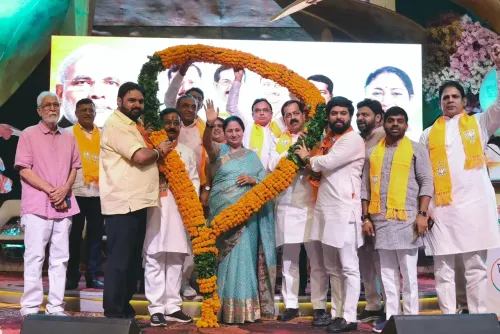
Delhi's linguistic heritage got a fresh institutional push on Friday, November 20, 2026, as Delhi Chief Minister Rekha Gupta met the newly appointed vice-presidents and members of the city's language academies — covering Hindi, Sanskrit, Punjabi, Maithili-Bhojpuri, Garhwali, Kumaoni, and Jaunsari — and extended her congratulations to each of them.
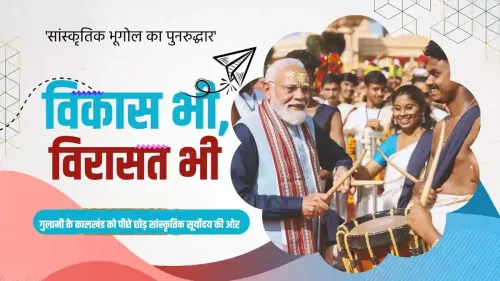
Posting on X, CM Gupta framed the appointments as part of a larger resolve: 'dilli ki samridh bhashayee aur sanskritik virasat ko nayi urja mile' — 'that Delhi's rich linguistic and cultural heritage receives new energy, our folk traditions grow stronger, and coming generations connect more deeply with their roots.' She anchored the vision explicitly in Prime Minister Narendra Modi's well-known slogan, 'Vikas bhi, Virasat bhi' — 'Development as well as Heritage.'
Seven academies, one mandate
Delhi operates dedicated language academies for a diverse set of tongues — from the classical weight of Sanskrit to the Himalayan dialects of Garhwali, Kumaoni, and Jaunsari, languages that represent the cultural fingerprint of Delhi's vast migrant and regional communities. The simultaneous induction of new leadership across all seven bodies signals a coordinated effort to revitalise these institutions rather than allow them to run on inertia.
Cabinet colleague Kapil Mishra, BJP minister in the Delhi government, was present at the meeting alongside other dignitaries, lending the occasion the weight of collective cabinet ownership over the cultural agenda.
'Vikas bhi, Virasat bhi' — the BJP's cultural policy thread
The slogan has been part of the BJP's governing vocabulary since 2014, threading together infrastructure ambition and heritage preservation as complementary rather than competing goals. At the state level, that philosophy translates into active appointments to literary and linguistic bodies — a pattern seen in BJP-governed states — keeping these institutions politically and programmatically alive. For Delhi, a city of layered identities shaped by Partition, northward migration, and a cosmopolitan present, the breadth of academies being activated is itself a statement about whose culture the government intends to celebrate.
CM Gupta's note that the new leaders will give 'a new identity to Delhi's languages, literature, and folk traditions' sets a measurable expectation. How these academies translate fresh appointments into public programming, literary festivals, school outreach, and digital archiving of endangered dialects will be the real test of that promise.
Point of View
Especially in a city whose electorate spans every linguistic community in northern India. By anchoring the move in Modi's 'Vikas bhi, Virasat bhi' slogan, Rekha Gupta both aligns Delhi's cultural agenda with the Centre and signals continuity with a national brand identity. The inclusion of smaller Himalayan dialects like Garhwali, Kumaoni, and Jaunsari is particularly pointed, reaching communities that form a significant slice of Delhi's migrant population. The real political dividend, however, will depend on whether these academies produce visible, on-ground activity — or remain symbolic appointments.
NationPress
20 Nov 2026
Frequently Asked Questions
Which language academies did Delhi CM Rekha Gupta meet newly appointed officials of?
CM Rekha Gupta met newly appointed vice-presidents and members of seven academies: Hindi, Sanskrit, Punjabi, Maithili-Bhojpuri, Garhwali, Kumaoni, and Jaunsari language academies in Delhi.
What is the slogan 'Vikas bhi, Virasat bhi' and who uses it?
'Vikas bhi, Virasat bhi' means 'Development as well as Heritage.' It is a BJP slogan used since 2014 by Prime Minister Narendra Modi to frame policies that balance economic growth with the preservation of Indian languages, culture, and traditions.
Who is Kapil Mishra and why was he present at the meeting?
Kapil Mishra is a BJP politician serving as a cabinet minister in the Delhi government. He attended the meeting as a cabinet colleague of CM Rekha Gupta during the felicitation of newly appointed academy officials.
Does Delhi have a Garhwali or Kumaoni language academy?
Yes. Delhi operates language academies for Garhwali, Kumaoni, and Jaunsari, among others, reflecting the large Uttarakhand-origin migrant community in the capital.
What is Delhi CM Rekha Gupta's cultural policy agenda?
CM Rekha Gupta has stated that her government's resolve is to give new energy to Delhi's linguistic and cultural heritage, strengthen folk traditions, and help younger generations connect more deeply with their roots, guided by PM Modi's 'Vikas bhi, Virasat bhi' philosophy.