CM Rekha Gupta: Kashmir Free of Local Terror Recruits After Latif Bat Kill
Synopsis
Delhi CM Rekha Gupta declared that Kashmir is now free of locally recruited terrorists following the elimination of Lashkar-e-Taiba operative Latif Bat, citing PM Modi's decisive leadership and Home Minister Amit Shah's zero-tolerance policy as the driving forces behind India's sharpened counter-terrorism doctrine.
Key Takeaways
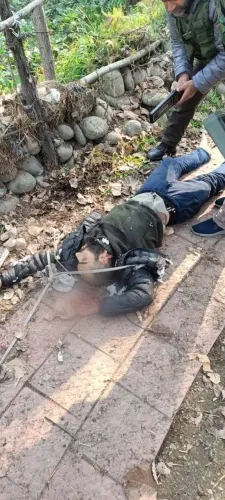
Latif Bat , a Lashkar-e-Taiba operative, has been killed in a security operation in Kashmir , according to Delhi CM Rekha Gupta .
CM Gupta claims Kashmir is now free of locally recruited terrorists following the operation.
She credited PM Narendra Modi's leadership for changing both India's counter-terrorism policy and intent.
Home Minister Amit Shah's zero-tolerance doctrine is cited as the operational framework behind dismantling militant networks.
The post draws a direct contrast between past dialogue-oriented approaches and the current strategy of striking at the roots of terrorism.
CM Gupta pledged that terrorist networks will be destroyed and Kashmir's peace will not be compromised at any cost.
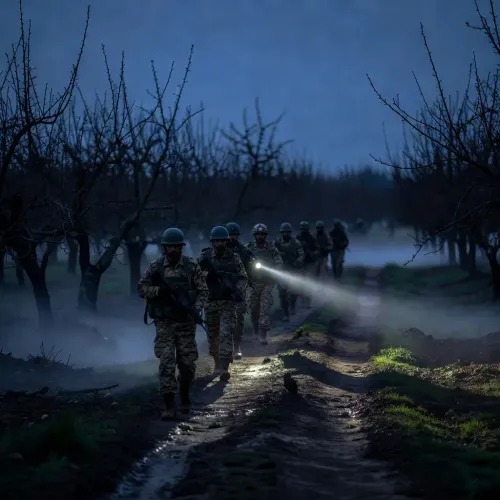
A milestone in Kashmir's long war against militancy — Delhi Chief Minister Rekha Gupta declared on Friday, 20 November 2026 that the elimination of Lashkar-e-Taiba terrorist Latif Bat has left Kashmir free of locally recruited terrorists, crediting a decisive shift in India's counter-terrorism posture under the current central leadership.
Posting in Hindi on X, CM Gupta wrote: 'लश्कर के आतंकी लतीफ बट को मार गिराने के बाद कश्मीर स्थानीय स्तर पर भर्ती किए गए आतंकवादियों से मुक्त हो गया है' — 'After the killing of Lashkar terrorist Latif Bat, Kashmir has been freed from locally recruited terrorists.' The claim frames the operation not as a tactical win but as a strategic inflection point.
From Latif Bat to a Network in Collapse
Lashkar-e-Taiba, the Pakistan-based group that has driven much of Kashmir's insurgency, has long depended on local recruitment to sustain operations on the ground. Eliminating a figure like Latif Bat — by the CM's account a cornerstone of that local network — represents exactly the kind of pressure security planners have aimed to sustain since the policy pivot of the last decade.
CM Gupta directly invoked Prime Minister Narendra Modi and Union Home Minister Amit Shah in her post. 'The firm leadership of respected Prime Minister Modi has changed both the policy and the intent of India against terrorism,' she wrote. Shah's 'zero tolerance' framework, she added, is 'breaking terrorist networks and striking their hideouts continuously.'
India's Security Doctrine: Before and After 2016
The contrast CM Gupta draws is deliberate and historically grounded. For much of the 1990s and 2000s, Indian governments periodically explored dialogue with militant-linked interlocutors as a parallel track to security operations. That calculus changed sharply after the September 2016 surgical strikes across the Line of Control following the Uri attack — the first publicly acknowledged cross-border military response — which set a new precedent for proactive retaliation.
The August 2019 abrogation of Article 370, removing Jammu and Kashmir's special constitutional status, accelerated the security push further. Since then, operations have concentrated on dismantling the support infrastructure — funding channels, overground workers, and local recruitment pipelines — that keep militant organisations functional inside the valley.
'पहले आतंकवाद के सामने समझौतों के रास्ते तलाशे जाते थे। आज आतंकवाद की जड़ों पर प्रहार किया जाता है।' — 'Earlier, paths of compromise were sought in the face of terrorism. Today, the roots of terrorism are struck.' The line is a sharp rhetorical summary of a decade-long institutional shift.
What the Claim Means for Kashmir's Residents and Forces
If local recruitment has genuinely collapsed, the operational significance is considerable. Foreign militants require sustained logistical support — shelter, food, local intelligence — that only resident sympathisers or coerced locals can provide. Cutting that pipeline does not end the threat from across the border, but it raises the cost and visibility of every infiltration attempt.
CM Gupta's post ends with an unambiguous pledge: 'Terrorists will be eliminated, their networks will be destroyed, and peace in Kashmir will not be compromised at any price.' For the security forces operating in the valley and the residents who have lived under the shadow of militancy for decades, that is both a political commitment and a measure against which results will be judged.
Point of View
If borne out by security assessments, would mark a genuine milestone in a three-decade insurgency. It also signals that the party intends to make Kashmir's security record a prominent electoral credential. The sharp historical contrast — 'compromise before, confrontation now' — is a recurring motif in BJP communication that simultaneously critiques past governments and frames the current administration as uniquely decisive.
NationPress
20 Nov 2026
Frequently Asked Questions
Who is Latif Bat and which terrorist group was he linked to?
Latif Bat was a Lashkar-e-Taiba operative active in Kashmir. Lashkar-e-Taiba is a Pakistan-based militant organisation that has been central to the insurgency in Jammu and Kashmir.
What did Delhi CM Rekha Gupta say about Kashmir terrorism?
CM Rekha Gupta stated on 20 November 2026 that following the killing of Latif Bat, Kashmir has been freed from locally recruited terrorists, and credited PM Modi and Home Minister Amit Shah's zero-tolerance policy for the shift.
What is Amit Shah's zero tolerance policy on terrorism?
Union Home Minister Amit Shah's zero-tolerance policy on terrorism refers to India's stated approach of actively dismantling militant networks, eliminating operatives, and targeting the support infrastructure of terrorist groups rather than pursuing dialogue with them.
How has India's Kashmir counter-terrorism policy changed since 2016?
Since the September 2016 surgical strikes following the Uri attack, and further after the abrogation of Article 370 in August 2019, India has shifted from dialogue-parallel approaches to direct, proactive targeting of militant networks and their local support systems inside the valley.
What is the significance of eliminating locally recruited terrorists in Kashmir?
Locally recruited militants provide critical logistical support — shelter, intelligence, and local knowledge — to foreign operatives infiltrating from across the Line of Control. Eliminating this layer significantly raises the cost and difficulty of sustaining militant operations inside Kashmir.