Kashmir free of locally recruited terrorists after Latif Bhat killing: Amit Shah
Synopsis
Home Minister Amit Shah declared at a national counter-terrorism conference that Kashmir is now free of locally recruited terrorists — a first — following the killing of LeT operative Latif Bhat. With 303 fugitives extradited since 2019 and new NIA infrastructure unveiled, the government is signalling a decisive shift in its counter-terror posture.
Key Takeaways
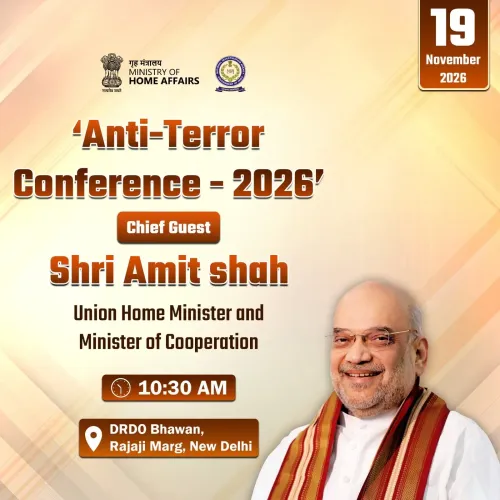
Home Minister Amit Shah declared Kashmir free of locally recruited terrorists on 19 November 2026 , following the killing of LeT terrorist Latif Bhat .
Shah reiterated the government's 'Zero Tolerance' policy against terrorism at a two-day counter-terrorism conference in New Delhi .
Since 2019 , 303 fugitives have been brought back to India from 36 countries , according to Shah.
Shah launched the NIA 'Pushti' portal , laid the foundation of the NIA Chandigarh office complex , and inaugurated the NIA residential complex at Maidangarhi, Delhi .
Seven NIA officers and personnel were conferred decorations at the event.
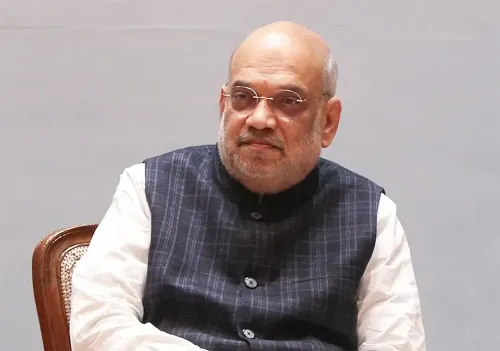
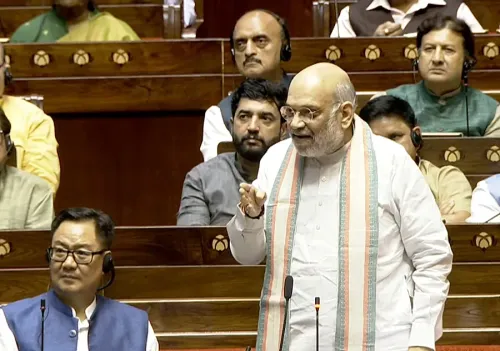
Union Home Minister Amit Shah declared on Thursday, 19 November 2026, that Kashmir is now free of locally recruited terrorists born in India, following the killing of Lashkar-e-Taiba (LeT) terrorist Latif Bhat. Shah made the announcement at the inaugural session of a two-day counter-terrorism conference in New Delhi, reiterating the government's 'Zero Tolerance' policy against terrorism.
Key Declaration at Counter-Terrorism Conference
Addressing senior security officials and agency heads, Shah said, 'Under the leadership of Prime Minister Shri Narendra Modi, we have adopted a Zero Tolerance policy towards terrorism, and this policy is yielding positive results.' He described the elimination of Latif Bhat as 'a major milestone in the fight against terrorism.'
The two-day conference brought together the leadership of India's premier security and intelligence agencies, signalling a coordinated push to consolidate counter-terrorism gains across the country.
303 Fugitives Returned, Terror Financing in Focus
Shah stressed the importance of dismantling terror financing networks and bringing fugitives hiding abroad back to justice. 'Since 2019, 303 fugitives have been brought back to India from 36 countries,' he said, according to an official statement. He called for better coordination with financial investigation agencies to cut off funding pipelines that sustain terror networks.
He also emphasised pre-emptive action, stating that the hallmark of a successful agency is its ability to apprehend terrorists before an attack is carried out — a model he urged all state police forces to study and replicate.
NIA Gets New Infrastructure and Digital Tools
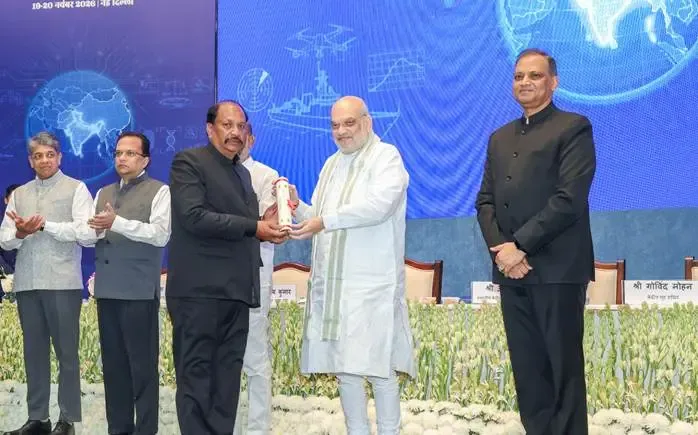
On the occasion, Shah released the National Investigation Agency (NIA)'s publication 'Fail-Safe Investigation' and laid the foundation stone of the NIA office complex in Chandigarh. He also inaugurated the NIA residential complex at Maidangarhi, Delhi, and e-launched the agency's 'Pushti' portal, designed to strengthen investigative coordination. Seven NIA officers and personnel were conferred decorations for distinguished service.
Senior Officials Present
The event was attended by Minister of State for Home Affairs Bandi Sanjay Kumar, Union Home Secretary Govind Mohan, Director Intelligence Bureau (IB) Mahesh Dikshit, Special Secretary (Internal Security) Anand Swarup, and Director General NIA Rakesh Aggarwal, along with several other senior officers, according to the official statement.
What This Means for the Security Landscape
Shah's claim that Kashmir has been cleared of locally recruited terrorists marks a significant rhetorical and operational milestone. Historically, local recruitment has been among the most dangerous dimensions of the insurgency in the Valley — locally born operatives are harder to detect, require less logistical support, and carry greater ideological resonance. This comes amid a broader government push that has seen cross-border infiltration attempts increase even as ground-level networks are reportedly degraded. Analysts have noted that sustained pressure on the financial and recruitment architecture — not just eliminations — will determine how durable this outcome proves to be.
Point of View
By itself, establish the absence of a recruitment pipeline. The broader counter-terrorism picture is more complex: infiltration pressure from across the border has not abated, and sleeper networks are notoriously difficult to verify. The government's real strength in this narrative is the extradition record — 303 fugitives from 36 countries is a concrete, verifiable metric. The NIA infrastructure investments also signal institutional depth. But framing the elimination of a single individual as a categorical milestone risks overstating the case, and the security establishment will be held to this benchmark the next time a locally recruited actor emerges.
NationPress
19 Nov 2026
Frequently Asked Questions
What did Amit Shah announce about Kashmir at the counter-terrorism conference?
Home Minister Amit Shah declared that Kashmir is now free of locally recruited terrorists born in India, following the killing of Lashkar-e-Taiba operative Latif Bhat. He called it 'a major milestone in the fight against terrorism' at the two-day counter-terrorism conference in New Delhi on 19 November 2026.
Who was Latif Bhat and why does his killing matter?
Latif Bhat was a Lashkar-e-Taiba terrorist whose killing, according to Home Minister Amit Shah, marks the elimination of the last locally recruited terrorist active in Kashmir. Local recruits are considered especially dangerous because they are harder to detect and require less external logistical support.
How many fugitives has India brought back from abroad since 2019?
According to Home Minister Amit Shah, India has brought back 303 fugitives from 36 countries since 2019. He cited this figure at the counter-terrorism conference as evidence of the government's international push to dismantle terror and organised crime networks.
What new NIA initiatives were launched at the conference?
Shah launched the NIA's 'Pushti' portal for investigative coordination, laid the foundation stone of the NIA office complex in Chandigarh, and inaugurated the NIA residential complex at Maidangarhi in Delhi. He also released the NIA publication 'Fail-Safe Investigation' and conferred decorations on seven NIA officers and personnel.
What is the government's 'Zero Tolerance' policy on terrorism?
The 'Zero Tolerance' policy, as described by Amit Shah, involves pre-emptive detention of terrorists before attacks occur, dismantling terror financing networks, coordinating across agencies, and extraditing fugitives from abroad. Shah credited the policy, pursued under Prime Minister Narendra Modi, with the security gains seen in Kashmir.