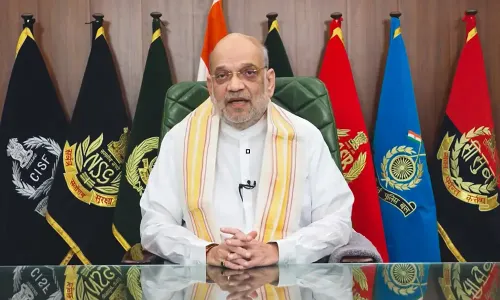
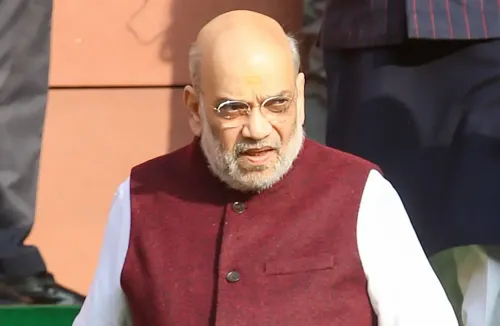
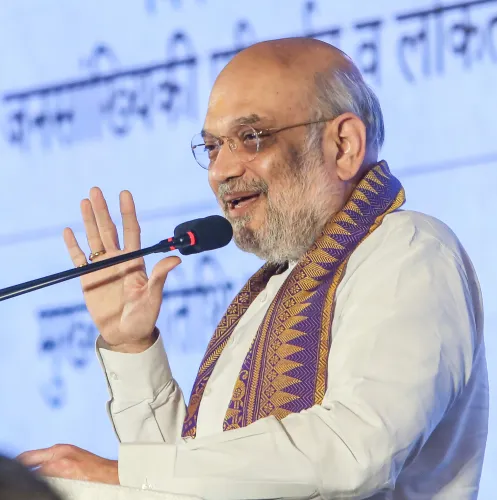
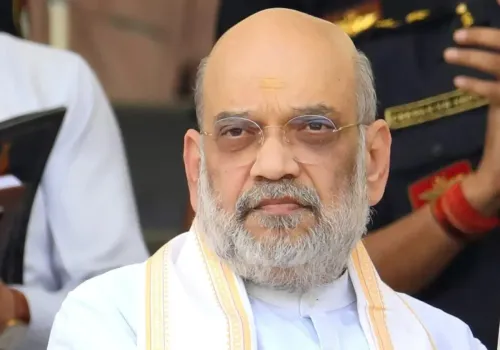
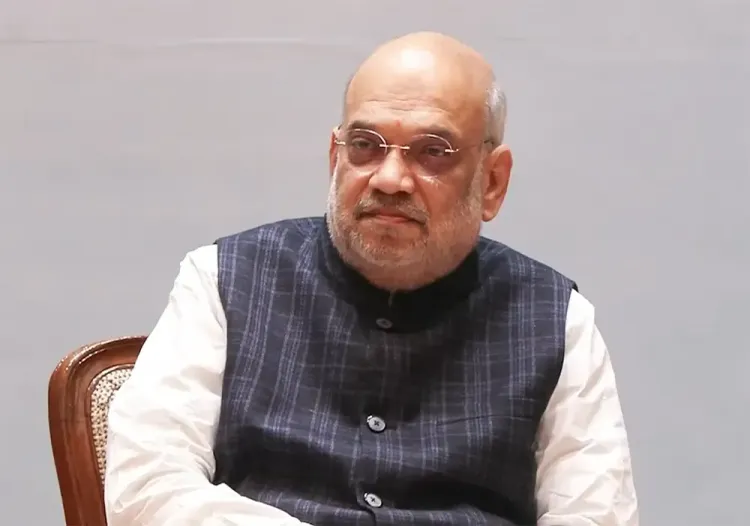
Amit Shah chairs two-day Anti-Terror Conference in Delhi, focus on cross-border threats
Synopsis
Home Minister Amit Shah is chairing a two-day NIA-organised Anti-Terror Conference in New Delhi with a sharp focus on cross-border terrorism, digital evidence integration, and a 'Whole of Government' security approach. The conclave marks a deliberate pivot toward closing the gap between investigation quality and prosecution outcomes — bringing state police, Central agencies, and technical experts under one roof to forge a unified national counter-terror doctrine.
Key Takeaways
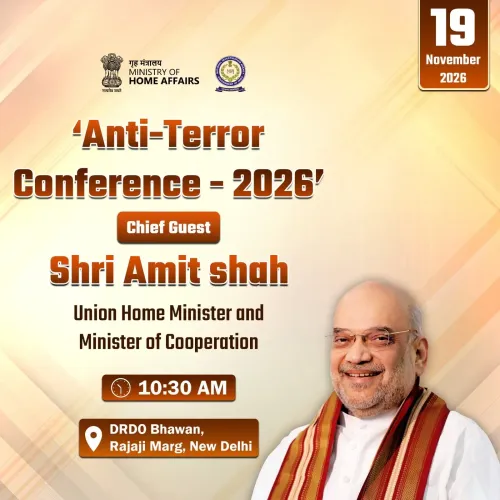
Union Home Minister Amit Shah inaugurated the two-day Anti-Terror Conference in New Delhi on 20 November 2026 .
The conference is organised by the National Investigation Agency (NIA) under the Ministry of Home Affairs and focuses on 'Cross-Border Terrorism' .
Key agenda items include digital forensics, evidence from foreign jurisdictions, terror financing disruption, and countering radicalisation and hybrid threats.
A dedicated capacity-building training programme will train state police on new criminal laws, digital evidence, and witness protection frameworks.
Senior officers from states, Union Territories, and Central counter-terror agencies are participating to share field experiences and best practices.
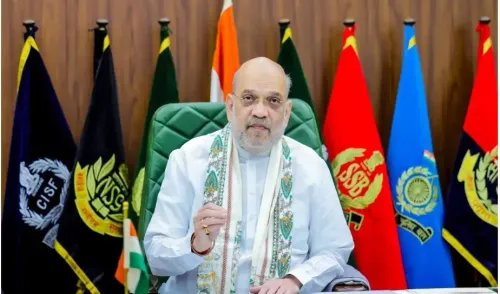
Union Home Minister Amit Shah on Thursday, 20 November 2026, inaugurated a high-level two-day Anti-Terror Conference in New Delhi, convening top police brass, Central counter-terror agencies, and domain experts from across India to sharpen the country's collective security response. The conference, organised under the banner of 'Cross-Border Terrorism', advances Prime Minister Narendra Modi's stated policy of 'Zero Tolerance' against terror.
What the Conference Covers
Organised annually by the National Investigation Agency (NIA) under the Ministry of Home Affairs, the conclave has emerged as a premier operational forum where investigators, forensic experts, legal professionals, and technologists jointly examine the country's most pressing security threats. This year's edition places particular emphasis on a 'Whole of Government' approach — seeking to build both formal and informal coordination channels among all stakeholders engaged in counter-terror work.
Sessions will tackle complex challenges including evidence collection from foreign jurisdictions, the application of digital forensics and data analytics in counter-terror investigations, and strategies to disrupt terror financing networks. Discussions will also cover countering radicalisation, espionage, and hybrid threats, alongside building institutional capacities for emerging security challenges.
Capacity-Building at the Centre of the Agenda
A notable feature of this year's conference is a dedicated capacity-building training programme for state police personnel and practising professionals. The training is designed to equip participants to apply India's new criminal laws in terror investigations, manage trials effectively, and integrate digital evidence into prosecution strategies.
The programme will additionally cover special investigative provisions, witness protection frameworks, methods to counter common defence challenges in court, and recent government initiatives aimed at improving prosecution outcomes. This signals a deliberate push to close the gap between investigation quality and conviction rates — a persistent concern in India's counter-terror legal infrastructure.
Who Is in the Room
Senior police officers from states and Union Territories are joining officials from Central counter-terror departments and technical experts at the two-day conclave. The gathering enables law enforcement agencies to share field experiences, highlight best practices, and draw actionable lessons from past terror investigations — creating a living repository of operational knowledge that individual agencies often lack in isolation.
Broader Context and Significance
The conference comes at a time of sustained pressure on India's internal security architecture, with cross-border terror networks continuing to exploit digital infrastructure, hawala channels, and radicalisation pipelines. This is not a new initiative — the NIA has held similar conclaves in earlier years — but the emphasis on new criminal laws and digital evidence integration marks a fresh operational direction. Notably, the Centre's push for a 'Whole of Government' response also signals an intent to reduce the silos that have historically complicated coordination between state police and Central agencies.
The outcomes of the two-day deliberations are expected to feed into future counter-terror policy, with the NIA set to compile actionable recommendations from the sessions.
Point of View
But this year's emphasis on new criminal laws and digital evidence integration signals something more substantive. India's conviction rates in terror cases have historically lagged its investigation capabilities — and the capacity-building component suggests the Centre is finally treating that gap as a structural problem rather than a one-off failure. The 'Whole of Government' framing is also worth watching: it is easy to announce and hard to execute when state police forces jealously guard jurisdiction. Whether the two days of deliberations translate into durable coordination mechanisms or simply produce a report will determine the conference's real legacy.
NationPress
19 Nov 2026
Frequently Asked Questions
What is the Anti-Terror Conference being held in New Delhi?
The Anti-Terror Conference is an annual two-day conclave organised by the National Investigation Agency (NIA) under the Ministry of Home Affairs, bringing together top police officers, Central counter-terror agencies, forensic experts, and technologists to address national security challenges. This year's edition, inaugurated by Home Minister Amit Shah on 20 November 2026, focuses on cross-border terrorism and a 'Whole of Government' counter-terror approach.
Who is chairing the Anti-Terror Conference in Delhi?
Union Home Minister Amit Shah is chairing the high-level two-day conference, which is being held in New Delhi. The event advances Prime Minister Narendra Modi's stated policy of 'Zero Tolerance' against terrorism.
What are the key topics being discussed at the 2026 Anti-Terror Conference?
Key topics include cross-border terrorism, evidence collection from foreign jurisdictions, digital forensics and data analytics, disruption of terror financing networks, countering radicalisation and espionage, and hybrid threats. A dedicated capacity-building training programme on new criminal laws and digital evidence is also a major focus.
Who is attending the Anti-Terror Conference?
The conference brings together senior police officers from states and Union Territories, officials from Central counter-terror departments, and technical and legal experts from across the country. It is designed to facilitate sharing of field experiences and best practices across agencies.
What is the significance of the 'Whole of Government' approach highlighted at the conference?
The 'Whole of Government' approach aims to build both formal and informal coordination channels among all stakeholders in India's counter-terror ecosystem, reducing operational silos between state police and Central agencies. It reflects the Centre's intent to move from fragmented agency responses toward a unified national counter-terror strategy.