Amit Shah to inaugurate NIA's two-day anti-terror conference on cross-border terrorism
Synopsis
India's top counter-terror brass converges in New Delhi as Home Minister Amit Shah inaugurates the NIA's annual two-day Anti-Terror Conference, this time squarely focused on cross-border terrorism. Beyond the symbolism, the agenda tackles hard operational questions — foreign evidence collection, terror financing, hybrid threats, and training state police on new criminal laws — making this less a talking shop and more a template for the next phase of India's security doctrine.
Key Takeaways
Union Home Minister Amit Shah will inaugurate the NIA Anti-Terror Conference in New Delhi on Thursday, 20 November 2026 .
The two-day conclave is themed around 'Cross-Border Terrorism' and hosted annually by the National Investigation Agency (NIA) .
Sessions will address terror financing , digital forensics , radicalisation, espionage, and hybrid threats .
A dedicated capacity-building training programme will equip state police to apply new criminal laws in terror investigations and trials.
The conference advances Prime Minister Narendra Modi's declared policy of 'Zero Tolerance' against terrorism.
Outputs are expected to shape future counter-terror policy at the national level.
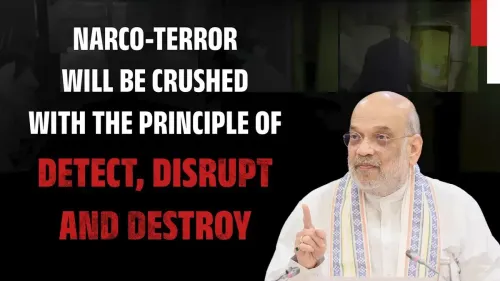
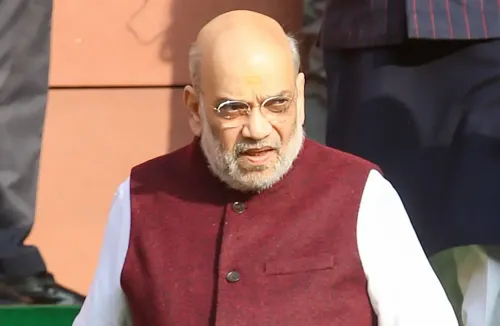
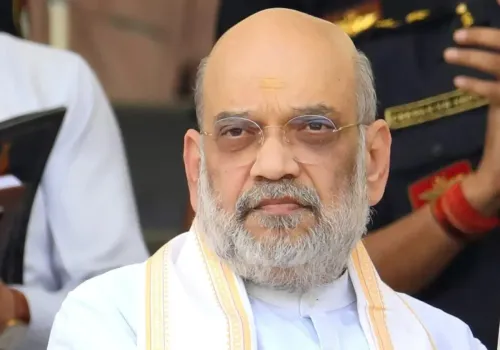
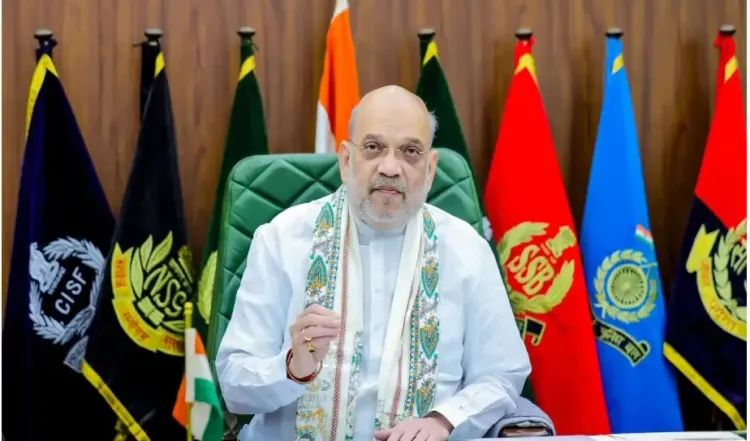
Union Home Minister Amit Shah will on Thursday, 20 November 2026, inaugurate a high-level two-day Anti-Terror Conference in New Delhi, organised by the National Investigation Agency (NIA) under the Ministry of Home Affairs. The conclave, themed around 'Cross-Border Terrorism', brings together top police brass, Central counter-terror agencies, and domain specialists to sharpen India's collective security architecture — advancing Prime Minister Narendra Modi's stated policy of 'Zero Tolerance' against terrorism.
Who Is Attending and Why It Matters
Senior police officers from states and Union Territories, officials from Central counter-terror departments, and technical experts in law, forensics, and data analytics are all expected at the conclave. Held annually by the NIA, the gathering has evolved into a premier operational forum — moving well beyond ceremonial resolve to actionable security planning. This year's edition places particular emphasis on a 'Whole of Government' approach, designed to build both formal and informal coordination channels among stakeholders fighting terror networks.
Notably, the conference comes at a time of sustained pressure on India's internal security environment, with cross-border terror financing and radicalisation remaining live concerns for law enforcement agencies.
Key Agenda: Evidence, Financing, and Digital Forensics
Investigators and security strategists will grapple with some of the most complex operational challenges in modern counter-terror work. Discussions will cover obtaining evidence from foreign jurisdictions — a persistent legal and diplomatic hurdle — as well as leveraging digital forensics and data analytics in active terror probes.
A dedicated segment will address disrupting terror financing networks, with practitioners sharing tools, techniques, and case experiences. Sessions on countering radicalisation, espionage, and emerging hybrid threats will also feature prominently, alongside an examination of institutional capacity gaps that must be bridged to meet future security challenges.
Capacity-Building Programme for State Police
A major highlight of this year's agenda is a targeted capacity-building training programme for state police personnel and practising professionals. The training is designed to equip participants with the skills to apply India's new criminal laws in terror investigations, manage trials effectively, and integrate digital evidence into prosecution strategies.
The curriculum will further cover special investigative provisions, witness protection frameworks, methods to counter common defence challenges in court, and recent government initiatives aimed at improving prosecution outcomes. This practical focus signals a shift from policy-level deliberation to ground-level execution.
Broader Policy Context
The NIA conference is part of a wider pattern of institutional reinforcement under the current government. India has in recent years expanded the NIA's jurisdictional remit, introduced sweeping amendments to the Unlawful Activities (Prevention) Act (UAPA), and digitalised aspects of criminal procedure — changes that investigators are still being trained to operationalise. The annual conference serves as a critical bridge between policy reform and field implementation.
With deliberations set to produce substantive inputs for future counter-terror policy, all eyes will be on the specific recommendations that emerge from the two-day conclave.
Point of View
But the real measure of its success will lie in what happens after the delegates leave. India's counter-terror architecture has seen considerable legislative muscle — UAPA amendments, NIA jurisdictional expansion, new criminal codes — yet implementation gaps between Delhi's policy corridors and state police stations remain wide. The focus on training state personnel to use digital evidence in prosecution is an implicit acknowledgement that courtroom outcomes, not just field operations, determine whether terror cases stick. If this year's conclave produces binding inter-agency protocols rather than advisory recommendations, it will have moved the needle; if it produces only a communiqué, the cycle repeats.
NationPress
18 Nov 2026
Frequently Asked Questions
What is the NIA Anti-Terror Conference 2026?
It is an annual two-day conclave organised by the National Investigation Agency (NIA) under the Ministry of Home Affairs, bringing together top police officers, counter-terror officials, and domain experts to coordinate India's security response. The 2026 edition is themed around 'Cross-Border Terrorism' and opens in New Delhi on Thursday, 20 November.
Why is Amit Shah inaugurating the conference?
As Union Home Minister, Amit Shah heads the Ministry of Home Affairs, which oversees the NIA. His inauguration signals the government's high-level political commitment to Modi's 'Zero Tolerance' policy on terrorism and frames the event as a priority security initiative.
What topics will the two-day conference cover?
Key agenda items include obtaining evidence from foreign jurisdictions, digital forensics and data analytics in counter-terror probes, disrupting terror financing networks, countering radicalisation and hybrid threats, and a capacity-building programme to train state police on applying new criminal laws in terror investigations.
Who is participating in the NIA conference?
Participants include senior police officers from states and Union Territories, officials from Central counter-terror departments, and technical experts in law, forensics, and technology. The broad participation reflects the conference's 'Whole of Government' approach.
What outcomes are expected from the conference?
The deliberations are expected to produce substantive policy inputs for India's counter-terror framework, with an emphasis on actionable inter-agency coordination. The capacity-building programme also aims to directly improve how state police handle terror investigations and prosecutions under newly enacted criminal laws.