NIA raids Bijbehara, Dooru in Anantnag amid J&K terror probe

Synopsis
NIA teams backed by J&K Police and CRPF swept two houses in Anantnag's Bijbehara and Dooru on Saturday as part of a live terror case probe — the latest move in a wide-ranging federal offensive against militant networks, funding pipelines, and hybrid operatives across the Kashmir Valley.
Key Takeaways
The NIA raided two premises at Bijbehara and Dooru in Anantnag district on 22 August in connection with a terror case.
The operation was conducted jointly with J&K Police and the CRPF .
NIA probes in J&K cover terror funding, OGW networks, drone-smuggled weapons, and digital radicalisation.
Banned outfits under scrutiny include TRF , LeT , HM , JeM , and Al-Badr .
Yasin Malik was sentenced to life imprisonment in 2022 ; Aasiya Andrabi also received a life term in a separate NIA case.
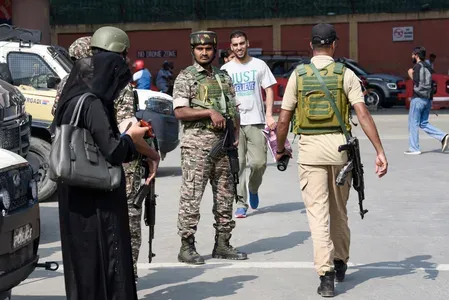
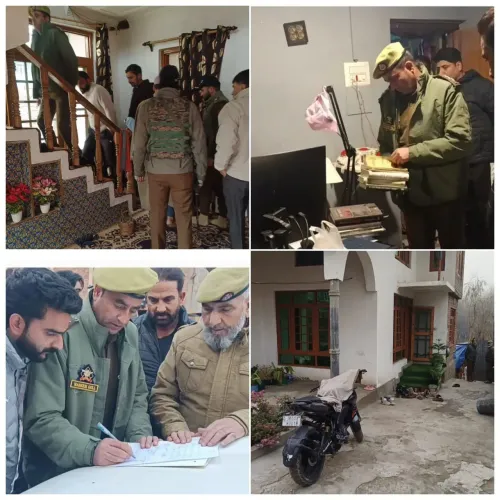
The National Investigation Agency (NIA), accompanied by Jammu and Kashmir Police and the Central Reserve Police Force (CRPF), on Saturday, 22 August conducted raids at two locations — Bijbehara and Dooru — in Anantnag district of Jammu and Kashmir, as part of an ongoing terror case investigation. The coordinated search operation is the latest in a sustained federal crackdown on militant networks operating in the region.
Details of the Raids
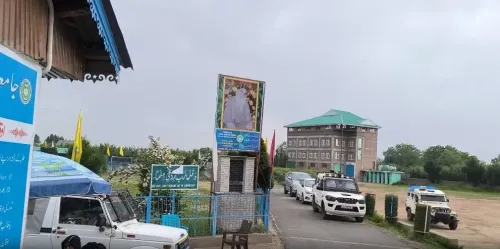
NIA sleuths descended on two residential premises in Anantnag, a district that has remained a focal point of counter-terror operations in the Kashmir Valley. The joint operation with J&K Police and CRPF signals a multi-agency approach to gathering evidence in what officials describe as an active terror investigation. Specific details about arrests or seizures had not been officially disclosed at the time of reporting.
NIA's Broader Counter-Terror Mandate in J&K
The NIA has been running several parallel investigations in Jammu and Kashmir targeting a range of militant activities. These include probes into terror funding and the alleged misuse of charitable organisations — notably the banned Jamaat-e-Islami (JeI), accused of routing funds domestically and internationally under the cover of charity to sustain secessionist activity.
The agency is also tracking Overground Workers (OGWs) and hybrid operatives linked to proscribed outfits including The Resistance Front (TRF), Lashkar-e-Taiba (LeT), Hizb-ul-Mujahideen (HM), Jaish-e-Mohammed (JeM), and Al-Badr. Separately, investigations are underway into cross-border smuggling of sticky bombs, IEDs, arms, ammunition, and narcotics — many reportedly delivered via drones into border districts such as Poonch.
Terror Funding and Radicalisation Under the Scanner
A cornerstone of the NIA's J&K mandate has been dismantling financial pipelines that fuel unrest. The agency has filed extensive chargesheets against prominent Hurriyat leaders, including Yasin Malik — sentenced to life imprisonment in 2022 — and has named Hafiz Saeed in related proceedings. Investigators have uncovered complex Hawala networks, cross-border trade manipulations, and funding channels allegedly used to sustain street violence.
The NIA is also pursuing cases involving digital radicalisation, with handlers reportedly using social media platforms to recruit local youth into newly-formed militant outfits.
Landmark Convictions Underpinning the Probe
The agency's investigation into Dukhtaran-e-Millat, an all-women secessionist organisation, resulted in a landmark ruling by an NIA Special Court. Founder Aasiya Andrabi was sentenced to life imprisonment, while her senior associates received 30-year prison terms for conducting what the court described as a physical and digital campaign against India. These convictions have set a legal precedent for prosecuting hybrid and non-kinetic forms of militancy in the region.
What Comes Next
The Anantnag raids are expected to yield documentary and digital evidence that could widen the scope of the current investigation. With the NIA maintaining an active operational tempo across the Valley, further searches and possible arrests in connected cases remain likely in the weeks ahead.
Point of View
Not isolated searches. The NIA's simultaneous pursuit of funding networks, hybrid operatives, and digital recruiters reflects an understanding that modern militancy in Kashmir operates across multiple layers — financial, physical, and ideological. What remains less visible is the conviction rate and the pace at which chargesheets translate into verdicts, given how long landmark cases like the Yasin Malik prosecution took. Speed of prosecution, not just frequency of raids, will ultimately determine whether the NIA's operational tempo translates into durable deterrence.
NationPress
6 Oct 2026
Frequently Asked Questions
Why did the NIA raid Bijbehara and Dooru in Anantnag?
The NIA conducted the raids on 22 August as part of an ongoing investigation into a terror case in Jammu and Kashmir. The searches in Bijbehara and Dooru were aimed at gathering evidence linked to militant networks operating in the region.
Which agencies were involved in the Anantnag raids?
The operation was a joint effort involving the National Investigation Agency (NIA), Jammu and Kashmir Police, and the Central Reserve Police Force (CRPF). Such multi-agency raids are standard procedure for high-sensitivity terror investigations in the Valley.
What kinds of cases is the NIA currently investigating in Jammu and Kashmir?
The NIA is probing terror funding via Hawala networks and charity misuse, overground worker and hybrid operative networks linked to groups such as TRF, LeT, HM, JeM, and Al-Badr, drone-based smuggling of weapons and narcotics, and social-media-driven radicalisation of local youth.
Who are some prominent figures convicted in NIA cases related to J&K militancy?
Yasin Malik, a prominent Hurriyat leader, was sentenced to life imprisonment in 2022 following an NIA chargesheet on terror funding. Aasiya Andrabi, founder of Dukhtaran-e-Millat, also received a life sentence from an NIA Special Court, with her top aides getting 30-year terms.
What is the significance of the NIA's focus on Anantnag district?
Anantnag has been a persistent hotspot for militant activity in the Kashmir Valley and falls within the NIA's operational priority zones. Raids there are part of a broader effort to dismantle the logistical and financial infrastructure that sustains Pakistan-backed outfits and their local proxies.