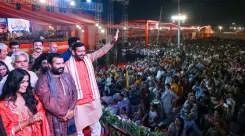
CM Rekha Gupta Backs Renaming Dwarka Metro Station to Dwarka Kakrola
Synopsis
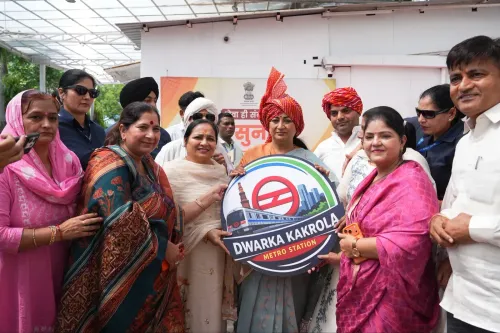
Delhi Chief Minister Rekha Gupta has backed the renaming of Dwarka Metro Station to 'Dwarka Kakrola', expressing gratitude to Kakrola villagers and calling the move a symbol of respect for local identity and heritage under the #ViksitDelhi agenda.
Key Takeaways
Delhi CM Rekha Gupta publicly endorsed the renaming of Dwarka Metro Station to 'Dwarka Kakrola' on June 1, 2026 .
The decision is framed as recognition of the heritage and identity of Kakrola village , a historic settlement absorbed into the Dwarka subcity.
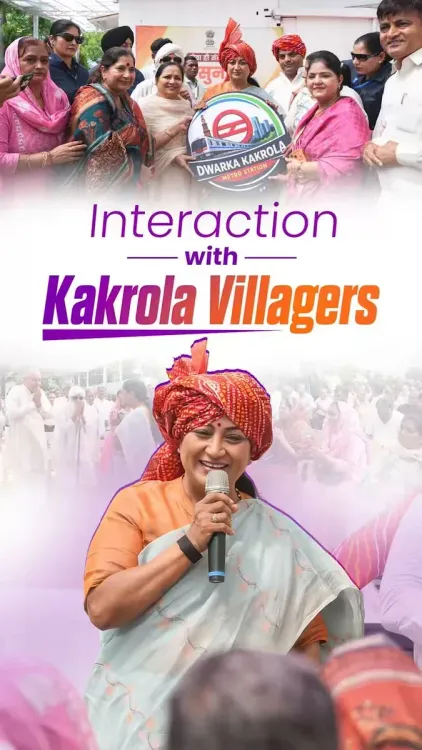
Gupta expressed 'heartfelt gratitude' to Kakrola residents for their reception, suggesting a public interaction at the locality.
The renaming falls under the #ViksitDelhi (Developed Delhi) governance agenda championed by the Chief Minister.
Implementation will require Delhi Metro Rail Corporation (DMRC) to update signage, maps, ticketing systems, and station announcements.
The move follows a broader Indian precedent of renaming civic infrastructure to preserve the identity of villages subsumed by urban expansion.
Delhi Chief Minister Rekha Gupta on Monday, June 1, 2026, expressed gratitude to residents of Kakrola village and endorsed the decision to rename the Dwarka Metro Station to 'Dwarka Kakrola', calling it a gesture of respect for local identity, heritage, and public sentiment.
Context
Posting on X in Hindi, Gupta wrote: 'Kakrola gramvaasiyon ke is snehpurn abhinandan ke liye hriday se aabhaar' — 'Heartfelt gratitude for this affectionate welcome from the residents of Kakrola village.' She described the renaming as a symbol of honouring 'local identity, heritage, and public sentiment,' using the hashtag #ViksitDelhi (Developed Delhi).
The post was accompanied by a video, suggesting the Chief Minister may have attended or addressed a public gathering in the Kakrola locality. The renaming proposal centres on the Dwarka Metro Station, part of the Delhi Metro network operated by the Delhi Metro Rail Corporation (DMRC) in the southwest Delhi subcity of Dwarka.
Policy Backdrop
Dwarka was developed as a planned subcity from the 1980s onward, absorbing several pre-existing rural settlements including Kakrola village. As urban expansion integrated these historic villages into modern civic infrastructure, questions of local identity and representation have persisted among original residents.
Indian state governments have a long precedent of renaming public infrastructure — metro stations, roads, and flyovers — to reflect local village names or heritage markers. Such decisions are typically seen as a way to preserve the cultural memory of communities that were subsumed by rapid urbanisation. Appending the village name 'Kakrola' to the existing station name 'Dwarka' follows this pattern, retaining geographic continuity while acknowledging the village's historical presence.
Stakeholders and Impact
The primary beneficiaries of this decision are Kakrola villagers, whose community name would now appear on official metro signage, maps, and station announcements. For long-standing village residents, the renaming carries symbolic weight — a formal civic acknowledgement of their identity within a rapidly modernised urban landscape.
Dwarka commuters and the broader southwest Delhi population are also stakeholders, as the name change will require updates across DMRC digital and physical infrastructure, including route maps, ticketing systems, and audio announcements. CM Gupta's public endorsement signals that the decision carries political backing at the highest level of the Delhi government.
What's Next
The physical implementation of the renaming will involve updated signage at the station, revised route maps, and changes to automated announcements — all coordinated by the Delhi Metro Rail Corporation. The timeline for these operational changes has not been publicly specified.
Gupta's endorsement, framed under the #ViksitDelhi banner, may also signal further such renamings across the Delhi Metro network where historic village localities have been absorbed into urban infrastructure. How swiftly the DMRC moves on formal notification will be closely watched by residents and urban governance observers alike.
Point of View
But high-yield politically among village communities that feel erased by rapid urbanisation. For CM Rekha Gupta, publicly championing this under the #ViksitDelhi banner allows the BJP-led Delhi government to demonstrate cultural sensitivity alongside its development agenda. The move fits a wider national pattern where ruling parties use infrastructure renaming to consolidate local support without significant fiscal outlay. Whether it translates into a broader DMRC renaming policy for other absorbed villages will be the real test of its governance substance.
NationPress
21 Oct 2026
Frequently Asked Questions
Why is Dwarka Metro Station being renamed to Dwarka Kakrola?
The station is being renamed to acknowledge the identity and heritage of Kakrola village, a historic settlement that was absorbed into the planned Dwarka subcity during Delhi's urban expansion. Delhi CM Rekha Gupta described the decision as a symbol of respect for local identity and public sentiment.
Who approved the renaming of Dwarka Metro Station?
Delhi Chief Minister Rekha Gupta has publicly endorsed the decision, signalling support at the highest level of the Delhi government. The operational implementation would be carried out by the Delhi Metro Rail Corporation (DMRC).
What is Kakrola and where is it located?
Kakrola is a village locality in southwest Delhi that was incorporated into the Dwarka subcity as part of planned urban development beginning in the 1980s. Its residents have long sought recognition of their village identity within the modern civic framework.
What changes will the renaming involve for commuters?
Commuters can expect updated station signage, revised route maps, changes to ticketing systems, and new automated audio announcements reflecting the name 'Dwarka Kakrola'. The DMRC will coordinate these changes, though no timeline has been officially announced.
What is the #ViksitDelhi hashtag that CM Rekha Gupta used?
#ViksitDelhi translates to 'Developed Delhi' and is a governance branding hashtag used by Delhi CM Rekha Gupta to communicate development and civic improvement initiatives undertaken by her administration.