CM Rekha Gupta Renames Metro Stations, Hospital, Chowk in Delhi
Synopsis
Delhi Chief Minister Rekha Gupta announced on May 27, 2026, the renaming of two metro stations, a hospital, a public square, and a sports complex across the capital, honouring figures including Dr. B.R. Ambedkar, Baba Ramdev, and former PM Atal Bihari Vajpayee under the #ViksitDelhi banner.
Key Takeaways
Jwala Puri Hospital will be renamed Baba Ramdevji Maharaj Hospital .
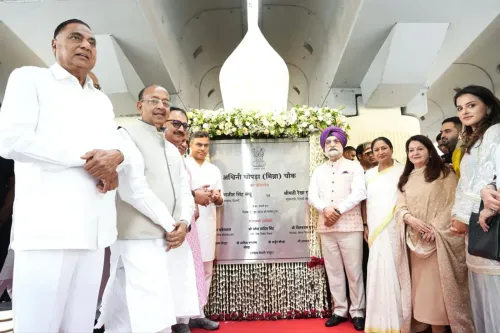
Britannia Chowk will become Ashwini Chopra (Minna) Chowk .
Rohini West Metro Station will be renamed Dr.
Baba Saheb Ambedkar Hospital Metro Station .
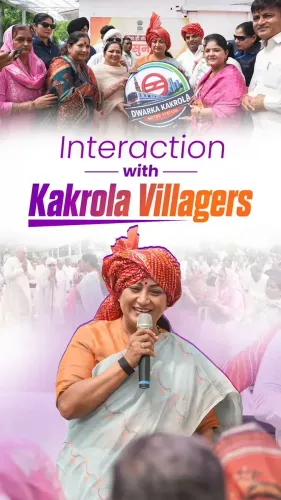
Dwarka Metro Station will become Dwarka-Kakrola Metro Station , and Rohini East Metro Station will be renamed Rohini Metro Station .
The Begumpur, Rohini Sector-33 Sports Complex will be renamed Atal Khel Parisar with a statue of Atal Bihari Vajpayee to be installed.
The renamings are part of the BJP Delhi government's #ViksitDelhi agenda and require formal gazette notifications and DMRC implementation orders.
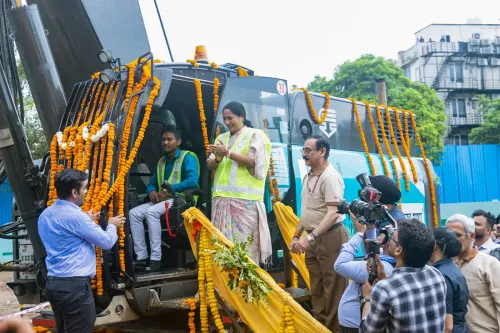
Delhi Chief Minister Rekha Gupta announced on Wednesday, May 27, 2026, a sweeping renaming of metro stations, a hospital, a public square, and a sports complex across the capital, signalling the BJP-led Delhi government's intent to reshape the city's civic identity around national icons and local figures.
Context
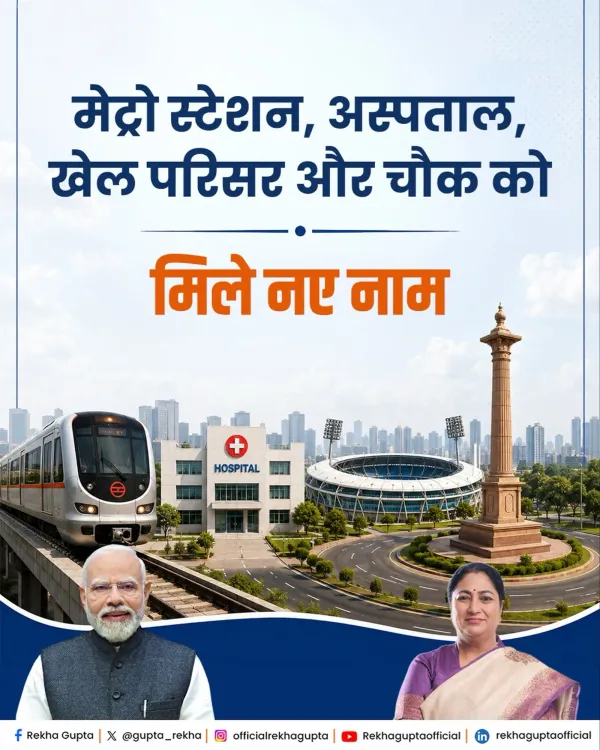
Posting on X, CM Gupta listed five specific renamings under the hashtag #ViksitDelhi ('Developed Delhi'). The changes cover a range of public infrastructure: Jwala Puri Hospital will now be called Baba Ramdevji Maharaj Hospital; Britannia Chowk will be renamed Ashwini Chopra (Minna) Chowk; Rohini West Metro Station will become Dr. Baba Saheb Ambedkar Hospital Metro Station; Rohini East Metro Station will be renamed simply Rohini Metro Station; and Dwarka Metro Station will be rechristened Dwarka-Kakrola Metro Station.
Additionally, the Begumpur, Rohini Sector-33 Sports Complex is to be renamed Atal Khel Parisar (Atal Sports Complex) in honour of former Prime Minister Atal Bihari Vajpayee, with a statue of the late leader to be installed at the premises in his memory.
Policy Backdrop
The announcements fit a well-established pattern in BJP-governed states since 2014, whereby airports, railway stations, roads, and public institutions have been renamed to honour figures aligned with the party's ideological and cultural priorities, or to shed colonial-era nomenclature. Similar drives have unfolded in Uttar Pradesh, Madhya Pradesh, and other BJP-ruled states under the broader Viksit Bharat ('Developed India') umbrella.
The choice of figures is deliberate. Dr. B.R. Ambedkar, the chief architect of the Indian Constitution and a towering Dalit icon, has had numerous public facilities named after him across India in recent decades. Baba Ramdev, the yoga guru and Patanjali founder with long-standing ties to the BJP-RSS ecosystem, is associated with public health and wellness advocacy. Atal Bihari Vajpayee, Prime Minister from 1998 to 2004, is remembered for a landmark infrastructure push and is widely revered within the BJP.
Stakeholders and Impact
The renamings most immediately affect Delhi Metro commuters, who will need to update their mental maps of the Rohini and Dwarka corridors — two of the capital's densest residential zones. The Delhi Metro Rail Corporation (DMRC) will be required to update signage, maps, and digital information systems across the affected stations.
Residents of Rohini and Dwarka in north and south-west Delhi respectively, as well as patients and staff at Jwala Puri Hospital, will see the changes in day-to-day civic life. The renaming of Britannia Chowk to honour Ashwini Chopra (Minna) — a local figure — suggests the government is also using the exercise to recognise community-level contributions alongside national icons.
What's Next
The announcements, made via social media, will need to be formalised through official gazette notifications and implementation orders from the relevant municipal bodies and the DMRC. The installation of Atal Bihari Vajpayee's statue at the Rohini Sector-33 sports complex will require a separate administrative and budgetary process. Political and community responses to the specific name choices — particularly the honouring of Baba Ramdev and the renaming of a metro station after Dr. Ambedkar — are likely to follow as the decisions move through official channels.
The scale and symbolism of the exercise suggest that the Rekha Gupta government intends renaming to be a recurring feature of its urban governance agenda, embedding its preferred roster of historical and contemporary figures into the everyday geography of Delhi.
Point of View
A hospital, and a sports complex is a textbook application of the BJP's symbolic urbanism playbook — converting administrative decisions into cultural statements. By invoking Ambedkar alongside Baba Ramdev and Vajpayee, the government signals a deliberate outreach across Dalit, Hindu wellness, and nationalist constituencies simultaneously. The exercise mirrors similar renaming waves in BJP-ruled states and is designed to make ideological imprints durable and visible in daily commuter life. Whether the renamings translate into on-ground administrative action swiftly will be the real test of the government's follow-through.
NationPress
20 Sept 2026
Frequently Asked Questions
Which Delhi metro stations are being renamed by CM Rekha Gupta?
Rohini West Metro Station will be renamed Dr. Baba Saheb Ambedkar Hospital Metro Station, Rohini East Metro Station will become Rohini Metro Station, and Dwarka Metro Station will be renamed Dwarka-Kakrola Metro Station, as announced by CM Rekha Gupta on May 27, 2026.
Why is Jwala Puri Hospital being renamed?
Jwala Puri Hospital in Delhi is being renamed Baba Ramdevji Maharaj Hospital as part of the BJP Delhi government's drive to honour prominent public figures, with yoga guru and Patanjali founder Baba Ramdev chosen for his association with health and wellness advocacy.
What is Atal Khel Parisar in Rohini?
Atal Khel Parisar is the new name for the Begumpur, Rohini Sector-33 Sports Complex, renamed in honour of former Prime Minister Atal Bihari Vajpayee. A statue of Vajpayee is also to be installed at the complex in his memory.
Who is Ashwini Chopra (Minna) after whom the Delhi chowk is being named?
Britannia Chowk in Delhi is being renamed Ashwini Chopra (Minna) Chowk. The renaming appears to honour a local figure, though detailed public background on Ashwini Chopra (Minna) was not elaborated upon in the official announcement.
What is the #ViksitDelhi campaign?
#ViksitDelhi, meaning 'Developed Delhi', is the hashtag and broader governance theme used by the Rekha Gupta-led BJP government in Delhi to frame its urban development and civic identity initiatives, including the renaming of public infrastructure after national and local icons.