CM Rekha Gupta joins ex-President Kovind at Koli Samaj convention
Synopsis
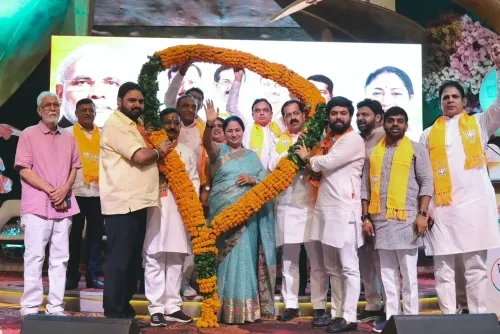
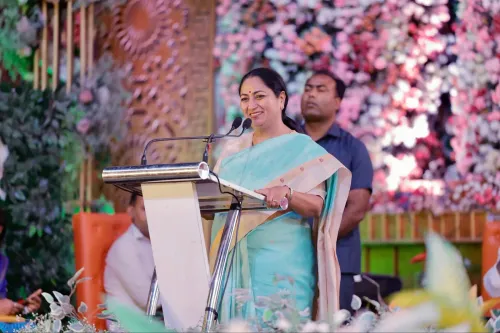
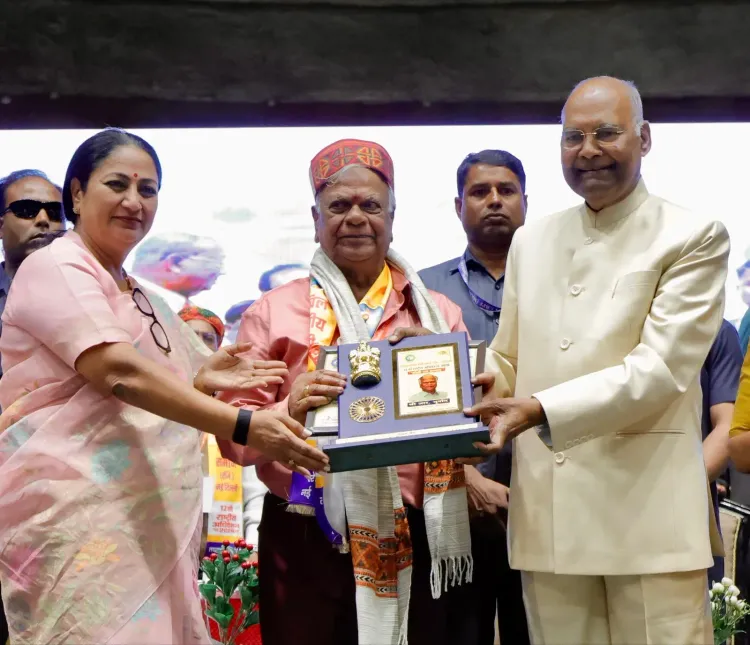
Delhi Chief Minister Rekha Gupta joined former President Ram Nath Kovind at the 12th National Convention of Akhil Bharatiya Koli Samaj at Talkatora Stadium on 21 June 2026, reaffirming the Delhi government's commitment to inclusive development rooted in Antyodaya philosophy and PM Modi's welfare priorities.
Key Takeaways
Delhi CM Rekha Gupta attended the 12th National Convention of Akhil Bharatiya Koli Samaj at Talkatora Stadium, New Delhi on 21 June 2026 .
Former President Ram Nath Kovind was also present at the event.
CM Gupta praised the Koli community's tradition of hard work, self-respect, and national service.
She invoked Pandit Deendayal Upadhyay 's Antyodaya philosophy and PM Narendra Modi 's 'priority for the deprived' principle as guiding frameworks for Delhi's governance.
The Delhi government reaffirmed its commitment to all-round development, social harmony, and dignified living for every section of society.
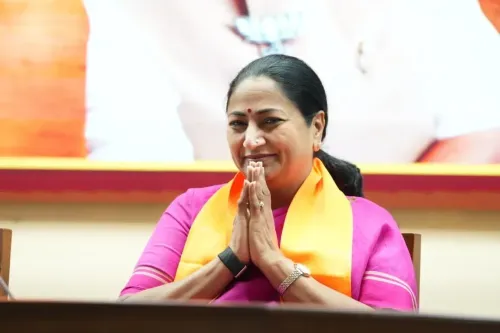
Delhi Chief Minister Rekha Gupta attended the 12th National Convention of Akhil Bharatiya Koli Samaj at Talkatora Stadium, New Delhi, on Sunday, 21 June 2026, alongside former President Ram Nath Kovind. The Chief Minister used the occasion to reaffirm the Delhi government's commitment to inclusive development, drawing on the Antyodaya philosophy of Pandit Deendayal Upadhyay and Prime Minister Narendra Modi's welfare framework.
Context
Posting on X after the event, CM Gupta wrote — translated from Hindi — that she was 'privileged to participate alongside the respected former President Shri Ram Nath Kovind in the 12th National Convention of Akhil Bharatiya Koli Samaj at Talkatora Stadium today.' She extended 'heartfelt congratulations to Akhil Bharatiya Koli Samaj for this grand event,' adding that the community has made 'an important contribution to the nation's development through its glorious tradition of hard work, self-respect, and national service' (parishram, swabhimaan aur rashtraseva).
Talkatora Stadium, an indoor arena in central Delhi, is a frequent venue for large national-level community and political gatherings. The Akhil Bharatiya Koli Samaj is a national body representing the Koli community and convenes periodic conventions to address social, cultural, and developmental concerns of its members.
Policy Backdrop
CM Gupta invoked two ideological anchors in her post. The first is the Antyodaya philosophy of Pandit Deendayal Upadhyay, the BJP's foundational ideologue who articulated in the 1960s the principle of uplifting the last person in the social order — the poorest among the poor — as the true measure of national progress. The second is PM Modi's articulation of 'Vanchiton ko Variyata' (priority for the deprived), a governing principle that has shaped multiple welfare programmes under the 'Sabka Saath, Sabka Vikas' framework since 2014.
The Delhi government, CM Gupta stated, is 'committed to the all-round development, social harmony, and dignified life of every section of society' — framing state policy as a direct expression of these two ideological streams.
Stakeholders and Impact
The Koli community spans several states and is categorised under Other Backward Classes (OBC) in many parts of India. National-level conventions of this kind serve as platforms where political leaders engage directly with community leadership, signal policy priorities, and reinforce cultural recognition. The presence of a former President alongside a sitting Chief Minister lends the event considerable institutional weight.
For the BJP, participation in such conventions is part of a broader pattern of high-level outreach to OBC and other social groups, connecting the party's historical ideological roots with its contemporary governance messaging. Marginalised communities, welfare scheme beneficiaries, and OBC voters in Delhi are the primary stakeholders of the commitments articulated at such forums.
What's Next
Community conventions of this scale often precede or accompany announcements of targeted welfare measures. Observers will watch for any Delhi government policy decisions or scheme launches directed at the Koli community and other marginalised groups in the weeks ahead. Similar conventions by other community organisations — and BJP leaders' participation in them — are expected to continue as a regular feature of the party's outreach calendar across states.
Point of View
Sabka Saath — within community outreach, lending it both cultural legitimacy and institutional gravitas. By invoking Pandit Deendayal Upadhyay in an OBC community setting, Gupta links the party's 1960s intellectual heritage directly to present-day Delhi governance, reinforcing continuity of purpose. The choice of Talkatora Stadium, a high-visibility Delhi venue, signals that this was not a peripheral engagement but a deliberate, well-resourced event. As Delhi's political landscape remains competitive, such conventions serve as important arenas for consolidating community support ahead of future electoral cycles.
NationPress
19 Sept 2026
Frequently Asked Questions
What is the Akhil Bharatiya Koli Samaj convention?
The Akhil Bharatiya Koli Samaj convention is a national gathering of the Koli community organised by the Akhil Bharatiya Koli Samaj, a national-level representative body. The 12th edition was held at Talkatora Stadium, New Delhi, on 21 June 2026.
Who is Ram Nath Kovind?
Ram Nath Kovind served as the 14th President of India from 2017 to 2022. He attended the 12th National Convention of Akhil Bharatiya Koli Samaj alongside Delhi CM Rekha Gupta.
What is the Antyodaya philosophy mentioned by CM Rekha Gupta?
Antyodaya is a philosophy articulated by BJP ideologue Pandit Deendayal Upadhyay in the 1960s, emphasising the uplift of the poorest and most marginalised sections of society as the true goal of national development. CM Gupta cited it as a guiding principle for the Delhi government.
What did Delhi CM Rekha Gupta say at the Koli Samaj event?
CM Gupta congratulated the Akhil Bharatiya Koli Samaj for organising the convention and praised the community's contributions through hard work, self-respect, and national service. She reaffirmed the Delhi government's commitment to inclusive development and social harmony.
Where is Talkatora Stadium located?
Talkatora Stadium is an indoor sports and events arena located in central New Delhi, frequently used for large national-level community, cultural, and political gatherings.