CM Rekha Gupta hails PM Modi joining Delhi youth for bhajans
Synopsis
On Pandit Deendayal Upadhyay's birth anniversary, Delhi CM Rekha Gupta celebrated PM Modi joining the capital's youth in singing bhajans, hailing the moment as the most meaningful expression of her government's effort to connect Delhi's new generation with Indian cultural heritage.
Key Takeaways
PM Narendra Modi participated in a bhajan session with Delhi youth on 25 September 2026 , Pandit Deendayal Upadhyay's birth anniversary.
Delhi CM Rekha Gupta described the moment as the finest validation of her government's cultural-connect mission for the capital's younger generation.
Gupta highlighted Delhi's emerging 'bhajan clubbing' trend — informal collective devotional singing sessions popular among young residents.
Pandit Deendayal Upadhyay , born 25 September 1916, founded the Bharatiya Jana Sangh and authored the philosophy of Integral Humanism central to BJP ideology.
BJP-led governments have marked Deendayal Upadhyay Jayanti with cultural and youth programmes annually since at least 2014 .
The Delhi government's approach frames devotional and classical traditions as heritage preservation and a bridge between youth identity and Indian culture.
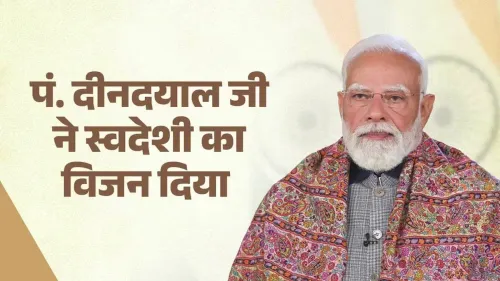
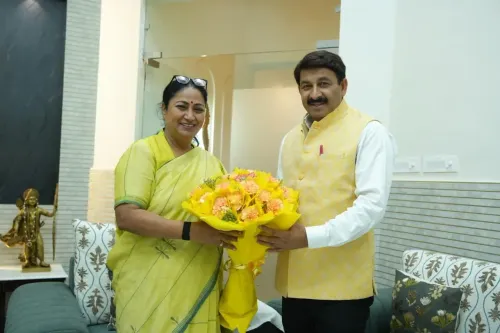
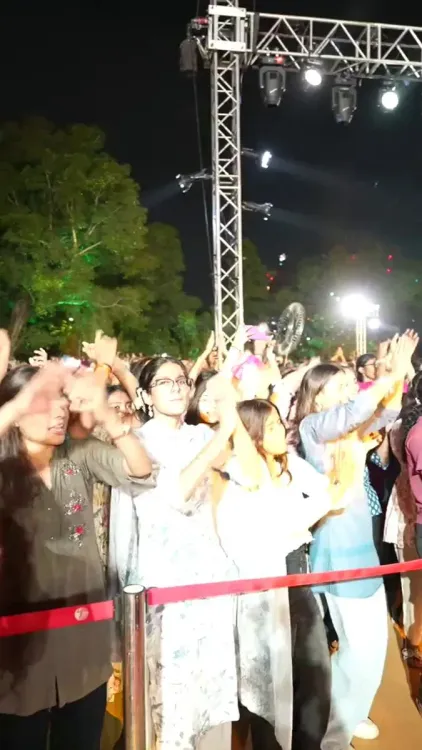
On the birth anniversary of Pandit Deendayal Upadhyay, Delhi's streets found an unlikely chorus: young residents singing devotional hymns — and Prime Minister Narendra Modi sitting among them. Delhi Chief Minister Rekha Gupta called the moment the most beautiful validation of her government's push to reconnect the capital's youth with Indian cultural roots, sharing her reaction on X on Friday, 25 September 2026.
Gupta's post, written in Hindi, urged people to imagine the pride and joy of a young mind getting to sing bhajans alongside the Prime Minister: 'भक्ति में लीन दिल्ली के युवा और उनके बीच हमारे आदरणीय प्रधानसेवक' — 'Delhi's youth absorbed in devotion, and our revered Prime Minister in their midst.' The phrase 'Pradhan Sevak,' or chief servant, is a term Modi himself has long favoured over the conventional 'Pradhan Mantri.'
Deendayal Upadhyay Jayanti and the BJP's cultural calendar
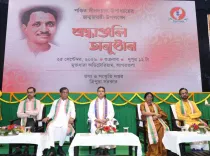
Pandit Deendayal Upadhyay, born 25 September 1916, founded the Bharatiya Jana Sangh — the ideological forerunner of today's BJP — and is best known for his philosophy of Integral Humanism, which argues for a political economy rooted in Indian civilisational values. His birth anniversary has been observed by BJP-led governments with cultural programmes and youth outreach every year since at least 2014, making it one of the party's most significant commemorative dates.
Gupta framed the evening's gathering not as a party event but as proof that Delhi's younger generation is choosing to reclaim its heritage. 'Delhi is blessed,' she wrote — 'दिल्ली धन्य है!' — closing with a rare exclamation that captured the warmth of the moment.
Delhi's 'bhajan clubbing' trend gets a prime-time moment
The Chief Minister specifically cited what she described as Delhi's emerging 'bhajan clubbing' trend — a grassroots movement where young people gather in informal settings for collective devotional singing, blending the social energy of a club night with traditional bhajan practice. Gupta's post positions Modi's participation as the trend's highest-profile endorsement yet, a moment that transforms a subcultural phenomenon into a headline.
The BJP's broader strategy across several states has involved linking youth cultural identity to devotional and classical traditions, framing it as heritage preservation rather than political mobilisation. Delhi, as the national capital and home to a large, young, aspirational population, is a particularly visible laboratory for that approach.
What the chemistry signals for Delhi's cultural policy
Gupta described the 'natural chemistry' between Modi and the young participants as the most meaningful proof that her government's cultural-connect efforts are working. The language is deliberate: 'sehaj chemistry' — effortless chemistry — suggests authenticity rather than choreography, a distinction that matters in an era when political events are routinely scrutinised for stage-management.
To watch: whether the Delhi government moves to institutionalise bhajan-clubbing spaces or formally integrate the format into its youth-culture programmes ahead of future Upadhyay Jayanti observances.
A Prime Minister sharing a devotional song with the capital's youth on the anniversary of the man who shaped his party's founding ideology — that is not a small image for Delhi's BJP to carry into the months ahead.
Point of View
Ties that achievement to one of the BJP's most sacred commemorative dates, and places Modi at the centre of a youth-friendly, non-confrontational image. The 'bhajan clubbing' framing is notable — it domesticates a party-aligned cultural push into something that reads as organic and youth-driven rather than top-down. For a government still consolidating its hold on Delhi after years in opposition at the state level, anchoring cultural identity work to Deendayal Upadhyay Jayanti reinforces ideological continuity while the Modi presence adds national-level weight.
NationPress
26 Sept 2026
Frequently Asked Questions
What is 'bhajan clubbing' in Delhi?
'Bhajan clubbing' refers to an informal youth trend in Delhi where young people gather in group settings to sing traditional devotional hymns together, combining the social atmosphere of a club or community gathering with classical devotional practice. Delhi CM Rekha Gupta has cited it as part of a broader cultural revival among the capital's youth.
Why is 25 September significant for the BJP?
25 September is the birth anniversary of Pandit Deendayal Upadhyay , the founder of the Bharatiya Jana Sangh — the predecessor party to the BJP — and the philosopher behind 'Integral Humanism.' BJP-led governments have marked the date with cultural and youth programmes every year since at least 2014.
Who was Pandit Deendayal Upadhyay?
Pandit Deendayal Upadhyay , born 25 September 1916 , was the founder of the Bharatiya Jana Sangh and the thinker behind the philosophy of Integral Humanism, which advocates a political and economic model rooted in Indian civilisational values. He remains one of the most venerated ideological figures in the BJP's tradition.
What did Rekha Gupta say about PM Modi and Delhi youth?
Delhi CM Rekha Gupta said that PM Narendra Modi joining Delhi's youth in singing bhajans on Deendayal Upadhyay Jayanti was the most beautiful proof of her government's efforts to connect the capital's new generation with Indian culture. She described the interaction as 'effortless chemistry' and declared 'Delhi is blessed.'
What is Delhi CM Rekha Gupta's cultural agenda for youth?
Rekha Gupta's government in Delhi has promoted initiatives aimed at linking young residents to traditional Indian devotional and cultural practices, including supporting the 'bhajan clubbing' movement. The approach frames cultural revival as heritage preservation and a bridge between modern youth identity and classical Indian traditions.