Delhi CM Rekha Gupta: Nari Shakti key to Viksit Bharat
Synopsis
Delhi Chief Minister Rekha Gupta says Nari Shakti in Parliament and state assemblies is integral to Viksit Bharat. Backing PM Narendra Modi's resolve, she argues women must be equal partners in decision-making, tying the pledge to the 2023 reservation law's delimitation path.
Key Takeaways
Delhi Chief Minister Rekha Gupta on 28 November 2026 said rightful representation of Nari Shakti in Parliament and state assemblies is integral to Viksit Bharat .
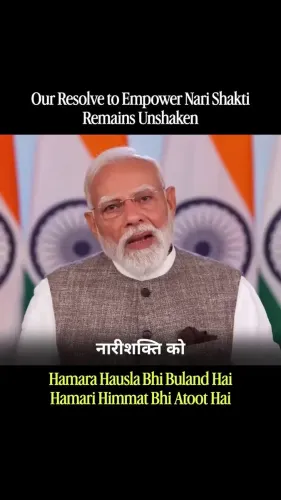
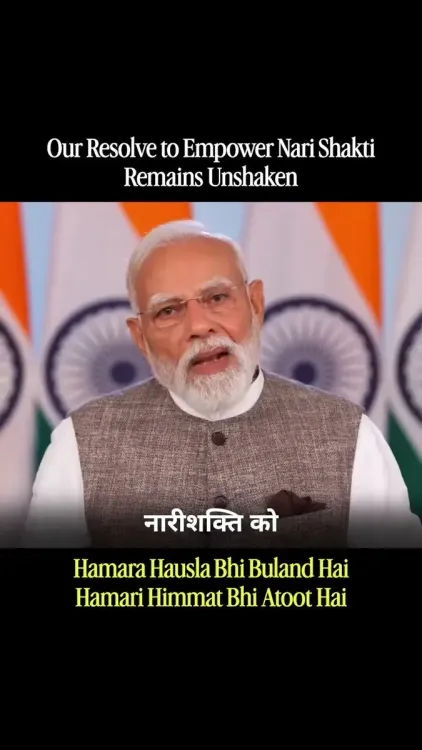
She said Prime Minister Narendra Modi has made his resolve clear on women as equal partners in decision-making and development.
Gupta framed the pledge as a commitment to the democratic aspirations of half of India's population.
Her post used the hashtags #DelimitationBill and #WomenReservation .
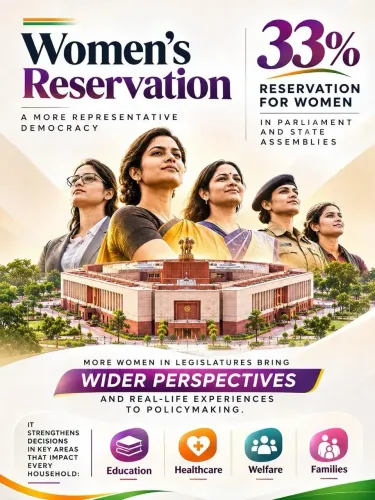
The Constitution (One Hundred and Sixth Amendment) Act, 2023 already reserves one-third of seats for women, with implementation tied to future delimitation after census processes.
Viksit Bharat is the Union vision of a developed India by 2047 , with inclusive participation including women.
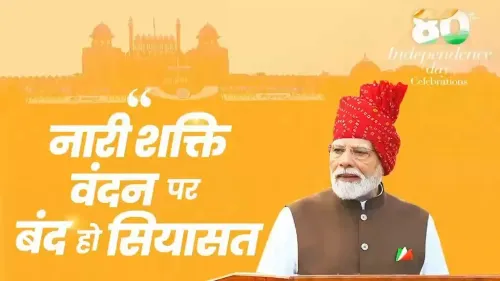
Delhi Chief Minister Rekha Gupta on 28 November 2026 placed women's political power at the heart of India's development story, arguing that Nari Shakti in Parliament and state assemblies is integral to Viksit Bharat. She said Prime Minister Narendra Modi has made his resolve clear: the country's mothers, sisters and daughters must sit as equal partners in decision-making. That, she framed, is a commitment to half of India.
In the post, Gupta wrote that 'the rightful representation of Nari Shakti in Parliament and State Assemblies is integral to the vision of Viksit Bharat.' She added that the Prime Minister 'has made his resolve clear' and that 'India's mothers, sisters and daughters must be equal partners in the nation's decision-making and development.' She called it 'a commitment to the democratic aspirations of half of India's population,' marking the message with #DelimitationBill and #WomenReservation.
Nari Shakti as a 2047 development test
Viksit Bharat is the Union government's stated vision of a developed India by 2047, built on inclusive participation. Gupta's formulation is blunt. Representation is not a side-theme. It is, in her words, integral.
The Delhi chief minister, a BJP leader, is lining the capital's political voice up with a national argument the Centre has repeated for years: women as decision-makers, not only as beneficiaries. Half of India, she reminds the public, has a democratic claim on the House itself.
The 2023 law that still needs new maps
Parliament has already written the quota into the Constitution. The Constitution (One Hundred and Sixth Amendment) Act, 2023 reserved one-third of seats for women in the Lok Sabha and in state legislative assemblies. That law does not switch on by itself. Its operation is tied to a future delimitation exercise — a redrawing of constituencies that, in turn, waits on census processes.
That is why the hashtags matter. Women reservation and delimitation are legally chained. Until the maps are redrawn under the 2023 design, the one-in-three promise stays on paper. Political parties and women legislators are the obvious stakeholders. The practical clock, however, runs on census and delimitation, not on slogans.
What the next census must unlock
The pathway set in 2023 is clear even if the calendar is not. A census, then delimitation legislation, then the 33 percent reservation can take effect in subsequent elections. Gupta's intervention keeps that sequence in public view. She does not announce a timetable. She restates a resolve and names the missing piece: rightful representation as a development goal.
Half of India has a constitutional claim on one in three seats. The remaining work is the map that turns that claim into names on a ballot.
Point of View
So the live political question is operational — census, then delimitation, then ballots. By tagging both WomenReservation and DelimitationBill, the Delhi chief minister points at that bottleneck without claiming a new timetable. The pressure now sits on the mapping process that will decide when half the population actually occupies one in three chairs.
NationPress
28 Nov 2026
Frequently Asked Questions
What did Delhi CM Rekha Gupta say about women reservation?
She said the rightful representation of Nari Shakti in Parliament and state assemblies is integral to the vision of Viksit Bharat. She added that Prime Minister Narendra Modi has made his resolve clear and that India's mothers, sisters and daughters must be equal partners in decision-making and development.
What is the women reservation law in India?
The Constitution (One Hundred and Sixth Amendment) Act, 2023 reserves one-third of seats for women in the Lok Sabha and state legislative assemblies. Implementation is tied to a future delimitation exercise after census processes.
Why is delimitation linked to women's reservation?
The 2023 amendment made the 33 percent quota operational only after constituencies are redrawn through delimitation. Until that mapping is completed, the reserved seats cannot take effect in elections.
What is Viksit Bharat in this debate?
Viksit Bharat is the Government of India's vision of becoming a developed nation by 2047. Inclusive participation, including women in public decision-making, is part of that framing.
When will 33 percent reservation for women start?
The 2023 law does not fix an election cycle. It takes effect after the next delimitation, which itself depends on census-related processes, so no implementation date is set in the amendment text.