CM Rekha Gupta Shares Modi's Vision for Viksit Bharat
Synopsis
Delhi CM Rekha Gupta amplified PM Modi's speech cataloguing India's transformation — from the Chandrayaan-3 Moon landing to a 50x solar power surge and the world's third-largest startup ecosystem — as evidence that Viksit Bharat 2047 is achievable.
Key Takeaways
Delhi Chief Minister Rekha Gupta shared a quote from Prime Minister Narendra Modi on November 12, 2026 , highlighting India's recent national achievements.
Chandrayaan-3 landed near the Moon's south pole in August 2023 , making India the first country to do so at that latitude.
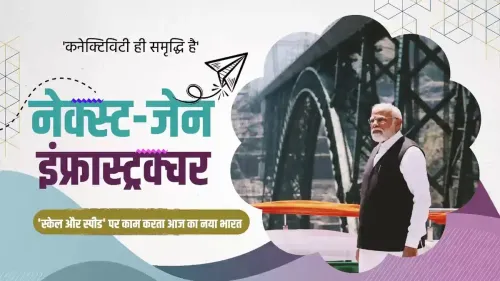
India is cited as the world's second-largest mobile manufacturer and home to the world's highest railway arch bridge on the Chenab River .
India's solar generation capacity has grown by more than 50 times in 12 years , driven by the National Solar Mission .
The Startup India initiative, launched in 2016 , is credited with building the world's third-largest startup ecosystem within 12 years.
The post situates these milestones within the Viksit Bharat 2047 framework, the government's goal of making India a developed nation by independence's centenary.
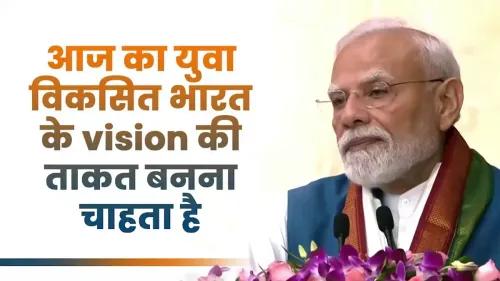
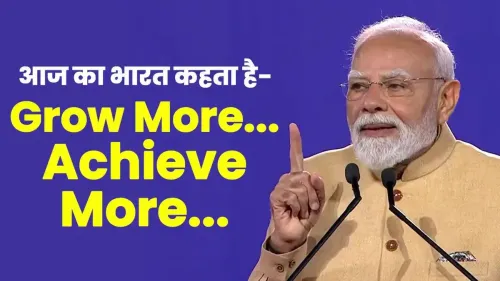
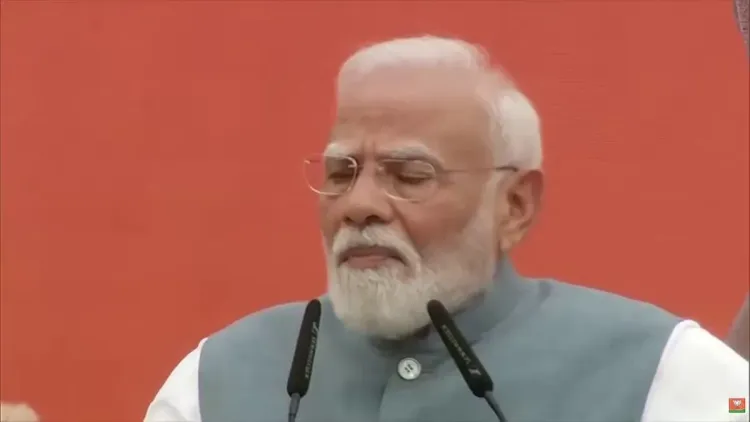
From the Moon's south pole to the world's highest railway bridge, Delhi Chief Minister Rekha Gupta on Thursday, November 12, 2026 shared a sweeping set of remarks by Prime Minister Narendra Modi that frames India's recent decade as a string of achievements once considered impossible — and argues that the goal of a 'Viksit Bharat' (Developed India) is firmly within reach.
Moon, Mobiles, and a Bridge Above the Clouds
Quoting the Prime Minister directly, CM Gupta's post asked a series of rhetorical questions designed to jolt the reader's sense of scale. 'Who had thought that India would make history by landing near the lunar south pole?' the quote reads — a reference to Chandrayaan-3, ISRO's landmark mission that achieved India's first soft landing near the Moon's south pole in August 2023, making India only the fourth country ever to land on the Moon and the first to touch down at that latitude.
The quote then pivots to manufacturing: 'Who had thought that India would become the world's second-largest mobile manufacturer?' It moves next to infrastructure — the Chenab River railway arch bridge, described as the world's highest, a feat of engineering that forms the centrepiece of the Udhampur-Srinagar-Baramulla Rail Link (USBRL) project, decades in the making and now a symbol of connectivity reaching into Jammu and Kashmir.
Solar Power's Fifty-Fold Surge and a Startup Nation's Rise
The Prime Minister's remarks, as shared by CM Gupta, cite two further statistics that underline the breadth of the transformation. India, the quote states, has expanded its solar generation capacity by more than 50 times in just 12 years — growth driven by successive revisions to the National Solar Mission, whose targets were significantly scaled up after 2014-15. The claim reflects a dramatic acceleration in renewable energy deployment, though the precise multiplier is drawn from the post itself.
Equally striking is the claim on entrepreneurship: India has built the world's third-largest startup ecosystem in 12 years, a trajectory traced back to the Startup India initiative launched in 2016 to promote innovation and ease of doing business. The ecosystem now encompasses thousands of recognised startups and a clutch of unicorns spread across sectors from fintech to deeptech.
The Viksit Bharat 2047 Arc
The broader frame of the post is the Viksit Bharat 2047 vision — the government's stated ambition to make India a developed nation by the centenary of its independence. By stringing together milestones in space, manufacturing, infrastructure, clean energy, and startups, the Prime Minister's remarks construct a narrative of compounding momentum: if each of these was once thought impossible, the argument runs, then the larger goal is not impossible either.
CM Gupta's decision to amplify the message from Delhi — a city that sits at the intersection of national politics and urban ambition — signals that the Viksit Bharat framework is being actively carried into state-level political communication, not confined to Union government platforms alone. The eyes of policymakers watching Gaganyaan timelines and the next phase of the National Infrastructure Pipeline will note that the narrative drumbeat is growing louder.
India's scientists, entrepreneurs, and workers built these milestones one decision at a time. The question now is whether the next chapter — human spaceflight, deeper industrial self-reliance, universal clean energy — arrives on the same accelerated clock.
Point of View
CM Rekha Gupta is doing more than reposting a speech — she is embedding the Viksit Bharat 2047 narrative into BJP's state-level political communication, a deliberate strategy to link Union government milestones with local political credibility. The choice of achievements — space, manufacturing, clean energy, startups — spans both aspirational urban voters and science-proud middle India, covering the coalition the party needs. The rhetorical device of 'who had thought?' is classic Modi oratory, turning policy outcomes into emotional validation, and its amplification by a state chief minister signals coordinated message discipline ahead of what promises to be a busy policy calendar. Watchers of the Gaganyaan human spaceflight programme and the next National Infrastructure Pipeline phase should read this as an early framing exercise for announcements likely to follow.
NationPress
12 Nov 2026
Frequently Asked Questions
What is Viksit Bharat 2047?
Viksit Bharat 2047 is the Indian government's vision to make India a fully developed nation by 2047, the centenary of independence, focusing on economic growth, infrastructure, clean energy, and technological self-reliance.
What was the Chandrayaan-3 mission?
Chandrayaan-3 was ISRO's lunar mission that achieved India's first soft landing near the Moon's south pole in August 2023 , making India the first country to land a spacecraft at that latitude.
Where is the world's highest railway arch bridge?
The world's highest railway arch bridge spans the Chenab River in Jammu and Kashmir and is part of the Udhampur-Srinagar-Baramulla Rail Link (USBRL) project.
How has India's solar power capacity grown?
According to PM Modi's remarks shared by CM Gupta, India has grown its solar generation capacity by more than 50 times in 12 years , driven by the National Solar Mission whose targets were scaled up significantly after 2014-15.
What is Startup India and how did it grow India's startup ecosystem?
The Startup India initiative was launched in 2016 to promote entrepreneurship and ease of doing business. It is credited with helping India build the world's third-largest startup ecosystem within 12 years, encompassing thousands of recognised startups and numerous unicorns.