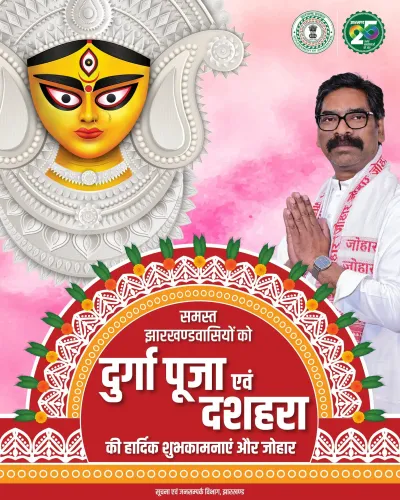
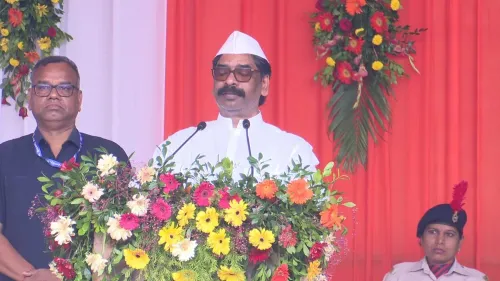
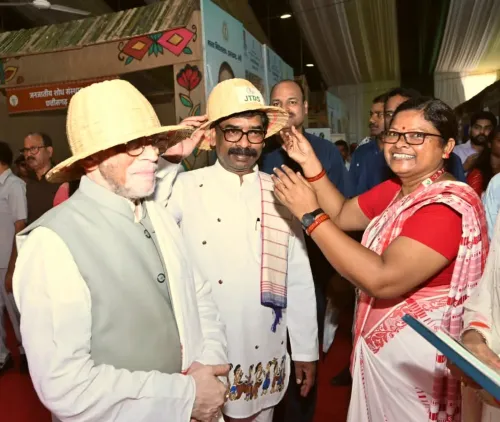
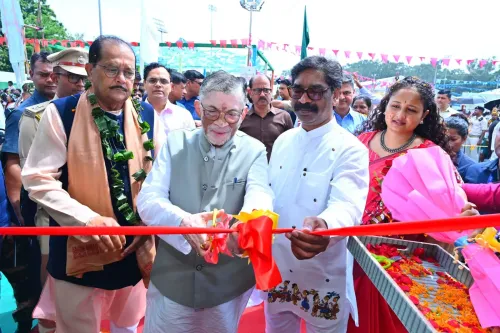
CM Hemant Soren extends Vijayadashami greetings
Synopsis
Jharkhand Chief Minister Hemant Soren marked Vijayadashami 2026 with a message calling truth's victory over falsehood the festival's core symbol and urging citizens to stand against injustice, discrimination, and hatred while building love and brotherhood.
Key Takeaways
Jharkhand CM Hemant Soren posted Vijayadashami greetings on 20 October 2026 .
He described the festival as the triumph of truth over falsehood, dharma over adharma, and justice over injustice.
Soren called on citizens to pledge to fight injustice, discrimination, and evil, and to strengthen love, harmony, and brotherhood.
His message closed with the Bengali salutation 'Shubho Vijaya' , reflecting Jharkhand's cultural diversity.
The framing — naming injustice and discrimination explicitly — carries the social-justice undertone characteristic of JMM's political identity.
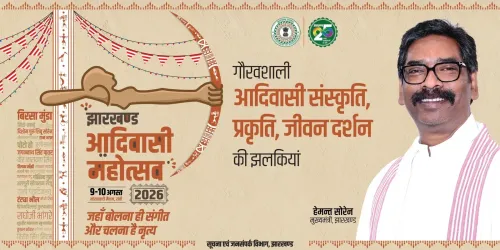
On the morning of Vijayadashami 2026, Jharkhand Chief Minister Hemant Soren sent out a message rooted in the festival's oldest promise — that truth, righteousness, and justice will always outlast the forces ranged against them.
Posting in Hindi on Tuesday, 20 October 2026, Soren described Vijayadashami as a symbol of 'satya par asatya ki vijay' — the victory of truth over falsehood — and called on citizens to pledge themselves against injustice, discrimination, and evil, while strengthening love, harmony, and brotherhood. He closed with the Bengali salutation 'Shubho Vijaya', a customary greeting that signals the end of Durga Puja and the beginning of the Vijaya season, reflecting the cultural plurality of Jharkhand's population.
The festival's message and Soren's framing
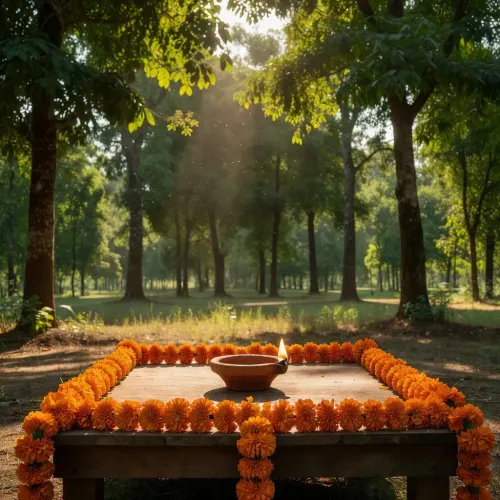
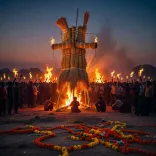
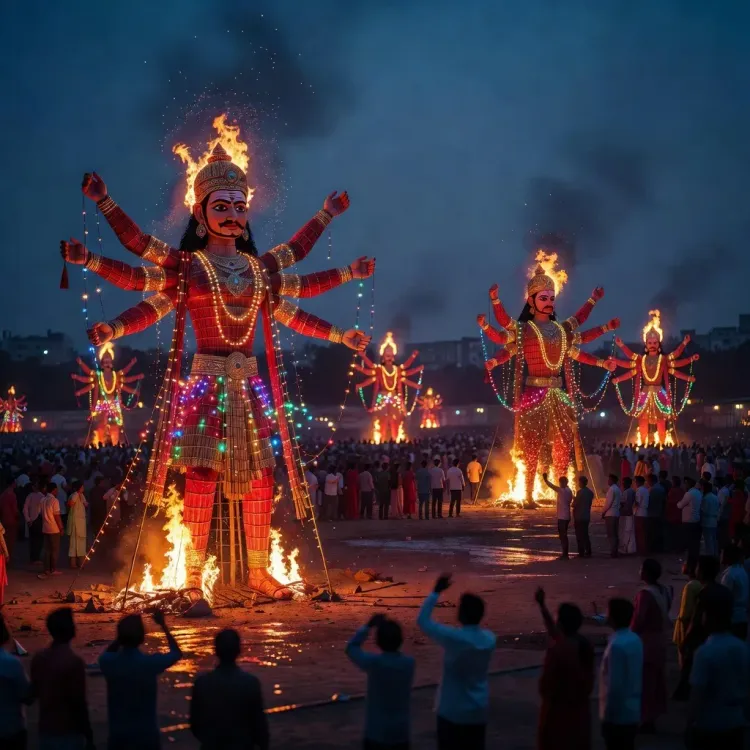
Vijayadashami, observed on the tenth day of Navratri, marks Lord Rama's victory over the demon king Ravana and, in the eastern tradition, the departure of Goddess Durga after her ten-day stay. The dual mythology gives the occasion a twin symbolism — divine feminine power and the triumph of dharma — that political leaders across India regularly invoke to frame calls for social good. Soren's message leaned into that tradition directly, naming injustice, discrimination, and hatred as the contemporary 'Ravanas' worth confronting.
The bilingual sign-off — Hindi throughout the body, Bengali 'Shubho Vijaya' at the close — is characteristic of how Soren and the Jharkhand Mukti Morcha address the state's diverse electorate, which includes significant Bengali-speaking communities alongside Santali, Kurukh, and Hindi speakers.
A seasonal ritual with political resonance
Festival greetings from chief ministers are a fixture of Indian political communication, but the framing matters. By explicitly naming 'anyay, bhedbhav aur buraiyaan' — injustice, discrimination, and evils — rather than stopping at generic good wishes, Soren gave his message a social-justice edge consistent with the JMM's long-standing advocacy for tribal rights and equitable governance in Jharkhand. The call for brotherhood also lands in a state that has, over decades, navigated complex questions of identity, land rights, and communal harmony.
Whether the message translates into fresh policy action remains a separate question — but as a statement of values on one of Hinduism's most celebrated days, it lands with intent.
Point of View
But their framing reveals political priorities. Soren's decision to name injustice and discrimination — rather than offer a purely devotional greeting — fits the JMM's foundational identity as a movement rooted in tribal rights and equity. The bilingual close with 'Shubho Vijaya' is a deliberate nod to Jharkhand's Bengali-speaking communities, signalling inclusive outreach ahead of what is always an electorally sensitive period. The message is ceremonial in form but coded in intent — a hallmark of how regional leaders calibrate culture and politics simultaneously.
NationPress
20 Oct 2026
Frequently Asked Questions
What did Hemant Soren say on Vijayadashami 2026?
Jharkhand CM Hemant Soren described Vijayadashami as the symbol of truth defeating falsehood and justice defeating injustice, and urged citizens to pledge against discrimination and hatred while building love and brotherhood.
What does 'Shubho Vijaya' mean?
'Shubho Vijaya' is a Bengali greeting meaning 'auspicious victory,' traditionally exchanged at the close of Durga Puja as the goddess departs; Soren used it to acknowledge Jharkhand's Bengali-speaking communities.
Why do Indian politicians post Vijayadashami messages?
Vijayadashami is one of Hinduism's most widely observed festivals; public messages by political leaders let them align with its themes of truth and justice while addressing diverse voter bases.
What is the Jharkhand Mukti Morcha?
The Jharkhand Mukti Morcha is a regional political party founded to champion tribal rights and statehood for Jharkhand; Hemant Soren serves as both Chief Minister and the party's executive president.
When is Vijayadashami in 2026?
Vijayadashami in 2026 falls on Tuesday, 20 October , the tenth day after the start of Navratri.