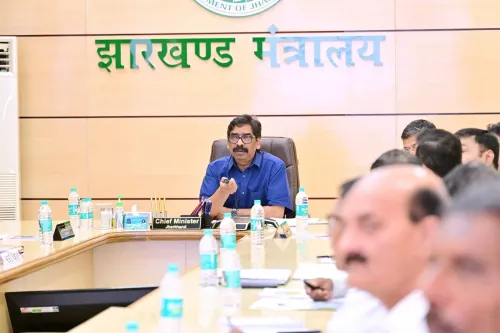
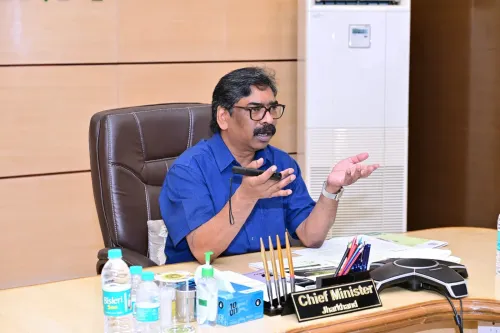
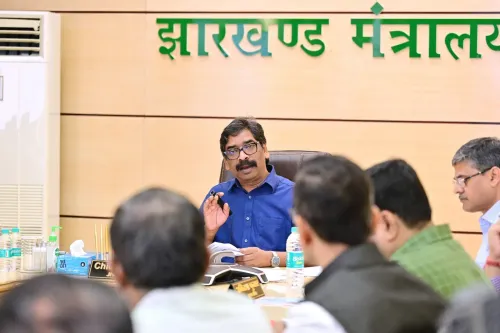
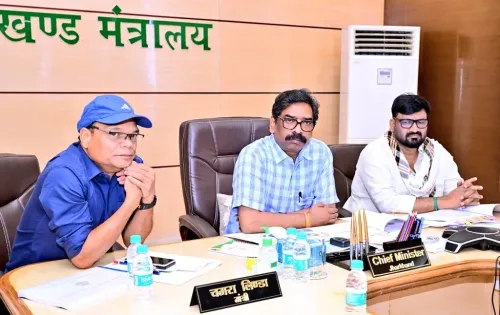
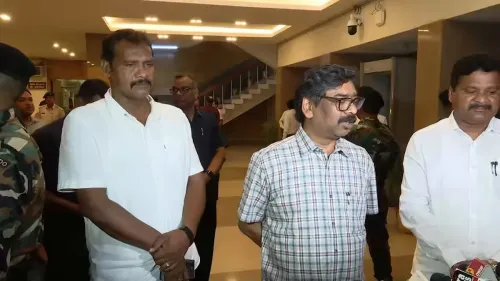
CM Hemant Soren meets Jharkhand Forest Dept senior officials
Synopsis
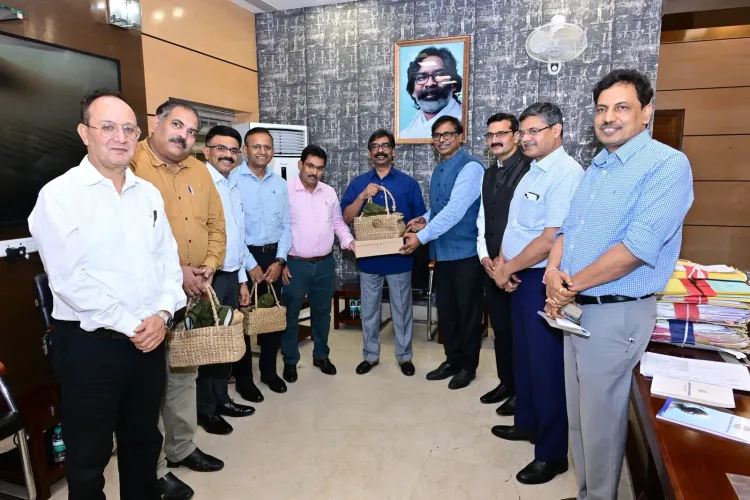
Senior officials of the Jharkhand Forest Department met Chief Minister Hemant Soren and presented him with forest-produce crafted items, signalling the state government's continued focus on tribal livelihoods and value-added non-timber forest produce as a governance priority.
Key Takeaways
Senior officials of the Jharkhand Forest Department called on Chief Minister Hemant Soren on 20 July 2026 .
Officials presented the Chief Minister with products made from forest-based materials as a goodwill gesture.
Jharkhand has over 29 percent forest cover and a large tribal population dependent on non-timber forest produce.
The meeting reflects the Soren government's ongoing focus on linking forest administration with tribal livelihood programmes.
Follow-up policy action may include expanded Van Dhan Kendras or improved marketing infrastructure for minor forest produce collectors.
The Chief Minister's Office of Jharkhand announced on Monday, 20 July 2026 that senior officials of the Jharkhand Forest Department called on Chief Minister Hemant Soren, presenting him with products crafted from forest-based materials as a gesture of goodwill.
The post, shared on the CMO's official X account, stated: 'Mukhyamantri Shri Hemant Soren se Jharkhand Van ke varishtha adhikariyon ne mulakat ki. Is dauran mukhyamantri ko adhikariyon ne van aadharit utpad se bani samagriyan saprem bhent ki.' — translated: 'Senior officials of Jharkhand Forest met Chief Minister Hemant Soren. During the meeting, the officials affectionately presented the Chief Minister with items made from forest-based produce.'
Context
Jharkhand has one of the highest forest covers among Indian states, with forests accounting for more than 29 percent of its geographical area. The state is home to a large tribal population whose livelihoods are closely tied to the collection and processing of non-timber forest produce (NTFP) such as lac, honey, mahua flowers, and bamboo. The symbolic gifting of forest-produce items to the Chief Minister underscores the department's emphasis on value-added forest goods as a policy priority.
Policy Backdrop
The constitutional and legal foundation for community-based forest use in Jharkhand rests significantly on the Scheduled Tribes and Other Traditional Forest Dwellers (Recognition of Forest Rights) Act, 2006, which granted tribal communities rights over forest resources and minor produce. CM Hemant Soren, a leader of the Jharkhand Mukti Morcha (JMM) with a long-standing focus on tribal rights, has consistently aligned his government's forest policy with livelihood enhancement for gatherer communities. His administration has sought to strengthen coordination between the Jharkhand Forest Department and rural collectors to raise incomes while maintaining ecological safeguards across tribal districts.
State-level efforts have included encouraging value addition of NTFP items and supporting infrastructure such as Van Dhan Kendras — processing and marketing centres designed to help tribal producers capture more of the value chain rather than selling raw produce at low prices.
Stakeholders and Impact
The primary stakeholders in this policy space are Jharkhand's tribal communities and forest produce collectors, who depend on NTFP for a significant share of household income. Senior officials of the Jharkhand Forest Department engaging directly with the Chief Minister signals that forest-based livelihoods remain a governance priority at the highest level. Such interactions typically precede operational decisions on marketing infrastructure, procurement pricing, or expansion of processing facilities.
The presentation of forest-produce goods also carries a symbolic dimension: it demonstrates the department's intent to showcase the quality and commercial potential of locally crafted forest products to political leadership, potentially influencing budget allocations or scheme design.
What's Next
Observers will watch for follow-up announcements from the Jharkhand Forest Department or the Chief Minister's Office on expanded marketing infrastructure, revision of minimum support prices for minor forest produce, or new Van Dhan Kendra facilities in tribal districts. Any policy direction emerging from this meeting could have a direct bearing on the incomes of lakhs of forest-dependent families across Jharkhand. The meeting reinforces the Soren government's pattern of keeping forest governance and tribal welfare at the centre of its administrative agenda.
Point of View
But its public communication carries deliberate political messaging: the JMM-led government is keen to project itself as a steward of tribal forest rights and rural livelihoods ahead of any future electoral cycle. The symbolic gifting of forest-produce items to the Chief Minister is a soft but visible signal that NTFP value addition remains on the policy agenda. For a state where forest-dependent communities represent a core voter base for the JMM, keeping this narrative active through high-visibility interactions serves both administrative and political purposes. The broader arc points toward Jharkhand positioning its forest economy as a model of rights-based, livelihood-linked conservation.
NationPress
21 Jul 2026
Frequently Asked Questions
Why did Jharkhand Forest Department officials meet CM Hemant Soren?
Senior officials of the Jharkhand Forest Department met Chief Minister Hemant Soren to brief him on forest administration matters and presented him with items crafted from forest-based produce as a gesture of goodwill.
What is the Jharkhand Forest Department's role in tribal livelihoods?
The Jharkhand Forest Department manages conservation and wildlife protection across the state's extensive forest areas and promotes the collection and value addition of non-timber forest produce such as lac, honey, mahua, and bamboo to support tribal community incomes.
What are Van Dhan Kendras and how do they help Jharkhand tribals?
Van Dhan Kendras are government-supported processing and marketing centres that help tribal forest produce collectors add value to raw materials before sale, enabling them to earn higher prices rather than selling unprocessed goods at low rates.
What is the Forest Rights Act and how does it apply in Jharkhand?
The Scheduled Tribes and Other Traditional Forest Dwellers (Recognition of Forest Rights) Act, 2006 grants tribal communities legal rights over forest land and minor forest produce. In Jharkhand, with its large tribal population, this law underpins community-based forest use and livelihood programmes.
What is Hemant Soren's policy stance on forest and tribal rights?
Chief Minister Hemant Soren of the JMM has consistently prioritised tribal rights and forest-based livelihoods, aligning his government's forest policy with income enhancement for gatherer communities while stressing ecological safeguards in tribal districts.