CM Hemant Soren Meets Singapore High Commissioner, Eyes Investment in Jharkhand
Synopsis
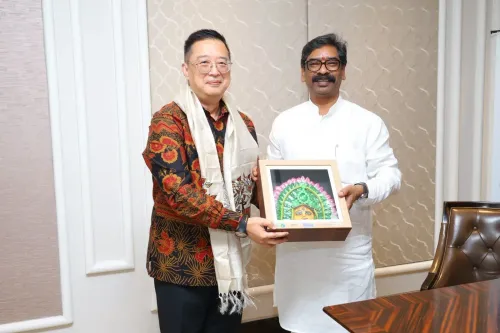
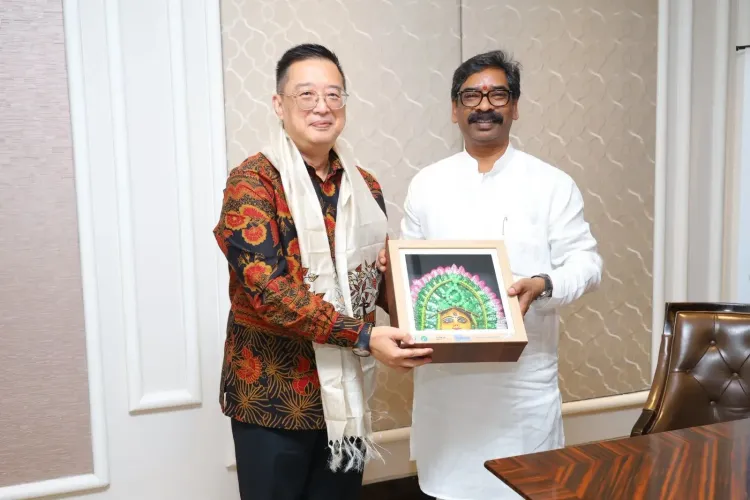
Jharkhand CM Hemant Soren met Singapore High Commissioner H.E. Simon Wong Wie Kuen on 9 July 2026, agreeing to facilitate a Singaporean company visit to Jharkhand to map opportunities in logistics, healthcare, education and skilling as the state pursues a shift from resource extraction to innovation-led growth.
Key Takeaways
Jharkhand Chief Minister Hemant Soren met H.E.
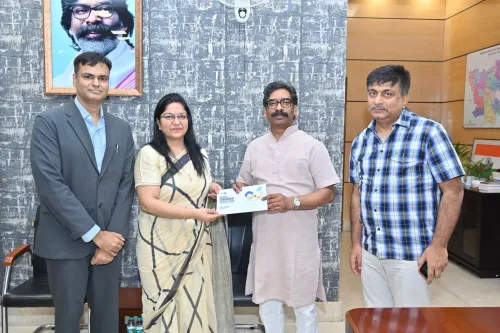
Simon Wong Wie Kuen , Singapore's High Commissioner to India, on 9 July 2026 .
Both sides agreed to facilitate a Singaporean company delegation visit to Jharkhand to identify investment and collaboration opportunities.
Priority sectors discussed include logistics, supply chain resilience, transport, resource-based value addition, healthcare, education and skilling .
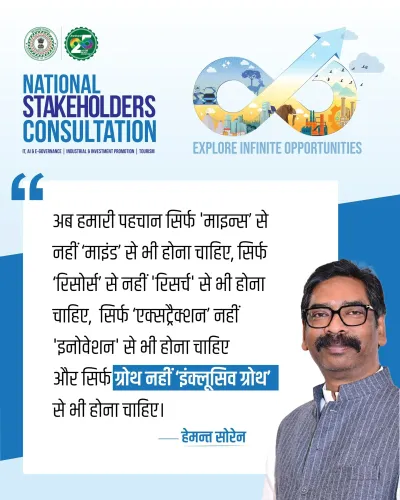
Soren articulated Jharkhand's economic vision as a transition 'from mines to minds, from extraction to innovation, and from resources to research.' The engagement builds on the India-Singapore CECA framework (2005) and mirrors economic diplomacy pursued by other Indian states with Singapore.
Follow-up steps include on-ground opportunity mapping by Singaporean firms and potential MoUs on logistics parks and skilling academies .
Jharkhand Chief Minister Hemant Soren held a bilateral meeting with H.E. Simon Wong Wie Kuen, High Commissioner of Singapore to India, on Thursday, 9 July 2026, to explore long-term economic cooperation across multiple priority sectors. The two sides agreed to facilitate a visit by Singaporean companies to Jharkhand to jointly map investment and collaboration opportunities.
Context
Chief Minister Soren shared details of the engagement on X, noting that discussions spanned logistics, supply chain resilience, transport, resource-based value addition, healthcare, education and skilling. He highlighted that the High Commissioner expressed appreciation for Jharkhand's economic vision, which the Chief Minister framed as a shift 'from mines to minds, from extraction to innovation, and from resources to research.' The meeting signals Jharkhand's intent to position itself as a destination for high-quality foreign direct investment beyond its traditional mining identity.
Policy Backdrop
India and Singapore have maintained a structured economic partnership since the signing of the Comprehensive Economic Cooperation Agreement (CECA) in 2005, which expanded bilateral trade, investment and services linkages. Indian states have increasingly pursued parallel economic diplomacy with Singapore to attract FDI in logistics parks, vocational training and value-added manufacturing, working within the broader CECA framework. Jharkhand's state industrial policies since the 2010s have prioritised downstream mineral processing and manufacturing clusters, making the current outreach a continuation of that trajectory. The state's stated transition from a resource-based to a value-driven economy mirrors similar strategies pursued by mineral-rich states such as Odisha and Chhattisgarh.
Stakeholders and Impact
The primary beneficiaries of any resulting partnership would be Jharkhand's industrial sector, its local workforce, and Singaporean companies seeking footholds in eastern India's resource and logistics corridors. Sectors such as healthcare and education could see institutional tie-ups, while logistics and supply chain investments would strengthen connectivity for the state's manufacturing base. The emphasis on 'quality jobs' and 'sustainable growth' in Soren's post suggests the government intends to anchor any incoming investment to employment generation targets for local communities. Singapore-based firms have a strong track record of establishing skills academies and SME supply-chain integration projects across Indian states, which could translate well to Jharkhand's demographic profile.
What's Next
The immediate follow-up will be a delegation visit by Singaporean companies to Jharkhand, as agreed during the meeting, to conduct on-ground opportunity mapping across the identified sectors. Observers will watch for the formalisation of any Memoranda of Understanding covering logistics parks, skilling academies or healthcare infrastructure in the months ahead. If the engagement progresses to concrete project announcements, it would mark a significant step in Jharkhand's bid to diversify its economic base and attract institutional foreign capital at scale.
Point of View
Moving the narrative away from its image as a mining and extraction economy toward a diversified, innovation-capable destination. By securing the High Commissioner's public endorsement of the 'mines to minds' vision, the Chief Minister generates diplomatic validation that can be leveraged in future investor outreach. The focus on logistics and supply chain resilience is strategically timed, as global companies are actively de-risking supply chains and scouting for new nodes in South Asia. Whether the goodwill translates into binding commitments will depend on the follow-up delegation visit and the state's ability to offer competitive land, infrastructure and regulatory clarity.
NationPress
9 Jul 2026
Frequently Asked Questions
Why did Hemant Soren meet the Singapore High Commissioner?
CM Hemant Soren met Singapore High Commissioner H.E. Simon Wong Wie Kuen on 9 July 2026 to explore long-term investment and collaboration opportunities for Jharkhand across sectors including logistics, healthcare, education and skilling.
What sectors did Jharkhand and Singapore discuss for cooperation?
The discussions covered logistics, supply chain resilience, transport, resource-based value addition, healthcare, education and skilling, with a shared focus on transitioning Jharkhand toward a value-driven economy.
What is Jharkhand's 'mines to minds' vision?
'Mines to minds' is CM Hemant Soren's articulation of Jharkhand's economic transformation goal — shifting from dependence on mineral extraction to innovation, research and value-added industries that generate quality employment.
What is the India-Singapore CECA and how does it relate to this meeting?
The Comprehensive Economic Cooperation Agreement (CECA), signed in 2005, is the bilateral framework governing trade, investment and services between India and Singapore. State-level engagements like this one operate within and complement that national framework.
What are the next steps after the Soren-Singapore High Commissioner meeting?
The immediate next step is a visit by Singaporean companies to Jharkhand to map on-ground opportunities, with potential Memoranda of Understanding on logistics parks and skilling academies expected in the coming months.