CM Hemant Soren Vows Justice for Jharkhand Youth Protesters
Synopsis
Jharkhand CM Hemant Soren, speaking at Adivasi Mahotsav 2026 on 9 August, publicly acknowledged a student agitation over recruitment irregularities, pledged strict punishment for those responsible, and urged youth protesters to trust the government rather than align with political groups.
Key Takeaways
CM Hemant Soren addressed ongoing student protests in Jharkhand from the Adivasi Mahotsav 2026 platform on 9 August 2026 .
He confirmed the government has detected irregularities ( gadbadi ) and promised the 'strictest possible punishment' for those responsible.
Soren assured protesting students that the government is 'listening with an open mind' and that justice will be delivered.
He urged students not to seek or accept political patronage, framing the issue as a governance responsibility, not a political contest.
The statement signals an internal inquiry is underway, though the specific nature of the irregularities has not been officially disclosed.
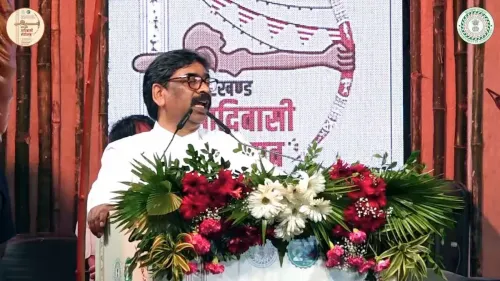
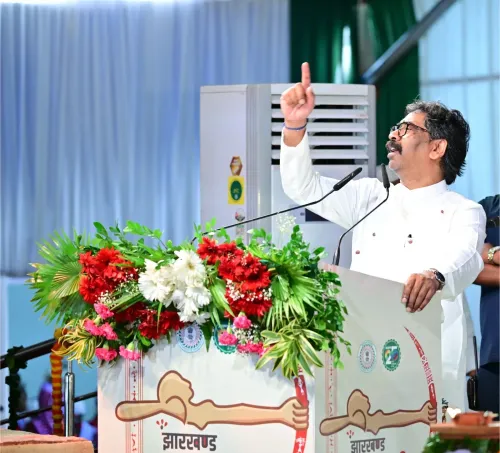
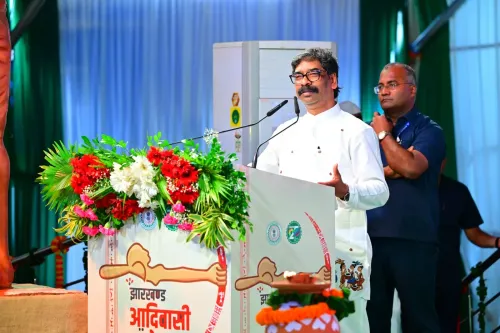
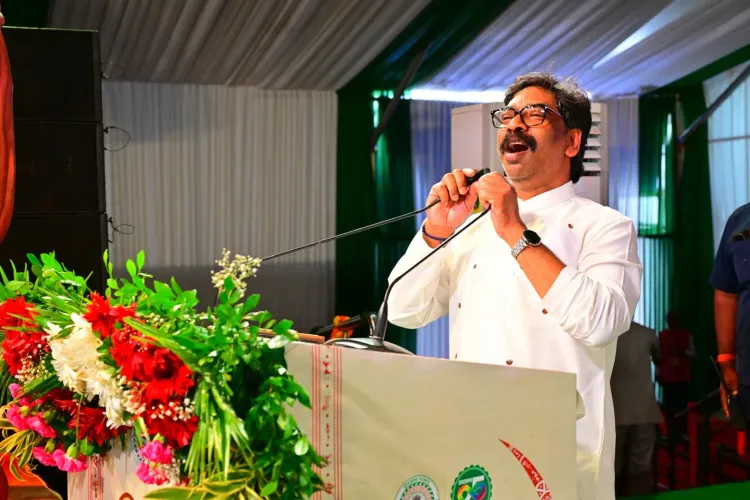
At a moment when hundreds of young Jharkhand students were sitting in protest outside government offices, Chief Minister Hemant Soren stepped to the microphone on Sunday, 9 August 2026 — and spoke directly to them. Not around them, not about them — to them.
Speaking at what appears to be a state event tied to the Adivasi Mahotsav 2026 celebrations, Soren acknowledged the ongoing agitation by students and youth demanding redressal of what he called 'gadbadi' — irregularities. 'We have caught the irregularity,' he said plainly. 'The youth will get justice, and those responsible for the wrongdoing will be given the strictest possible punishment.'
A Government That Is 'Listening with an Open Mind'
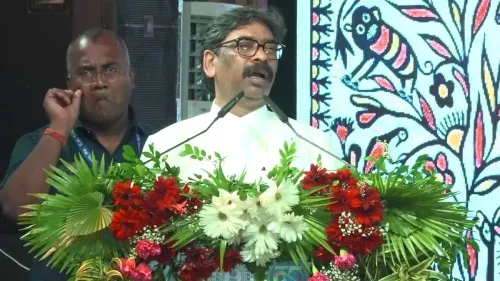
Soren was unambiguous: the agitation is legitimate, the demands are being heard, and the state will act. 'Whether farmer or labourer, woman or man, village or city, educated or less educated — the concern of every citizen is the government's responsibility,' he said, in a sweep that framed the student protest not as a law-and-order problem but as a governance obligation.
He urged the protesting students to resist being drawn into political camps. 'You are students. Your right is that you get your right, that you get justice. This is the government's responsibility — and this work will be completed.' The closing line carried the weight of a pledge, not a platitude.
Recruitment Irregularities and a Pattern Jharkhand Knows Well
Student agitations over recruitment irregularities — delayed examinations, paper leaks, opaque selection processes — are a recurring flashpoint across Indian states, and Jharkhand is no exception. The Jharkhand Mukti Morcha-led government has historically positioned itself as a champion of tribal and rural youth, making any perception of failure on employment and competitive exams politically costly. Soren's decision to address the protesters publicly, from a cultural platform no less, signals that his administration sees the agitation as serious enough to warrant a direct, visible response rather than bureaucratic deflection.
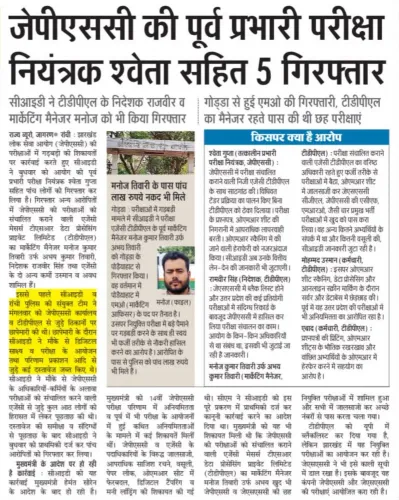
The specific nature of the irregularities Soren referenced has not been officially detailed, but his language — 'we have caught it' — suggests an internal inquiry is already underway or has surfaced findings. The critical test now is whether that inquiry produces accountability, and how quickly.
The Adivasi Mahotsav Stage as a Political Moment
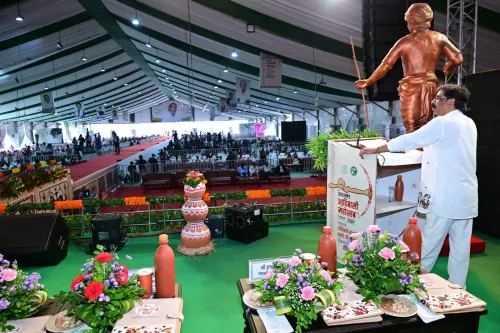
The choice of setting matters. Adivasi Mahotsav is an annual state-organised festival celebrating tribal culture — a flagship event for a party whose founding identity is rooted in Adivasi rights. Addressing youth grievances from this stage was not incidental. It placed the government's responsiveness to young protesters inside the same frame as its broader tribal-welfare identity, reinforcing the JMM's self-image as a party born from the soil of Jharkhand and answerable to its people. Soren underlined this himself: 'We were born in this soil and we will merge into this soil.'
The students are watching. So is the state.
Point of View
No less — is a calibrated move that transforms a potential law-and-order narrative into a governance accountability one, on terms favourable to the JMM. By pre-emptively warning against 'political umbrellas,' he attempts to deny the opposition any ownership of the agitation. The real test of this political bet is delivery: if an inquiry produces visible accountability quickly, the gamble pays off; if it stalls, the same speech becomes evidence of a broken promise. Student protests over recruitment irregularities have toppled political goodwill before in Jharkhand and across India's Hindi heartland.
NationPress
9 Aug 2026
Frequently Asked Questions
Why are students protesting in Jharkhand in 2026?
Jharkhand students and youth are agitating over what CM Hemant Soren described as irregularities in a recruitment or examination process. The specific nature of these irregularities has not been officially detailed, but Soren confirmed the government has identified the problem and promised strict action.
What did Hemant Soren say about the student protests?
Soren said the government is 'listening with an open mind,' confirmed it has caught the irregularities, and pledged the strictest possible punishment for those responsible. He also asked students not to align with any political group and assured them justice will be delivered.
What is Adivasi Mahotsav 2026?
Adivasi Mahotsav is an annual state-organised festival in Jharkhand celebrating tribal culture and identity. The 2026 edition served as the platform from which CM Soren made his remarks addressing the student agitation.
Will there be an inquiry into Jharkhand recruitment irregularities?
CM Soren's statement strongly implies an inquiry is already underway, as he said 'we have caught the irregularity.' However, the government has not yet publicly announced the formal terms, timeline, or scope of any investigation.
What is the JMM's position on youth employment in Jharkhand?
The Jharkhand Mukti Morcha has historically positioned itself as a party responsive to tribal and rural youth concerns on employment and rights. Soren's direct public address to protesters is consistent with the party's identity as a grassroots, soil-rooted movement accountable to ordinary citizens.