CM Himanta Pledges 1 km Pucca Road Per Panchayat in Assam Budget 2026

Synopsis
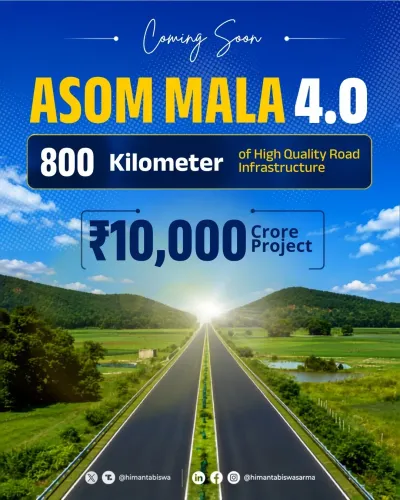
Assam CM Himanta Biswa Sarma has pledged to build an additional 1 km of pucca road in every Gaon Panchayat under AssamBudget2026, targeting last-mile connectivity for every rural habitation in the state.
Key Takeaways
CM Himanta Biswa Sarma announced the pledge on 10 July 2026 as part of #AssamBudget2026 .
The government will construct an additional 1 kilometre of pucca road in every Gaon Panchayat across Assam .
With 2,202 Gaon Panchayats in the state, the commitment could yield over 2,200 km of new rural road.
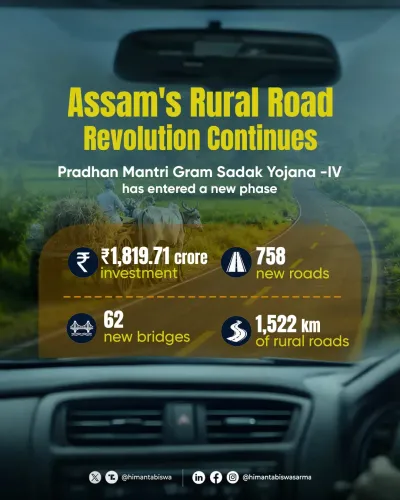
The initiative complements the centrally sponsored Pradhan Mantri Gram Sadak Yojana (PMGSY) already operational in the state.
Detailed budget allocations and district-wise targets are expected when the Assam Budget 2026 is formally tabled.
The model mirrors last-mile connectivity drives in other NEDA -governed northeastern states.
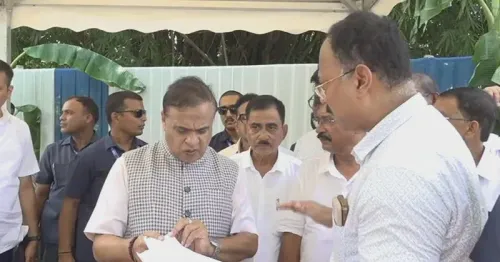
Assam Chief Minister Himanta Biswa Sarma announced on Friday, 10 July 2026, that the state government will build an additional 1 kilometre of pucca road in every Gaon Panchayat as part of #AssamBudget2026, with the stated aim of ensuring no habitation is left without proper connectivity.
Context
Posting on X, CM Sarma declared: 'We will not leave even a single habitation without proper connectivity. We will build an additional 1 km of pucca road in every Gaon Panchayat to take connectivity to the last mile.' The announcement is framed as a Budget 2026 commitment, signalling that physical targets and financial allocations are expected to be formalised when the state budget is presented.
Assam has 2,202 Gaon Panchayats, meaning the pledge — if executed uniformly — would translate into at least 2,202 kilometres of new pucca road across the state's rural landscape. The emphasis on 'last mile' connectivity directly addresses the challenge of reaching remote and flood-prone villages that remain cut off during large parts of the year.
Policy Backdrop
Rural road construction in Assam has long been supported by the centrally sponsored Pradhan Mantri Gram Sadak Yojana (PMGSY), launched in 2000, which targets all-weather connectivity for unconnected habitations. The state's 2023-24 and 2024-25 budgets allocated dedicated funds for rural road upgradation under both state and central schemes, and the new pledge extends that trajectory into the 2026-27 fiscal cycle.
The BJP-led government in Assam, in power since 2016, has consistently treated rural road density as a core development metric. The panchayat-level incremental model — adding a fixed quantum of road per local body — is a structured approach that allows granular monitoring and accountability at the Gaon Panchayat level.
Stakeholders and Impact
The primary beneficiaries are rural households in villages that currently lack all-weather road access, particularly in Assam's flood-affected districts such as Dhemaji, Lakhimpur, and Barpeta. Improved connectivity is directly linked to access to markets, healthcare, and schools for communities that remain isolated during the annual monsoon season.
Gaon Panchayats, as the implementing and oversight bodies at the grassroots level, will be central to executing the programme. Similar last-mile connectivity drives have been rolled out across other states governed under the North-East Democratic Alliance (NEDA), which CM Sarma convenes, suggesting a potential regional template.
What's Next
The detailed financial allocation, physical targets per district, and implementation timelines are expected to be disclosed when the Assam Budget 2026 is formally presented. Quarterly progress reports at the panchayat level will be the key instrument for tracking whether the 1 km per Gaon Panchayat commitment translates into ground-level execution.
If delivered at scale, the initiative could meaningfully raise Assam's rural road density and serve as a replicable model for other northeastern states facing similar last-mile connectivity deficits.
Point of View
Measurable infrastructure unit — here, 1 km of pucca road — to every Gaon Panchayat, making the promise both trackable and politically visible at the grassroots. The framing around 'last mile' connectivity is deliberate, invoking the language of inclusion that resonates with rural voters ahead of any electoral cycle. Embedding this in the budget rather than announcing it as a standalone scheme signals institutional intent, but the credibility of the pledge will depend entirely on how allocations and timelines are structured when the budget document is released. For the broader Northeast, where road access remains a persistent development gap, the panchayat-level model — if it delivers — could set a replicable standard across NEDA-aligned states.
NationPress
9 Oct 2026
Frequently Asked Questions
What did Assam CM Himanta Biswa Sarma announce about roads in Budget 2026?
CM Himanta Biswa Sarma announced that the Assam government will build an additional 1 kilometre of pucca road in every Gaon Panchayat as part of AssamBudget2026, aiming to ensure no rural habitation is left without proper connectivity.
What is a Gaon Panchayat in Assam?
A Gaon Panchayat is a village-level local governance body in Assam responsible for grassroots development and administration. Assam has over 2,200 such panchayats spread across its districts.
How does this road pledge connect to PMGSY?
The Pradhan Mantri Gram Sadak Yojana (PMGSY), launched in 2000, provides central funding for all-weather rural roads. The Assam government's 1 km per panchayat pledge is a state-level addition that complements and extends the reach of PMGSY.
How many kilometres of new road could be built under this scheme?
With approximately 2,202 Gaon Panchayats in Assam, a uniform 1 km addition per panchayat would translate to at least 2,200 kilometres of new pucca road across the state.
When will the full details of Assam Budget 2026 road scheme be available?
Specific financial allocations, district-wise targets, and implementation timelines are expected to be disclosed when the Assam Budget 2026 is formally presented in the state legislature.