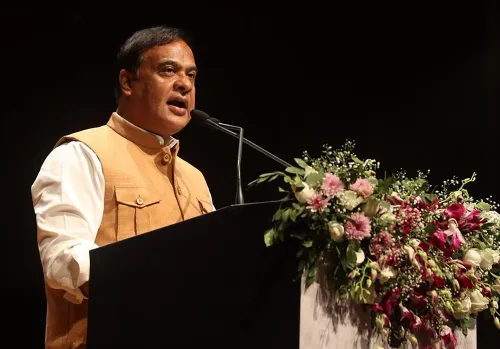
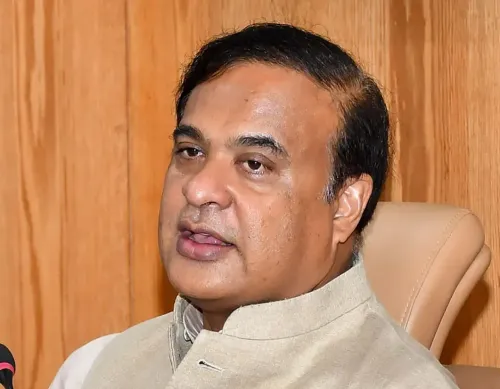
CM Himanta Flags 200 Ayushman Mandirs for Assam Tea Gardens
Synopsis
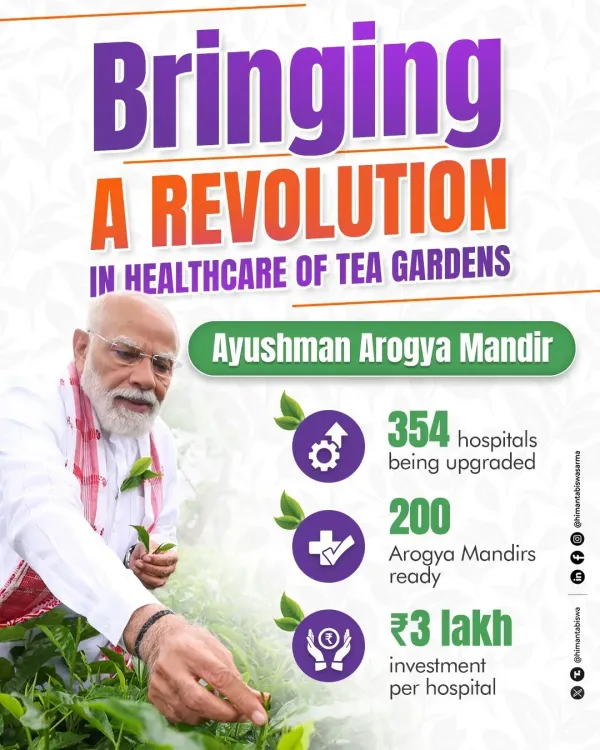
Assam Chief Minister Himanta Biswa Sarma announced on June 8, 2026, that 200 Ayushman Arogya Mandirs have been built inside tea gardens, with more planned, as the state targets primary healthcare delivery for plantation communities under the Ayushman Bharat framework.
Key Takeaways
200 Ayushman Arogya Mandirs have been built inside tea gardens across Assam as of June 2026.
CM Himanta Biswa Sarma says more such facilities are in the pipeline, signalling continued expansion.
The initiative is framed under the 'Double Engine Government' model of aligned BJP governance at the state and central levels.
Ayushman Arogya Mandirs are rebranded Health and Wellness Centres under the central Ayushman Bharat programme launched in 2018.
Tea garden communities in Assam have historically lacked access to public healthcare due to the remote, enclosed nature of plantation estates.
Real-world impact will depend on the operationalisation, staffing, and sustained funding of these centres beyond construction.
Assam Chief Minister Himanta Biswa Sarma on Monday, June 8, 2026, announced that 200 Ayushman Arogya Mandirs have been built inside tea gardens across the state, reaffirming his government's commitment to extending primary healthcare to one of Assam's most historically underserved communities.
Context
Posting on X, CM Sarma said the 'Double Engine Government' — a phrase BJP uses to describe aligned governance at the state and Centre — is committed to the 'all-round welfare of the tea garden community,' with healthcare as a key priority. He added that 'many more' such facilities are on the way, signalling continued expansion of the programme.
The statement comes against the backdrop of sustained political attention on Assam's tea-tribe communities, who form a significant electoral constituency and have historically had limited access to public health infrastructure due to the remote and enclosed nature of plantation estates.
Policy Backdrop
Ayushman Arogya Mandirs are the rebranded Health and Wellness Centres under the Ayushman Bharat programme, launched by the Government of India in 2018 to strengthen comprehensive primary healthcare at the village level. They are designed to deliver preventive, promotive, and curative services closer to where people live and work.
Following the 2021 Assam assembly elections, the state government announced a series of targeted welfare measures for tea-tribe communities spanning housing, education, and health. The deployment of Arogya Mandirs inside tea gardens represents the health pillar of that broader agenda, using centrally sponsored infrastructure to reach geographically isolated plantation populations.
Successive Assam governments have attempted to extend central schemes to tea estates, but the current administration has framed the effort explicitly within the 'Double Engine' model — arguing that alignment between BJP governments in Dispur and New Delhi accelerates delivery of such programmes.
Stakeholders and Impact
Tea garden workers and their families stand to benefit most directly. Plantation communities in Assam have long faced barriers to healthcare access — physical distance from district hospitals, irregular transport, and limited awareness — making facility-level primary care within garden boundaries a meaningful intervention.
The Arogya Mandir model, when fully operationalised, is intended to provide services ranging from maternal and child health to non-communicable disease screening, reducing dependence on overburdened district-level facilities. The announcement of 200 such centres already built signals a substantial infrastructural push, though the pace of operationalisation and staffing will determine real-world impact.
What's Next
CM Sarma's reference to 'many more' facilities suggests additional Arogya Mandirs are in the pipeline, with the precise rollout timeline likely to emerge through state health department progress reports or the next Assam budget. Observers will watch whether supplementary budgetary allocations are made to staff, equip, and sustain these centres beyond construction.
The broader test will be whether the infrastructure translates into measurable improvements in health indicators — maternal mortality, infant mortality, and disease burden — among tea garden communities, metrics that state and central health ministries track under the Ayushman Bharat framework.
Point of View
The Chief Minister simultaneously credits central policy architecture and state-level execution, reinforcing the BJP's pitch that aligned governance produces faster outcomes. The Arogya Mandir rollout also fits a broader national pattern of using primary health infrastructure as a low-controversy, high-visibility governance signal ahead of electoral cycles. The critical variable going forward is whether construction numbers translate into functional, staffed facilities — a gap that has historically undermined similar schemes in remote plantation areas.
NationPress
19 Sept 2026
Frequently Asked Questions
What are Ayushman Arogya Mandirs in Assam's tea gardens?
Ayushman Arogya Mandirs are rebranded Health and Wellness Centres under the central Ayushman Bharat programme. In Assam, the state government has built 200 of these centres inside tea gardens to provide primary healthcare services directly to plantation workers and their families.
How many Ayushman Arogya Mandirs have been built in Assam tea gardens?
According to CM Himanta Biswa Sarma's announcement on June 8, 2026, 200 Ayushman Arogya Mandirs have already been built inside tea gardens, with more planned for future rollout.
What is the 'Double Engine Government' that CM Himanta refers to?
'Double Engine Government' is a BJP phrase describing states where both the state government and the central government are BJP-led, with the argument that policy alignment between the two levels accelerates welfare delivery and development.
Why do Assam tea garden communities need special healthcare facilities?
Tea garden communities live in geographically isolated plantation estates, historically cut off from mainstream public health infrastructure. Distance from district hospitals, poor transport links, and limited awareness have made access to healthcare a persistent challenge for these workers.
What services do Ayushman Arogya Mandirs provide?
Ayushman Arogya Mandirs are designed to deliver comprehensive primary healthcare including maternal and child health services, non-communicable disease screening, and preventive and promotive health services at the community level, reducing dependence on distant district hospitals.