CM Himanta: 60% Flood Embankment Work Done in Jorhat
Synopsis
Assam Chief Minister Himanta Biswa Sarma announced on 28 July 2026 that 60 per cent of embankment restoration using geo-tube technology has been completed along the Kakodonga, Bhogdoi, Jhanji and Charaipani rivers in flood-prone Jorhat district, as the state accelerates anti-flood and anti-erosion measures during the monsoon season.
Key Takeaways
60 per cent of embankment restoration work has been completed across four river stretches in Jorhat district as of 28 July 2026 .
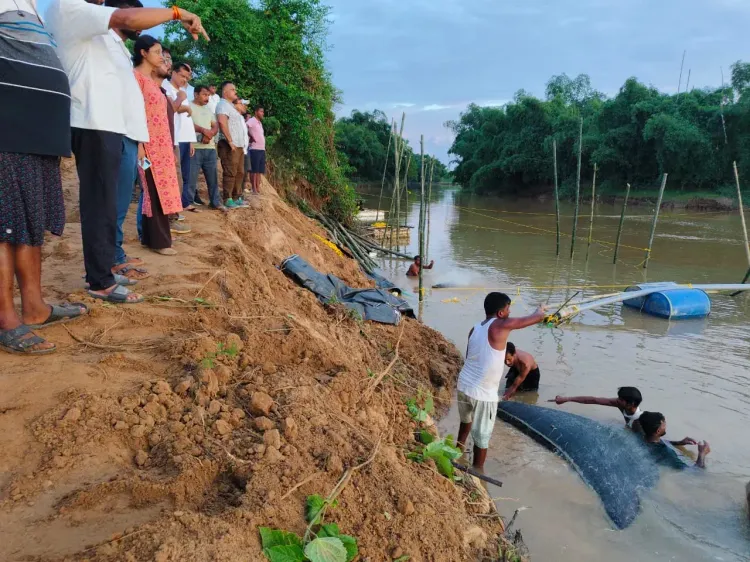
The state is using geo-tube technology — geosynthetic fabric tubes filled with sand — for riverbank protection, described by CM Sarma as a 'proven technology.' The four rivers targeted are Kakodonga , Bhogdoi , Jhanji , and Charaipani , all in flood-vulnerable Jorhat district.
Assam experiences annual monsoon flooding from the Brahmaputra and its tributaries, causing displacement and crop loss across upper Assam.
The BJP -led state government has framed these works as part of accelerated infrastructure resilience across the Northeast.
The remaining 40 per cent of restoration work and potential central funding requests under the Brahmaputra flood management framework remain key items to watch.
Assam Chief Minister Himanta Biswa Sarma announced on Tuesday, 28 July 2026 that the state has completed 60 per cent of embankment restoration work across four river stretches in Jorhat district, deploying geo-tube technology to combat annual flood and erosion damage.
Context
In a post on X tagged #AssamFloods, the Chief Minister stated that authorities are 'promptly shoring up measures to strengthen our anti-flood and anti-erosion measures.' The restoration work spans embankments along the Kakodonga, Bhogdoi, Jhanji, and Charaipani rivers — all tributaries that flow through or near Jorhat and are known to breach banks during the monsoon season.
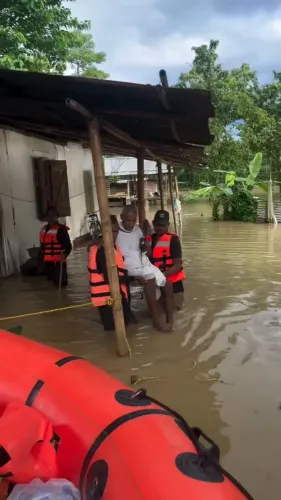
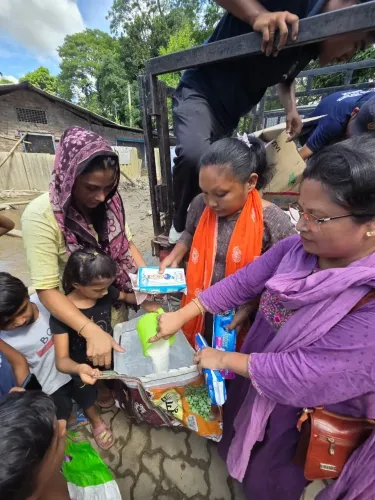
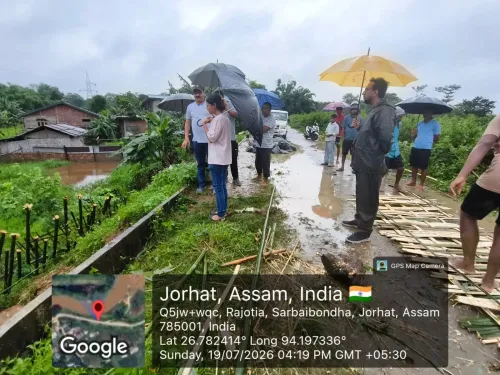
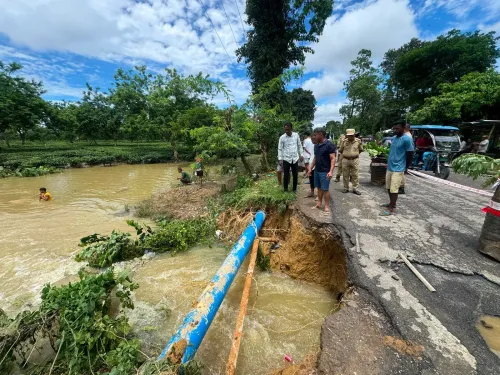
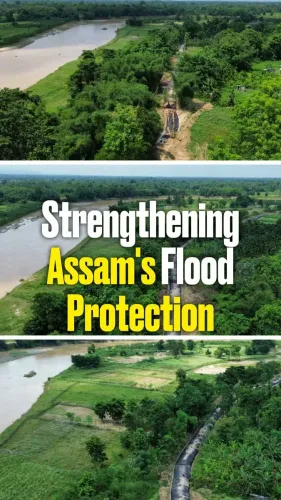
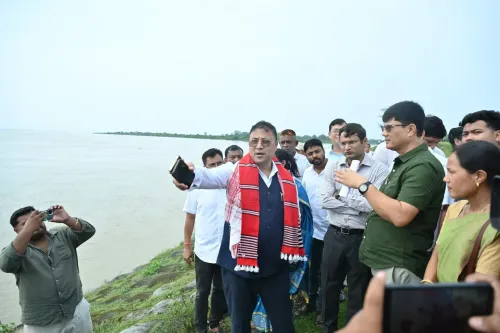
The announcement was accompanied by three images, indicating ground-level progress at the embankment sites. The Chief Minister framed the update as evidence of proactive state action ahead of the peak monsoon period.
Policy Backdrop
Assam is one of India's most flood-prone states, with the Brahmaputra and its tributaries inundating large swathes of agricultural and residential land every year. Successive state governments have pursued embankment construction and reinforcement as the primary line of defence, with engineered solutions such as geo-tubes piloted in districts including Dibrugarh and Majuli since the early 2010s.
Geo-tube technology involves large geosynthetic fabric tubes filled with sand or dredged material, which are placed along riverbanks to resist erosion and reduce embankment breaches. The current BJP-led government under CM Sarma has positioned such interventions as part of a broader push for accelerated infrastructure resilience across the Northeast.
Jorhat, an upper Assam district, faces recurring displacement of farming communities and damage to standing crops each monsoon. The four rivers named in the announcement — Kakodonga, Bhogdoi, Jhanji, and Charaipani — run through flood-vulnerable zones where embankment failures have historically caused significant damage.
Stakeholders and Impact
Residents of Jorhat district, particularly farmers whose paddy fields lie adjacent to these river stretches, stand to benefit most directly from the completed works. Embankment breaches in this region typically trigger displacement, crop loss, and damage to rural road networks, compounding economic hardship for communities already dependent on the kharif harvest.
The state government's use of geo-tube technology, described by the Chief Minister as a 'proven technology,' signals a shift from purely earthen embankments toward more durable engineered solutions. If the remaining 40 per cent of restoration work is completed before the monsoon peak, it could meaningfully reduce inundation risk in the affected corridors.
What's Next
Attention will now focus on the timeline for completing the remaining restoration work on all four embankments and whether the state will seek supplementary central funding under the Brahmaputra flood management framework. The pace of work on the Jhanji and Charaipani stretches — not separately detailed in the announcement — will be closely watched by district administration and affected communities alike.
With the monsoon season at its height in late July, any further delay in completing the outstanding 40 per cent of embankment work could expose riverside settlements to heightened flood risk. The Chief Minister's public update may also be read as a signal to district officials to accelerate on-ground execution before the next major rainfall event.
Point of View
Highlighted explicitly as 'proven,' reflects the BJP-led government's broader narrative of modernising flood management in the Northeast beyond traditional earthen embankments. This announcement fits a pattern of the Chief Minister using social media to project visible infrastructure delivery in a state where annual flooding is both a humanitarian crisis and a persistent political liability. The critical test will be whether completion timelines hold and whether the works demonstrably reduce inundation when the next major rainfall event arrives.
NationPress
28 Jul 2026
Frequently Asked Questions
What is geo-tube technology used in Assam flood protection?
Geo-tube technology uses large geosynthetic fabric tubes filled with sand or dredged material and placed along riverbanks to resist erosion and prevent embankment breaches. Assam has been piloting this approach in flood-prone districts as a more durable alternative to traditional earthen embankments.
Which rivers in Jorhat are getting embankment restoration work?
The four rivers targeted for embankment restoration in Jorhat district are the Kakodonga, Bhogdoi, Jhanji, and Charaipani, all of which are tributaries that flow through flood-vulnerable zones in upper Assam.
How bad are floods in Jorhat Assam?
Jorhat is an upper Assam district that faces recurring annual flooding from Brahmaputra tributaries, causing displacement of farming communities, crop loss, and damage to rural infrastructure every monsoon season.
What did Himanta Biswa Sarma say about Assam floods 2026?
On 28 July 2026, Chief Minister Himanta Biswa Sarma announced that 60 per cent of embankment restoration work using geo-tube technology has been completed on the Kakodonga, Bhogdoi, Jhanji and Charaipani rivers in Jorhat, and that the state is promptly strengthening its anti-flood and anti-erosion measures.
What is the Brahmaputra flood management framework?
The Brahmaputra flood management framework is a central government mechanism under which states like Assam can seek funding and technical support for flood control infrastructure along the Brahmaputra river system, including embankment works and erosion management.