CM Himanta Allocates ₹4,000cr for Assam Pipeline Irrigation
Synopsis
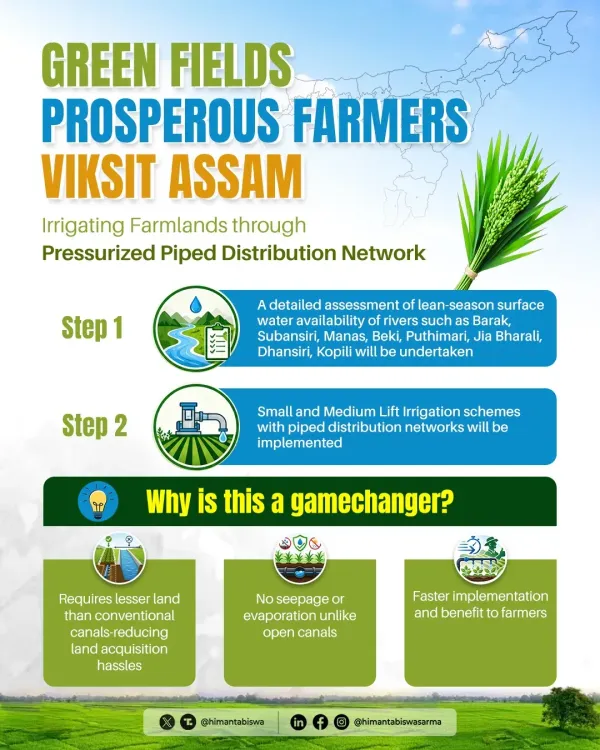
Assam CM Himanta Biswa Sarma has announced that the Assam Budget 2026 earmarks nearly ₹4,000 crore over five years to build a pressurised pipeline irrigation network, aiming to eliminate the 40-50% water loss typical of conventional open canal systems under the Per Drop More Crop mission.
Key Takeaways
Assam CM Himanta Biswa Sarma announced the initiative on 18 July 2026 .
Conventional open canal systems lose 40–50% of water through seepage and evaporation.
The Assam Budget 2026 has earmarked nearly ₹4,000 crore for the pipeline network over five years .
The project is aligned with the Per Drop More Crop micro-irrigation component of the central PMKSY scheme, launched in 2015.
The initiative extends India's national shift toward pressurised irrigation into the Northeast , where topography complicates conventional canal systems.
Primary beneficiaries are Assam's farming communities , with potential gains in crop yield predictability and rural employment.
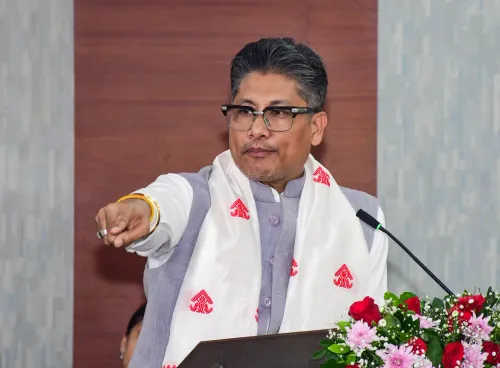
Assam Chief Minister Himanta Biswa Sarma on Saturday, 18 July 2026 announced a major irrigation modernisation push, stating that the Assam Budget 2026 has earmarked nearly ₹4,000 crore over five years to build a pressurised pipeline irrigation network across the state — directly targeting the water-loss problem endemic to conventional open canal systems.
Context
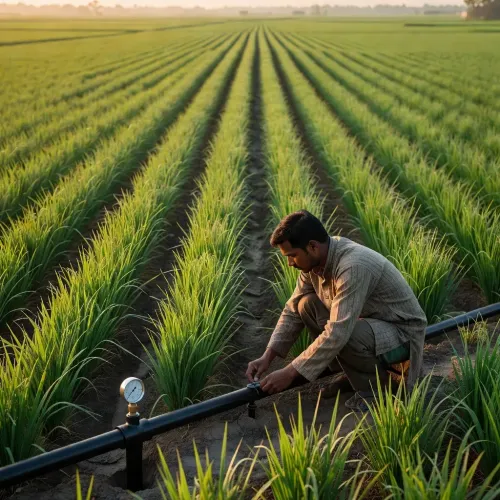
In his post, CM Sarma highlighted that conventional open canal systems lose between 40 and 50 per cent of water through seepage and evaporation. The proposed pressurised pipeline network, he said, is an 'innovative intervention' designed to deliver water directly to fields with far greater efficiency. The initiative is framed under the Per Drop More Crop mission, the micro-irrigation arm of the central government's agricultural water-use programme.
Assam is one of India's most water-abundant states yet paradoxically struggles with irrigation inefficiency, as its extensive river systems and flood-prone terrain make open canal management costly and wasteful. The shift to pressurised pipelines addresses both conveyance loss and the unpredictability of surface water availability.
Policy Backdrop
The Per Drop More Crop component was incorporated into the Pradhan Mantri Krishi Sinchayee Yojana (PMKSY), launched in 2015, to promote micro-irrigation technologies — including drip and sprinkler systems — at scale across Indian agriculture. The programme incentivises states to invest in infrastructure that reduces water consumption per unit of crop output.
Assam's decision to channel nearly ₹4,000 crore into pipeline irrigation over the next five years represents one of the most significant capital commitments to micro-irrigation in the Northeast. Indian states have progressively moved toward pressurised and piped systems to cut conveyance losses, and this allocation extends that national trend into a region where topography and rainfall variability have historically complicated conventional systems.
The Northeast's unique agricultural geography — marked by hilly terrain, heavy monsoon dependence, and fragmented landholdings — makes centralised open canal infrastructure particularly loss-prone, lending additional urgency to the pipeline approach.
Stakeholders and Impact
The primary beneficiaries are Assam's farming communities, who have long contended with erratic water supply despite the state's apparent water abundance. A pressurised pipeline network, if implemented as planned, would deliver more predictable irrigation to fields, potentially improving crop yields and reducing dependence on monsoon timing.
The ₹4,000 crore outlay also signals significant capital expenditure in rural infrastructure, with downstream effects on construction employment, equipment procurement, and supply chains across the state. Integration with existing PMKSY frameworks could unlock additional central co-funding, amplifying the impact of the state's own allocation.
What's Next
Attention will now turn to the phased rollout plan for the pressurised pipeline network and whether subsequent budget cycles maintain or expand the commitment. Observers will also watch for formal convergence between Assam's state-funded pipeline programme and central PMKSY disbursements, which could determine the overall scale and speed of implementation. The success of the initiative will be measured against measurable reductions in conveyance loss and improvements in irrigated area coverage across the state.
Point of View
000 crore pipeline irrigation commitment is the most consequential capital allocation in Assam's agricultural infrastructure in recent memory, and its framing under 'Per Drop More Crop' is a deliberate alignment with central government priorities — a pattern CM Sarma has consistently used to position Assam as a model BJP-governed state in the Northeast. The move addresses a structural inefficiency that has persisted for decades, and its success will depend heavily on execution quality and maintenance capacity, both historically weak points in state irrigation departments. If the programme integrates effectively with PMKSY co-funding, it could set a replicable template for other Northeast states facing similar topographic and water-management challenges. The five-year horizon also means accountability will be tested across budget cycles, making it as much a political commitment as a technical one.
NationPress
19 Jul 2026
Frequently Asked Questions
What is the Assam Budget 2026 irrigation plan?
The Assam Budget 2026 has earmarked nearly ₹4,000 crore over five years to build a pressurised pipeline irrigation network aimed at replacing water-wasteful open canal systems across the state.
Why are open canal irrigation systems being replaced in Assam?
Open canal systems lose between 40 and 50 per cent of water through seepage and evaporation. Pressurised pipelines deliver water directly to fields, dramatically cutting these conveyance losses.
What is Per Drop More Crop?
Per Drop More Crop is the micro-irrigation component of the central government's Pradhan Mantri Krishi Sinchayee Yojana (PMKSY), launched in 2015 to improve water-use efficiency in Indian agriculture through drip and sprinkler systems.
Who benefits from Assam's pipeline irrigation scheme?
Assam's farming communities are the primary beneficiaries, as the scheme aims to provide more reliable and efficient water supply to agricultural fields, potentially improving crop yields and reducing monsoon dependence.
How does Assam's irrigation plan connect to central government schemes?
The initiative is aligned with the central government's Per Drop More Crop mission under PMKSY, and integration with that framework could unlock additional central co-funding to supplement the state's own ₹4,000 crore allocation.