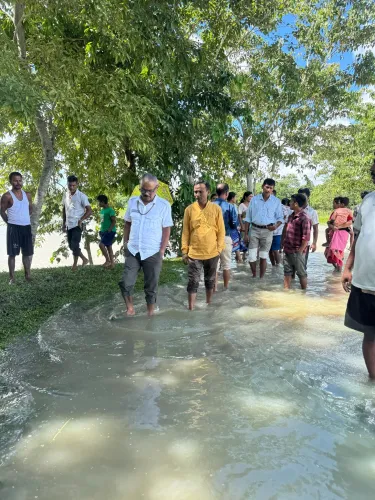
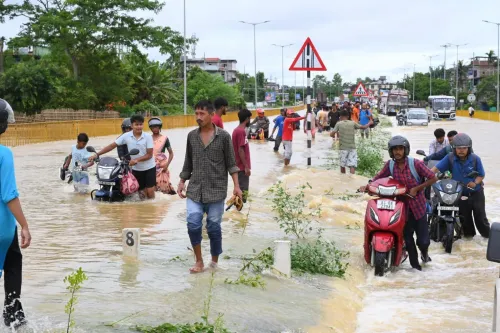
CM Himanta announces flood relief package for Assam families
Synopsis
Assam Chief Minister Himanta Biswa Sarma on July 28, 2026 announced key government decisions to assist and rehabilitate every flood-affected family in the state, describing the current flood situation as unprecedented.
Key Takeaways
Assam CM Himanta Biswa Sarma made a major flood relief announcement on July 28, 2026 .
The Chief Minister described the flood situation as 'unprecedented' ( অভূতপূৰ্ব ).
The government has committed to assisting every flood-affected family — not just the worst-hit pockets.
Goals include immediate aid, rehabilitation, and restoration of normal life.
Specific relief measures, amounts, and timelines are yet to be officially detailed.
Assam has a long pattern of state-level flood relief announcements, with prior packages rolled out in 2022 and 2023 .
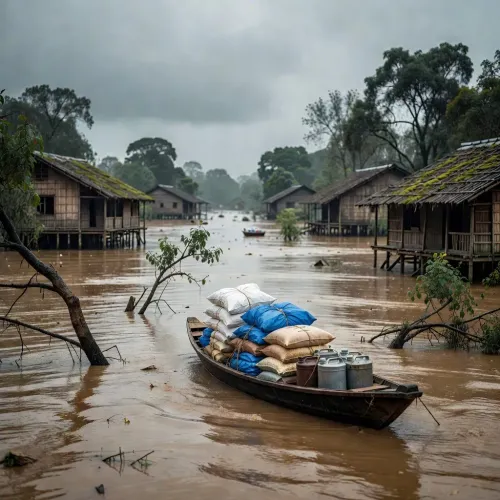
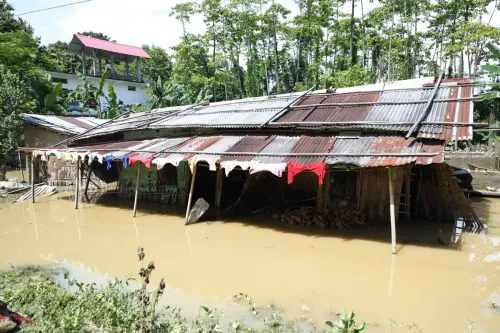
In what he called an unprecedented flood situation, Assam Chief Minister Himanta Biswa Sarma on Tuesday, July 28, 2026 announced a set of key decisions aimed at providing immediate assistance and long-term rehabilitation to every flood-affected family across the state.
Posting in Assamese, the Chief Minister declared: 'In this difficult time, the Assam government is by your side. We have taken several important decisions to assist every flood-affected family and to restore their rehabilitation and normal way of life.'
An 'unprecedented' flood season and what the government is promising
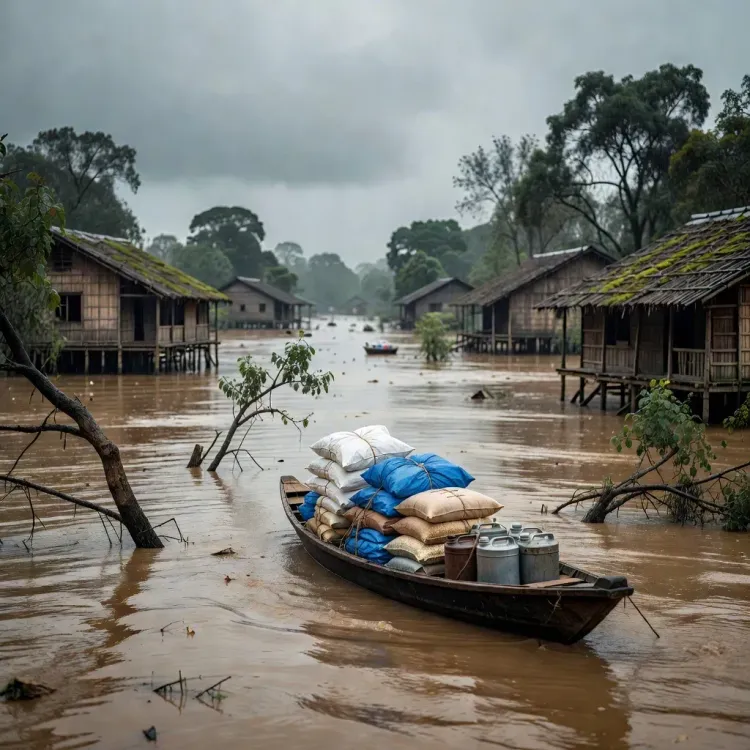
Assam's riverine geography — shaped by the Brahmaputra and its tributaries — makes the state one of India's most flood-vulnerable regions. Every monsoon season, lakhs of people are displaced, crops are destroyed, and infrastructure is battered. The Chief Minister's use of the word 'unprecedented' (অভূতপূৰ্ব) signals that the 2026 flood season is being treated as more severe than the annual baseline.
The announcement follows a well-established pattern: in 2022 and 2023, the state government rolled out ex-gratia payments, temporary shelters, and rehabilitation packages during similar monsoon crises. This time, Sarma has indicated that 'important decisions' have already been taken — though the specific measures, figures, and timelines are yet to be detailed publicly.
Every family, not just the worst-hit
The language of the announcement is notable for its breadth. Sarma's post commits to reaching every flood-affected family — a framing that suggests a wider net than targeted or district-specific relief. Rehabilitation and normalisation of daily life are explicitly named as goals alongside immediate aid, pointing to a two-phase approach: emergency support first, structural recovery second.
The weeks ahead will be telling — specifically, whether the state formalises a relief quantum per family, whether it seeks additional central government assistance, and how quickly the rehabilitation machinery moves on the ground.
Point of View
Rather than issuing district-level allocations, broadens the political dividend if delivery follows. Assam's chronic flood vulnerability has long been a governance pressure point, and how swiftly specific measures are formalised and disbursed will determine whether this announcement is remembered as decisive leadership or familiar pre-monsoon optics.
NationPress
29 Jul 2026
Frequently Asked Questions
What did Assam CM Himanta Biswa Sarma announce for flood victims?
On July 28, 2026, CM Sarma announced that the Assam government has taken key decisions to provide immediate assistance and rehabilitation to every flood-affected family in the state, describing the flood situation as unprecedented.
How bad are the Assam floods in 2026?
CM Himanta Biswa Sarma himself described the 2026 flood situation in Assam as 'unprecedented,' suggesting it is more severe than the annual monsoon flooding the state routinely faces from the Brahmaputra and its tributaries.
What relief does the Assam government give to flood-affected families?
The Assam government has in past years provided ex-gratia payments, temporary shelters, and rehabilitation packages to flood victims. The July 2026 announcement promises similar support, though specific amounts and measures are yet to be publicly detailed.
Will the Assam government seek central assistance for the 2026 floods?
That has not been announced yet. Whether Assam formally requests additional central government funds under the National Disaster Response Fund is among the key developments to watch in the coming weeks.
Why does Assam flood every year?
Assam's geography places it in the floodplain of the Brahmaputra river and its many tributaries. Heavy monsoon rainfall, combined with limited embankment and drainage capacity, causes recurrent flooding that displaces lakhs of people annually.