CM Himanta: Assam seized ₹3,000cr drugs, 26,000 arrested in 5 yrs
Synopsis
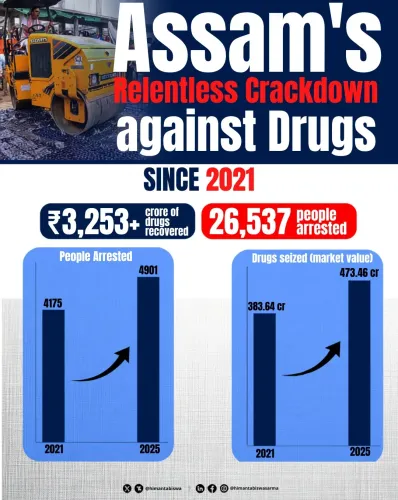
Assam Chief Minister Himanta Biswa Sarma announced on 12 July 2026 that the state has seized over ₹3,000 crore in narcotics and arrested more than 26,000 people under the NDPS Act in five years. The government is now scaling up to dismantle inter-state drug supply chains with Union Government support.
Key Takeaways
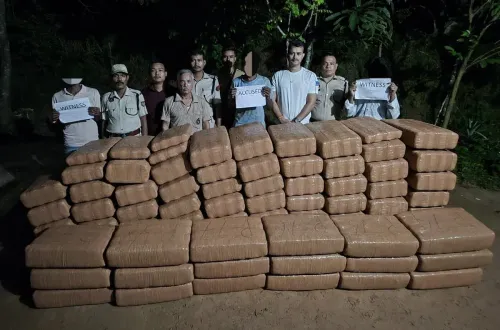
Assam seized over ₹3,000 crore worth of narcotics over the past five years .
More than 26,000 individuals have been arrested and charged under the NDPS Act in the same period.
CM Himanta Biswa Sarma announced a strategic shift toward tracking entire inter-state trafficking chains, not just individual offenders.
The expanded operation is being conducted with the support of the Union Government .
Assam borders Myanmar , a key source of narcotics from the Golden Triangle , making it a critical transit corridor for drugs entering India .
The move signals closer coordination between Assam Police , the Narcotics Control Bureau (NCB) , and other state agencies.
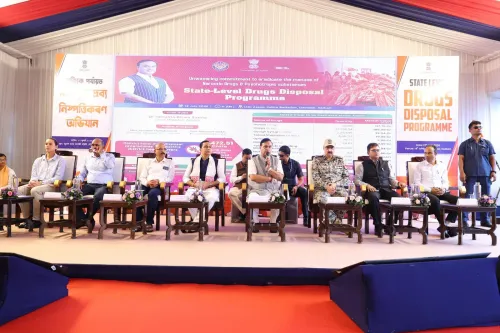
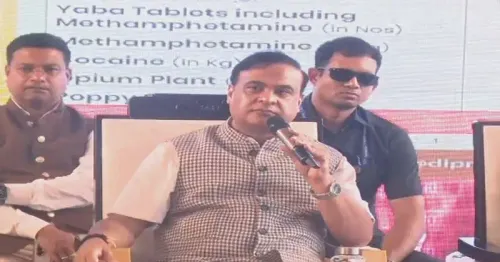
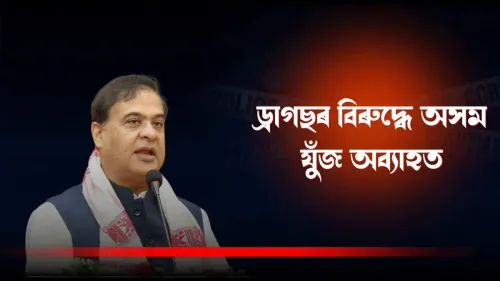
Assam Chief Minister Himanta Biswa Sarma on Sunday, 12 July 2026, stated that the state has seized over ₹3,000 crore worth of narcotics, arrested more than 26,000 individuals, and charged them under the Narcotic Drugs and Psychotropic Substances (NDPS) Act over the past five years, signalling a significant escalation in the state's counter-narcotics campaign.
Context
CM Sarma stated that Assam is now moving 'a step ahead' by tracking down entire supply chains within an inter-state narcotics nexus, with the support of the Union Government. The announcement marks a shift in strategy — from arresting individual offenders to dismantling the broader trafficking networks that funnel drugs across state and national borders.
The post, shared on X (formerly Twitter), comes as part of an ongoing public accountability exercise by the Chief Minister, who has regularly highlighted anti-drug milestones since assuming office in May 2021.
Policy Backdrop
Assam shares a porous border with Myanmar, a primary source country for heroin and synthetic drugs originating in the Golden Triangle — the region encompassing parts of Myanmar, Laos, and Thailand. This geography has historically made the state a transit corridor for narcotics entering the Indian mainland.
The Nasha Mukt Bharat Abhiyan, launched in August 2020 by the Ministry of Social Justice and Empowerment, laid the national framework for coordinated enforcement and rehabilitation. The Narcotics Control Bureau (NCB), operating under the Ministry of Home Affairs, serves as the central nodal agency enforcing the NDPS Act and coordinating operations across states. Assam's intensified operations since 2021 have aligned with this national push.
Charging accused persons under the NDPS Act — which provides for stringent bail conditions and mandatory minimum sentences — has been a deliberate tool to build what CM Sarma described as 'strong deterrence.'
Stakeholders and Impact
The most immediate impact falls on drug trafficking networks that have used Assam as a conduit between the Indo-Myanmar border and markets deeper inside India. Border communities, long vulnerable to both drug abuse and coercion by trafficking groups, stand to benefit from sustained enforcement pressure.
The shift toward inter-state chain-tracking implies closer coordination between Assam Police, the NCB, and law-enforcement agencies in neighbouring states. For the 26,000-plus individuals already arrested, the emphasis on NDPS Act charges means prolonged legal proceedings under one of India's toughest narcotics statutes.
Civil society groups working on drug rehabilitation in the Northeast have previously flagged the need to pair enforcement with treatment infrastructure — a dimension the current announcement does not address directly.
What's Next
The reference to tracking 'the entire chain in the inter-state nexus' with Union Government support points toward potential joint task forces involving the NCB and multiple state police forces. Observers will watch for formal announcements of such mechanisms, as well as any legislative proposals to strengthen inter-state coordination under the NDPS Act.
With Assam continuing to position itself as a model for counter-narcotics governance in the Northeast, CM Sarma's public tracking of enforcement metrics also carries political weight ahead of future electoral cycles in the region. The success of the inter-state nexus crackdown will ultimately be measured not just by seizure figures, but by whether supply chains are durably disrupted.
Point of View
Arrests, chargesheet rates — as measurable proof of administrative will. The pivot from individual arrests to inter-state chain disruption represents a maturation of the strategy, acknowledging that supply-side enforcement at the state level alone cannot break entrenched trafficking networks rooted in cross-border geography. The explicit invocation of 'Union Government support' also reinforces the Centre-state partnership framing that has defined the BJP's Northeast policy since 2021. Whether the inter-state mechanism produces prosecutable outcomes, rather than just headline seizures, will be the real test of this next phase.
NationPress
12 Jul 2026
Frequently Asked Questions
How much drugs has Assam seized in the last 5 years?
Assam Chief Minister Himanta Biswa Sarma stated on 12 July 2026 that the state has seized over ₹3,000 crore worth of narcotics over the past five years.
How many people have been arrested for drugs in Assam?
According to CM Sarma, more than 26,000 individuals have been arrested and charged under the NDPS Act in Assam over the last five years.
What is the NDPS Act and why does it matter in Assam's drug crackdown?
The Narcotic Drugs and Psychotropic Substances (NDPS) Act is India's primary narcotics law, providing for stringent bail conditions and mandatory minimum sentences. Assam has used it to build legal deterrence against drug offenders.
Why is Assam a major drug trafficking corridor?
Assam shares a border with Myanmar, a primary source of heroin and synthetic drugs from the Golden Triangle region. This geography makes the state a key transit route for narcotics entering the Indian mainland.
What is the Nasha Mukt Bharat Abhiyan?
The Nasha Mukt Bharat Abhiyan is a nationwide programme launched in August 2020 by the Ministry of Social Justice and Empowerment to prevent drug abuse and coordinate enforcement and rehabilitation efforts across Indian states.