CM Himanta: Assam to be First State With Doctors at Every Sub-Centre
Synopsis
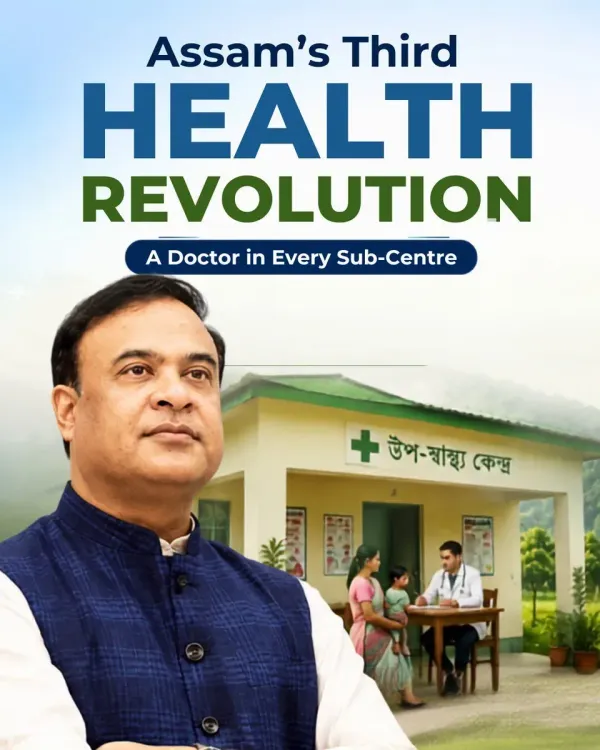
Assam CM Himanta Biswa Sarma announced under Assam Budget 2026 that Assam will be the first Indian state to post a doctor at every health sub-centre, targeting a structural gap in rural primary healthcare delivery.
Key Takeaways
Assam CM Himanta Biswa Sarma announced on 10 July 2026 that Assam aims to be the first state in India to place a doctor at every health sub-centre.
The commitment is linked to the Assam Budget 2026 , indicating budgetary backing rather than a standalone policy pledge.
Health sub-centres are the lowest tier of India's rural health system and have traditionally been staffed by ANMs, not qualified doctors.
The move builds on national frameworks including the National Rural Health Mission (2005) and Ayushman Bharat (2018) , which sought to upgrade sub-centre services.
Key implementation questions — including recruitment targets, timelines, and retention incentives — are expected to emerge from the full budget document.
If successful, the model could influence health policy in other North-Eastern states and prompt central-level replication.
Assam Chief Minister Himanta Biswa Sarma announced on Friday, 10 July 2026 that Assam will become the first state in India to post a doctor at every health sub-centre, framing the move as a landmark step toward delivering quality healthcare at the grassroots level. The announcement was made as part of the Assam Budget 2026 commitments.
Context
Sub-centres are the lowest tier of India's three-tier rural health infrastructure, traditionally staffed by Auxiliary Nurse Midwives (ANMs) and focused on basic preventive and maternal care — not curative services requiring a qualified physician. Sarma's announcement, if implemented, would represent a structural departure from this decades-old model by placing a doctor at every such facility in the state.
Posting the announcement under the hashtag #AssamBudget2026, the Chief Minister signalled that the commitment is backed by budgetary allocation in the current fiscal cycle, lending it institutional weight beyond a policy aspiration.
Policy Backdrop
India has pursued incremental upgrades to rural health infrastructure since the mid-2000s. The National Rural Health Mission (NRHM), launched in 2005, sought to strengthen staffing and infrastructure at sub-centres and primary health centres across states, with a particular focus on high-burden and remote regions — a category that includes much of the Northeast.
In 2018, the Ayushman Bharat programme announced the conversion of sub-centres into Health and Wellness Centres (HWCs), expanding their service packages to include non-communicable disease screening and basic curative care. However, the persistent shortage of qualified doctors at village-level facilities has remained a structural challenge across most Indian states. Assam's stated goal directly targets this gap.
Stakeholders and Impact
The primary beneficiaries would be rural patients in Assam — particularly in remote and tribal areas — who currently travel significant distances to access a qualified physician at a Primary Health Centre (PHC) or district hospital. Bringing a doctor to the sub-centre level could reduce out-of-pocket costs and improve early diagnosis rates for conditions that escalate without timely medical attention.
For primary care doctors and medical graduates, the announcement implies a large-scale rural posting drive, raising questions about recruitment mechanisms, incentive structures, and whether the state will draw on bonded service obligations from government medical college graduates. The success of the initiative will hinge significantly on retention, given the well-documented reluctance of doctors to serve in remote postings without adequate support infrastructure.
What's Next
Attention will now turn to the detailed provisions of the Assam Budget 2026-27 — specifically, the recruitment targets, funding allocations, and timelines attached to this commitment. Whether other North-Eastern states, many of which coordinate policy under the North-East Democratic Alliance (NEDA) that Sarma convenes, choose to replicate the model will be an early indicator of its regional influence. A successful rollout in Assam could also prompt the Union Health Ministry to consider scaling the approach nationally under existing central health missions.
Point of View
The Chief Minister raises the accountability stakes, making it harder to quietly defer. The move also reinforces Sarma's broader governance brand of using Assam as a laboratory for Northeast-first policy ideas that can later be projected nationally. Whether the commitment survives contact with ground-level doctor shortages and remote-posting reluctance will determine if this is transformative governance or an ambitious budget line.
NationPress
10 Jul 2026
Frequently Asked Questions
What did Assam CM Himanta Biswa Sarma announce about health sub-centres?
CM Himanta Biswa Sarma announced on 10 July 2026 that Assam will become the first state in India to ensure every health sub-centre has a doctor, as part of the Assam Budget 2026 commitments.
What is a health sub-centre in India?
A health sub-centre is the lowest tier of India's three-tier rural health system. It is traditionally staffed by Auxiliary Nurse Midwives (ANMs) and focuses on basic preventive and maternal care, not curative services requiring a qualified physician.
Is Assam really the first state to post doctors at sub-centres?
Assam CM Sarma has claimed Assam will be the first state to achieve this. The claim requires confirmation through the full budget provisions and implementation rollout, as the specific details are yet to be publicly verified.
How does this relate to Ayushman Bharat and the National Health Mission?
India's National Rural Health Mission (2005) and Ayushman Bharat (2018) sought to upgrade sub-centres into Health and Wellness Centres with expanded services, but doctor shortages at this level have persisted. Assam's plan directly targets this gap within that broader national framework.
What will determine the success of Assam's sub-centre doctor initiative?
Key factors include the recruitment targets and funding allocations in the Assam Budget 2026-27, the incentive structures offered to doctors for rural postings, and the state's ability to retain medical personnel in remote areas over the long term.