CM Himanta Defends Assam Police in Drug War Encounters
Synopsis
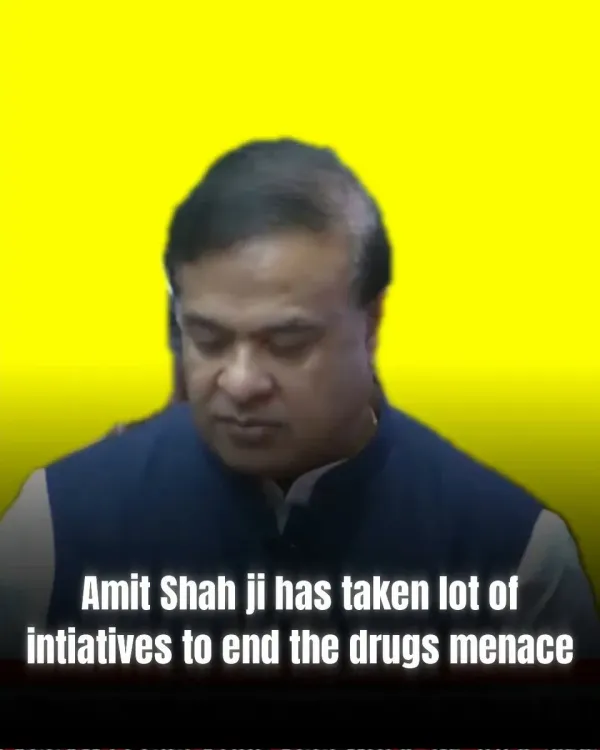
Assam CM Himanta Biswa Sarma defended police return fire in anti-drug encounters on 7 July 2026, saying traffickers fire first. He credited Home Minister Amit Shah for spearheading the state's major anti-narcotics campaign under the #AssamAgainstDrugs banner.
Key Takeaways
CM Himanta Biswa Sarma publicly justified Assam Police return fire during drug operations as acts of self-defence on 7 July 2026 .
The Chief Minister stated that drug traffickers 'frequently' open fire on police officers during operations.
Union Home Minister Amit Shah was credited with leading the overarching anti-narcotics campaign in Assam .
Assam is a major narcotics transit corridor connecting Myanmar and Bangladesh to the broader Golden Triangle supply chain.
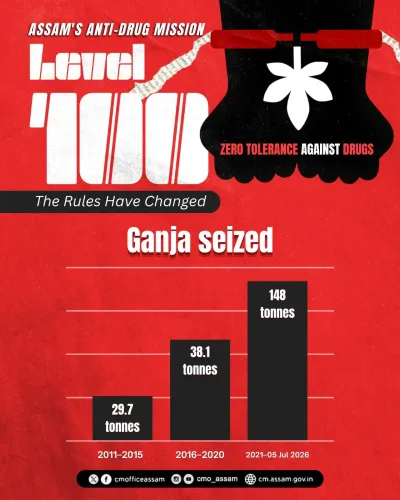
The #AssamAgainstDrugs campaign combines police encounters, seizures, and public outreach across the state.
A joint MHA-NCB review of North-East anti-drug operations is expected in the next quarterly cycle.
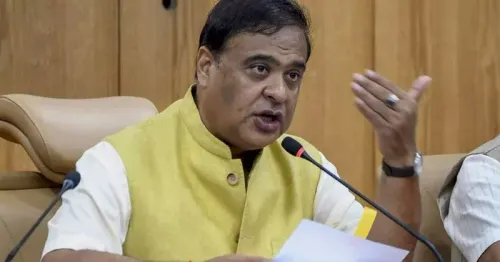
Assam Chief Minister Himanta Biswa Sarma on Tuesday, 7 July 2026, publicly defended the state police's use of return fire during anti-drug operations, stating that traffickers frequently open fire on officers and that the police act in self-defence. He credited Union Home Minister Amit Shah for leading a major campaign against narcotics in the state.
Context
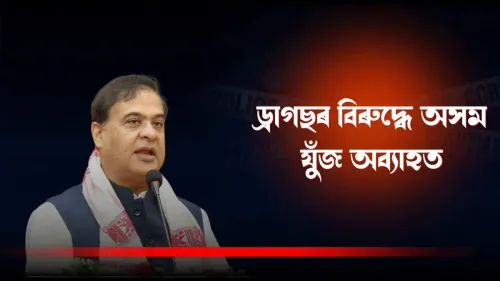
Posting in Hindi on X, CM Sarma wrote: 'ड्रग्स कारोबार के दलाल अक्सर असम पुलिस पर गोली चलाते हैं। अपनी आत्मरक्षा के लिए पुलिस भी return फायर करती है' — 'Drug trade brokers frequently fire upon Assam Police. In self-defence, the police also return fire.' He added that under the leadership of Home Minister Amit Shah, Assam has launched a major campaign against drugs, tagging the effort #AssamAgainstDrugs.
The statement comes amid sustained police encounters with drug networks across the state. Assam sits on a critical narcotics transit corridor linking Myanmar and Bangladesh — both gateways to supply chains originating in the Golden Triangle region of Southeast Asia.
Policy Backdrop
Since 2016, the Ministry of Home Affairs under Amit Shah has directed coordinated anti-narcotics drives across North-East states through the Narcotics Control Bureau (NCB) and state police forces. Assam, governed by the BJP and a key member of the North-East Democratic Alliance (NEDA) convenored by CM Sarma himself, has been a central theatre of this enforcement push.
The approach combines police encounters, large-scale seizures, and public awareness campaigns — a pattern mirrored in neighbouring Manipur and Mizoram. CM Sarma's post fits within a broader political messaging strategy that frames police encounters as defensive, not offensive, actions.
Stakeholders and Impact
Assam Police officers are the most immediate stakeholders, operating in conditions where armed resistance from traffickers is cited as routine. The Chief Minister's statement serves as institutional cover and public acknowledgement of the risks officers face in the field.
For Assam's youth — a demographic the state government has repeatedly identified as most vulnerable to drug abuse — the campaign represents an attempt to disrupt supply networks at the source. Civil liberties observers, however, have previously raised questions about the accountability framework around police encounter killings in the state, a debate the post is likely to reignite.
What's Next
The next quarterly review of Assam's anti-narcotics task force and any joint MHA-NCB operation announcements for the North-East will be closely watched. A formal escalation of the #AssamAgainstDrugs campaign — potentially involving central paramilitary support or inter-state coordination — remains a possibility given the Home Minister's direct association with the drive.
As long as Assam remains a key narcotics transit point, the tension between aggressive enforcement and due-process scrutiny will define the political and legal contours of the state's anti-drug strategy.
Point of View
He simultaneously shields state police from criticism and aligns Assam's enforcement record with the central government's tough-on-crime brand. The self-defence framing is legally significant — it pre-empts judicial or opposition scrutiny of encounter killings by placing the narrative onus on trafficker aggression. This mirrors a pattern seen across BJP-governed North-East states where encounter-based policing is publicly celebrated rather than quietly defended. The long-term test will be whether seizure and arrest data, not just encounter tallies, demonstrate a genuine disruption of supply chains.
NationPress
6 Oct 2026
Frequently Asked Questions
Why did Assam CM Himanta Biswa Sarma defend police encounters in drug cases?
CM Sarma stated on 7 July 2026 that drug traffickers frequently fire upon Assam Police first, and that officers return fire solely in self-defence. He framed the encounters as a necessary part of the state's anti-narcotics campaign led by Home Minister Amit Shah.
What is the #AssamAgainstDrugs campaign?
#AssamAgainstDrugs is Assam government's ongoing anti-narcotics initiative combining police operations, seizures, and public awareness drives, conducted under the broader national framework coordinated by the Ministry of Home Affairs and the Narcotics Control Bureau.
What is Assam's role in India's drug trafficking problem?
Assam is a key transit corridor for narcotics flowing from Myanmar and Bangladesh into mainland India, with supply chains tracing back to the Golden Triangle region of Southeast Asia. Its border geography makes it a persistent hotspot for drug interdiction efforts.
What is Amit Shah's role in Assam's anti-drug drive?
As Union Home Minister, Amit Shah oversees national anti-narcotics coordination through the Ministry of Home Affairs and the Narcotics Control Bureau. Since 2016, the MHA has directed coordinated enforcement drives across North-East states, including Assam.
Have Assam Police encounters in drug cases faced legal scrutiny?
Civil liberties observers have previously raised questions about accountability frameworks around police encounter killings in Assam. CM Sarma's 7 July 2026 statement — emphasising self-defence — appears aimed at addressing such concerns in the public domain.