CM Himanta echoes Modi's vision of India as global defence partner
Synopsis
Assam Chief Minister Himanta Biswa Sarma amplified PM Narendra Modi's Mann Ki Baat assertion that India is emerging as a trusted global defence partner, reflecting the BJP's coordinated push on the defence self-reliance narrative across its leadership network.
Key Takeaways
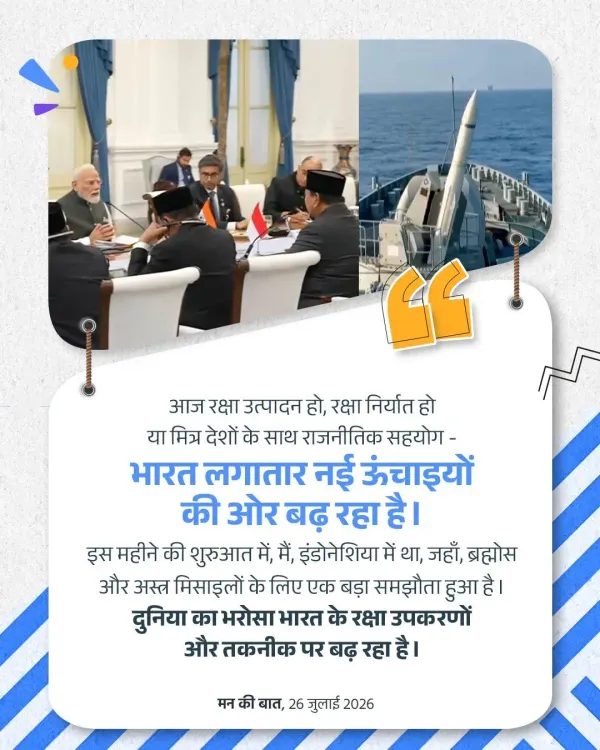
CM Himanta Biswa Sarma shared PM Modi's remark from Mann Ki Baat on 26 July 2026 , calling India a 'trusted global defence partner.' Mann Ki Baat is a monthly radio programme running since October 2014 used by PM Modi to communicate national milestones directly to citizens.
India's defence export ambitions are backed by the Defence Production and Export Promotion Policy (2020) and a raised FDI cap in the sector.
The Atmanirbhar Bharat campaign launched in 2020 specifically targets reduced import dependence and higher domestic defence manufacturing output.
India has expanded defence cooperation agreements with countries across Asia, Africa, and the Middle East to position itself as an alternative global supplier.
Upcoming Union Budget defence allocations and export targets will be key tests of how the stated ambition translates into policy commitments.
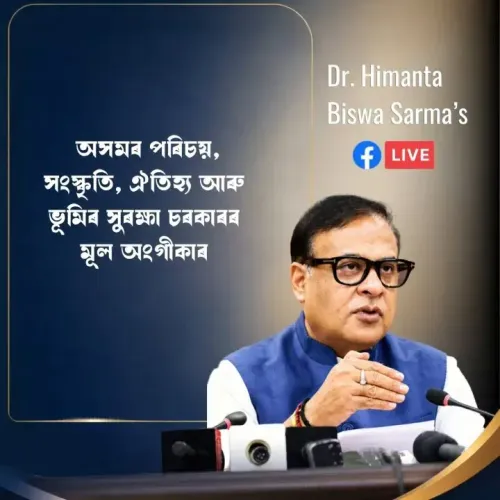
Assam Chief Minister Himanta Biswa Sarma on Sunday, 26 July 2026, amplified Prime Minister Narendra Modi's assertion that India is emerging as a trusted global defence partner, citing the Prime Minister's remarks on the monthly radio programme Mann Ki Baat.
Context
Sharing the Prime Minister's message, CM Sarma quoted Modi as saying, 'India is emerging as a trusted global defence partner.' The remark was made during an episode of Mann Ki Baat, the monthly radio address in which PM Modi regularly highlights themes of national development, self-reliance, and India's growing stature on the world stage.
The Chief Minister's amplification of the message underscores the BJP's coordinated effort to broadcast the Centre's defence narrative across its leadership network, with senior state-level figures reinforcing the Prime Minister's public communications.
Policy Backdrop
India's repositioning as a defence exporter has been shaped by a series of structural reforms over the past decade. The Make in India initiative, launched in 2014, set the foundation for domestic defence production, while the Atmanirbhar Bharat campaign, unveiled in 2020, sharpened the focus on reducing import dependence and scaling up exports.
The government's Defence Production and Export Promotion Policy (2020) set explicit targets for India's share of the global defence market. Alongside this, FDI limits in the defence sector were raised in 2020 to attract foreign technology and investment into domestic manufacturing. These measures collectively form the policy architecture behind the claim of India becoming a trusted partner for defence procurement globally.
Mann Ki Baat, which has been broadcast since October 2014, has served as a platform for the Prime Minister to communicate directly with citizens on issues ranging from social campaigns to strategic milestones, making it a key instrument in shaping public perception of government achievements.
Stakeholders and Impact
The defence indigenisation drive directly affects domestic defence manufacturers, including both public-sector undertakings and private firms that have entered the sector under liberalised FDI and licensing norms. A credible global reputation as a defence partner opens procurement conversations with countries in Asia, Africa, and the Middle East that seek alternatives to traditional suppliers.
For the Indian Armed Forces, the push toward domestic sourcing is intended to reduce strategic vulnerability linked to import dependence. Export partnerships, in turn, create longer production runs that can lower per-unit costs for equipment procured domestically.
CM Sarma, in his capacity as convenor of the North-East Democratic Alliance (NEDA), frequently echoes central government messaging on national security and development, reinforcing the political consensus within the ruling coalition around defence self-reliance.
What's Next
Analysts and industry observers will watch upcoming Union Budget defence allocations and any new export targets announced by the Ministry of Defence as indicators of how the stated ambition translates into fiscal commitment. Defence expos and bilateral cooperation agreements in the coming months will be key signposts for whether India's positioning as a trusted global partner moves from narrative to confirmed order books.
The broader trajectory suggests that India's defence diplomacy will remain a central theme in the government's public communication, with senior leaders across states continuing to amplify the message of strategic self-reliance and growing international acceptance of Indian-made platforms.
Point of View
Where state-level leaders reinforce Centre-driven narratives to maximise reach. The 'trusted global defence partner' framing marks a deliberate shift from India's historically import-dependent posture to one of export credibility — a narrative the government has been building since the Make in India and Atmanirbhar Bharat reforms. Whether the assertion reflects confirmed export contracts or remains an aspirational positioning will be tested by upcoming budget figures and bilateral deal announcements. For CM Sarma, whose political footprint extends across the North-East through NEDA, aligning with the Prime Minister's strategic messaging also reinforces his standing within the national BJP hierarchy.
NationPress
25 Oct 2026
Frequently Asked Questions
What did PM Modi say about India on Mann Ki Baat?
PM Modi stated that 'India is emerging as a trusted global defence partner' during a Mann Ki Baat episode, a remark amplified by Assam CM Himanta Biswa Sarma on 26 July 2026.
What is Mann Ki Baat?
Mann Ki Baat is a monthly radio programme launched by Prime Minister Narendra Modi in October 2014 to address citizens directly on topics including national security, social issues, and development milestones.
What is India's defence export policy?
India's Defence Production and Export Promotion Policy, introduced in 2020, sets targets for increasing India's share of the global defence market and supports domestic manufacturers through FDI liberalisation and indigenisation mandates.
What is Atmanirbhar Bharat in defence?
Atmanirbhar Bharat, launched in 2020, includes a dedicated defence component aimed at reducing India's reliance on imported military equipment and scaling up domestic production and exports.
Why is Himanta Biswa Sarma sharing defence-related posts?
As Assam Chief Minister and BJP leader, CM Sarma regularly amplifies central government messaging on national development themes; his post reflects the party's coordinated communication strategy around India's defence self-reliance narrative.