CM Himanta Calls for Better EAP Access at Shillong Meet
Synopsis
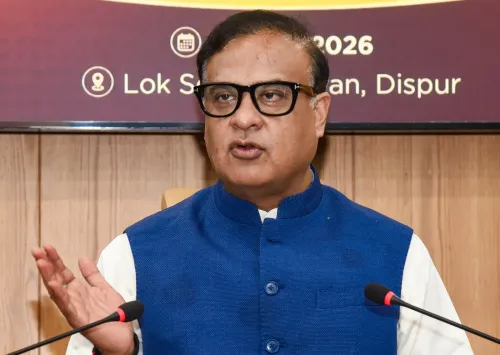
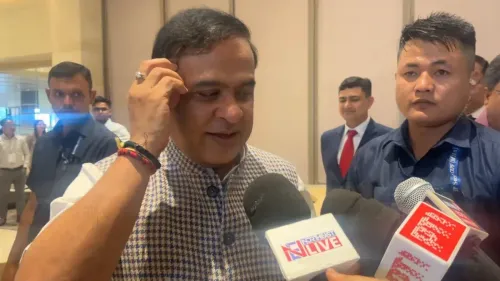
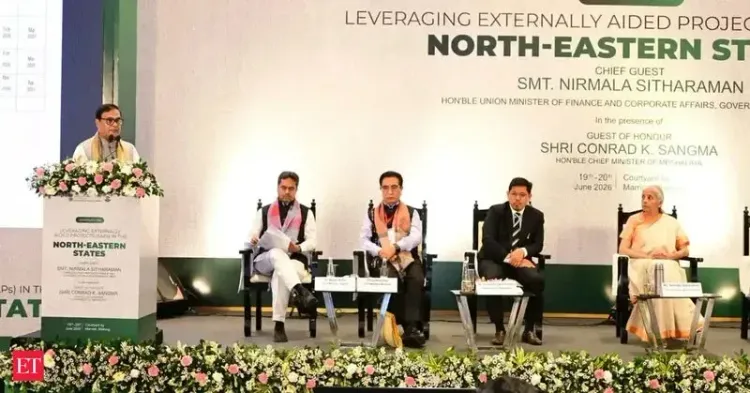
Chief Minister Himanta Biswa Sarma, speaking at Shillong on 20 June 2026, called for enhanced access to Externally Aided Projects, arguing they are pivotal to accelerating infrastructure development and sustaining the Northeast's growth momentum.
Key Takeaways
CM Himanta Biswa Sarma called for enhanced access to Externally Aided Projects (EAPs) at a meeting in Shillong on 20 June 2026 .
EAPs are infrastructure projects financed by multilateral lenders such as the World Bank and the Asian Development Bank .
The call aligns with India's Act East Policy (2014) , which positioned Northeast infrastructure as central to engagement with Southeast Asia.
The North Eastern Council , established in 1971 , has historically coordinated EAPs across the region's eight states .
ADB's North Eastern States Roads Investment Program , active since 2004 , set the precedent for large-scale multilateral financing in the Northeast.
Next steps include potential policy action through the Union Budget , NITI Aayog pipelines, and the Ministry of DoNER .
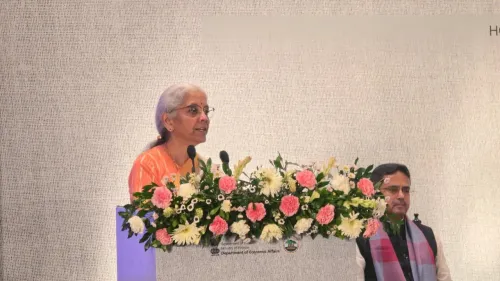
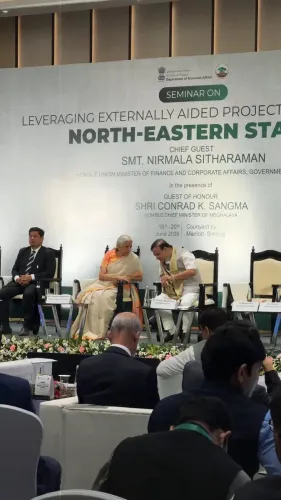
The Chief Minister's Office of Assam announced on Saturday, 20 June 2026 that Chief Minister Himanta Biswa Sarma called for enhanced access to Externally Aided Projects (EAPs) at a meeting in Shillong, underscoring their pivotal role in accelerating infrastructure development and sustaining the Northeast's growth momentum.
Context
Speaking at Shillong — the capital of Meghalaya and a regular venue for regional conclaves of Northeastern states — CM Sarma highlighted EAPs as a critical financing instrument for the region. Externally Aided Projects are infrastructure and development initiatives financed by multilateral lenders such as the World Bank and the Asian Development Bank (ADB), supplementing domestic budgetary allocations. The Chief Minister's call signals a push to deepen the Northeast's reliance on such multilateral channels to bridge persistent infrastructure financing gaps.
Policy Backdrop
The emphasis on EAPs is rooted in a long policy lineage. India's Act East Policy, formally articulated in 2014, placed Northeast infrastructure at the centre of the country's strategic engagement with Southeast Asia, making the region's connectivity a national priority. The North Eastern Council (NEC), established in 1971 and strengthened through successive Five-Year Plans, has historically coordinated externally aided projects across the eight-state region.
Multilateral financing for Northeast infrastructure is not new. The Asian Development Bank's North Eastern States Roads Investment Program, active since 2004, set an early precedent for using EAPs to fund large-scale connectivity projects. Successive central governments have treated such projects as an additional financing channel beyond domestic outlays, and CM Sarma's intervention at Shillong fits squarely within this established pattern.
Stakeholders and Impact
The primary beneficiaries of expanded EAP access would be the eight states of Northeast India — a region that has seen sustained central focus on connectivity since the early 2000s but continues to face gaps between ambitious targets and available fiscal resources. Infrastructure developers, state public works departments, and communities in remote districts stand to gain from faster project execution backed by multilateral funding.
For Assam in particular, which functions as the region's economic and logistical hub, improved EAP pipelines could accelerate road, power, and urban infrastructure projects. Broader regional stakeholders — including businesses dependent on cross-border trade corridors linking the Northeast to Myanmar, Bangladesh, and Southeast Asia — would also benefit from faster connectivity upgrades.
What's Next
Attention will now turn to the next meeting of the North Eastern Council and whether the Union Budget or the NITI Aayog infrastructure pipeline incorporates a dedicated EAP window for the region. CM Sarma's advocacy at Shillong is likely to feed into formal representations to the Ministry of Development of North Eastern Region (DoNER) and the Department of Economic Affairs, which manages India's externally aided project portfolio. If translated into policy, enhanced EAP access could meaningfully scale up infrastructure investment in one of India's most strategically important but fiscally constrained regions.
Point of View
Not merely a policy statement — it signals Assam's intent to position itself as the lead advocate for multilateral financing across the Northeast ahead of the next Union Budget cycle. The demand fits a broader pattern in which frontier states leverage regional forums to extract additional resource commitments from the Centre and international lenders. It also reflects a structural tension in Northeast development: while political momentum and central schemes have grown, the financing gap between targets and actual outlays remains wide. Whether this advocacy translates into a formal dedicated EAP window will be the real test of its impact.
NationPress
20 Jun 2026
Frequently Asked Questions
What are Externally Aided Projects (EAPs) in India?
Externally Aided Projects are infrastructure and development initiatives funded by multilateral lenders such as the World Bank and the Asian Development Bank, supplementing India's domestic budget allocations for large-scale projects.
Why did CM Himanta Biswa Sarma call for better EAP access?
CM Sarma argued at the Shillong meeting that enhanced access to EAPs is pivotal for accelerating infrastructure development and sustaining the Northeast's growth momentum, given persistent gaps between connectivity targets and available fiscal resources.
What is the significance of Shillong as a venue for this meeting?
Shillong, the capital of Meghalaya, regularly hosts regional conclaves of Northeastern states and meetings of the North Eastern Council, making it a natural venue for multi-state policy discussions.
How does India's Act East Policy relate to Northeast infrastructure?
India's Act East Policy, formally articulated in 2014, placed Northeast infrastructure at the centre of the country's strategic engagement with Southeast Asia, making regional connectivity a national priority and boosting the case for multilateral financing.
What could happen next after CM Sarma's call for more EAP access?
The advocacy is expected to feed into representations to the Ministry of DoNER and the Department of Economic Affairs, with the next North Eastern Council meeting and the Union Budget being key moments to watch for a dedicated EAP window.