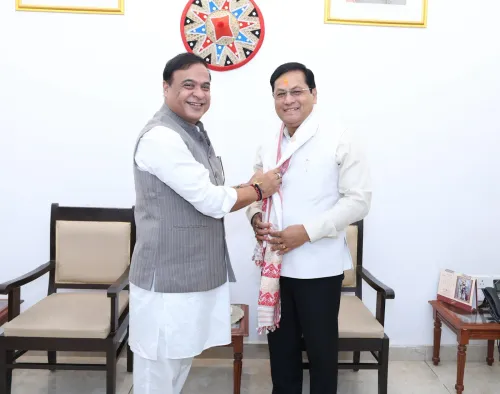
CM Himanta calls on Lok Sabha Speaker Om Birla, lauds digital push
Synopsis
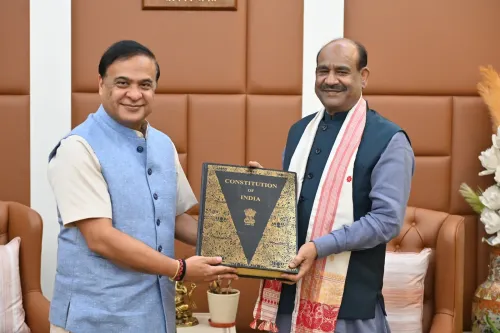
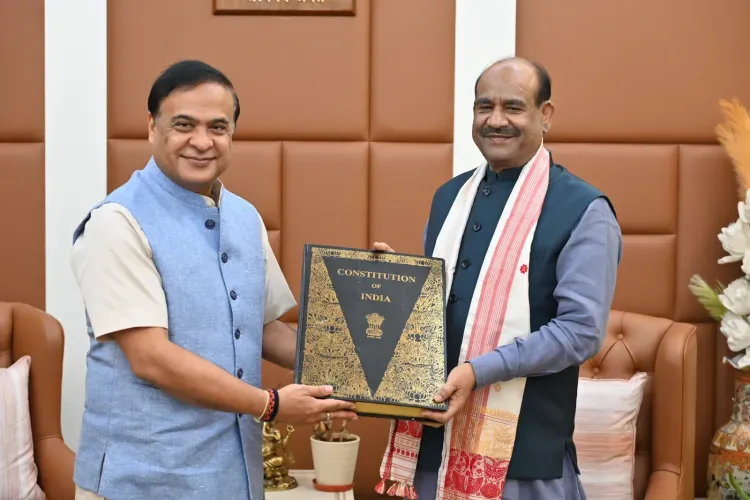
Assam Chief Minister Himanta Biswa Sarma called on Lok Sabha Speaker Om Birla on 1 July 2026, praising his push for a productive, digitised Parliament and noting that the Assam Vidhan Sabha has directly benefited from those efforts.
Key Takeaways
CM Himanta Biswa Sarma met Lok Sabha Speaker Om Birla on 1 July 2026 in a courtesy call.
Sarma publicly praised Birla's 'commitment towards a productive Parliament' as 'truly admirable.' The Assam Vidhan Sabha has adopted digitisation measures, including e-Vidhan modules, partly inspired by Lok Sabha's digital framework.
Speaker Birla has championed paperless Parliament and real-time digital access to proceedings since taking office in June 2019 .
State assemblies across India routinely reference Lok Sabha practices when modernising their own technology platforms under the Digital India framework.
Focus now shifts to the remaining e-Vidhan rollout in Assam ahead of the next assembly session.
Assam Chief Minister Himanta Biswa Sarma called on Lok Sabha Speaker Om Birla on Wednesday, 1 July 2026, praising the Speaker's commitment to a productive Parliament and acknowledging the direct benefits his digitisation drive has brought to the Assam Legislative Assembly.
Context
Sharing the meeting on social media, CM Sarma wrote that it was 'a pleasure to call on the Hon'ble Speaker of the Lok Sabha' and described Birla's commitment towards a productive Parliament as 'truly admirable.' He specifically noted that 'even our Vidhan Sabha has benefited immensely from his thrust towards the digitisation of proceedings.'
The courtesy call is part of routine institutional exchange between state executives and the national legislature's presiding officer, particularly as state assemblies continue to align their practices with those of Lok Sabha.
Policy Backdrop
Speaker Om Birla, who has held the office since June 2019, has made procedural efficiency and technology adoption central to his tenure. His initiatives for a paperless Parliament and real-time digital access to proceedings have been cited as a model for state legislatures across India.
The Assam government issued directions in 2021–22 to digitise assembly records and integrate e-Vidhan modules into the state legislature's functioning. These steps were part of the broader Digital India framework under which Indian legislatures have incrementally moved toward paperless, technology-driven operations since the mid-2010s.
Lok Sabha's early and consistent adoption of digital tools has made it a reference point for state assemblies seeking to modernise question-hour management, document access, and live proceedings.
Stakeholders and Impact
The primary beneficiaries of this institutional coordination are Assam's legislators and the Assembly Secretariat staff, who gain streamlined access to records, faster processing of questions, and more transparent proceedings. Constituents, in turn, benefit from greater accessibility to legislative activity.
The exchange also underscores a broader pattern in Indian parliamentary governance: state assemblies frequently look to Lok Sabha practices when upgrading their own rules and technology platforms, with direct engagement between state leaders and the national Speaker accelerating that transfer of best practices.
What's Next
Attention will now turn to the rollout status of remaining e-Vidhan modules in Assam and whether any new digital protocols adopted by Lok Sabha will be formally incorporated in the next session of the Assam Vidhan Sabha. Such institutional visits often precede concrete procedural announcements at the state level.
As Indian legislatures continue their push toward fully paperless functioning, coordination between national and state presiding officers is likely to become an increasingly structured feature of parliamentary governance.
Point of View
Lending political visibility to what are otherwise technocratic reforms. For Birla, such endorsements from chief ministers strengthen the case for a uniform digital parliament ecosystem across all tiers of Indian legislature. The broader implication is that inter-institutional coordination, rather than top-down mandate, is emerging as the primary driver of legislative modernisation in India.
NationPress
2 Jul 2026
Frequently Asked Questions
Why did Assam CM Himanta Biswa Sarma meet Lok Sabha Speaker Om Birla?
CM Sarma called on Speaker Birla as part of a courtesy visit, during which he praised Birla's focus on parliamentary productivity and acknowledged the benefits his digitisation push has brought to the Assam Vidhan Sabha.
How has the Assam Vidhan Sabha benefited from Lok Sabha's digitisation?
The Assam government directed the integration of e-Vidhan modules and digital record-keeping in the assembly in 2021–22, drawing on frameworks and practices pioneered by Lok Sabha under Speaker Birla's tenure.
What is e-Vidhan and how does it work in state assemblies?
e-Vidhan is a digital platform under the Digital India initiative that enables paperless legislative proceedings, including electronic submission of questions, real-time access to documents, and digital voting in state assemblies.
Who is Om Birla and what is his role?
Om Birla is the Speaker of the Lok Sabha, the lower house of India's Parliament, a position he has held since June 2019. He has prioritised reducing disruptions, improving efficiency, and advancing technology adoption in parliamentary functioning.
What is the significance of Lok Sabha's digital Parliament model for state legislatures?
Lok Sabha's early adoption of paperless and real-time digital systems has made it a reference model for state assemblies seeking to modernise, with direct engagement between state leaders and the Speaker accelerating the adoption of best practices.