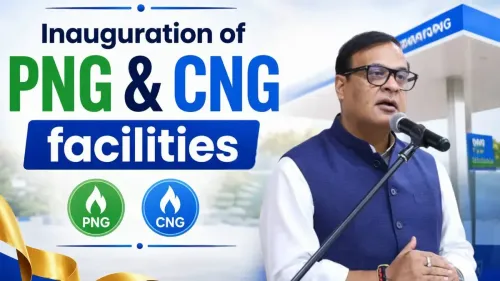
CM Himanta Cuts PNG VAT to 5% to Boost Clean Energy in Assam
Synopsis
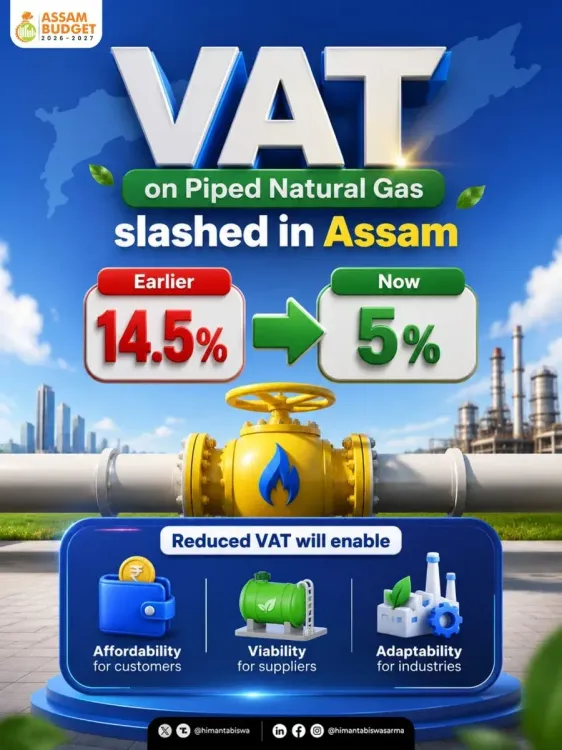
Assam Chief Minister Himanta Biswa Sarma has cut VAT on Piped Natural Gas to 5%, making PNG more affordable for households and industries while advancing the state's clean energy and Energy Atmanirbharta goals. The move leverages state fiscal powers to deepen City Gas Distribution network viability across Assam.
Key Takeaways
Assam has reduced VAT on Piped Natural Gas (PNG) to 5 per cent , announced by CM Himanta Biswa Sarma on 13 July 2026 .
The tax cut is designed to make PNG more affordable for domestic consumers and commercially viable for gas suppliers.
The policy supports industrial growth in Assam by reducing energy input costs for manufacturing and other energy-intensive sectors.
The move aligns with the national City Gas Distribution (CGD) expansion drive overseen by the PNGRB and the Atmanirbhar Bharat energy framework.
Wider PNG adoption is expected to reduce dependence on LPG and liquid fuels, delivering both environmental and economic benefits for Assam .
Formal gazette notification and revised tariffs from CGD entities are awaited to determine the consumer-level impact and implementation timeline.
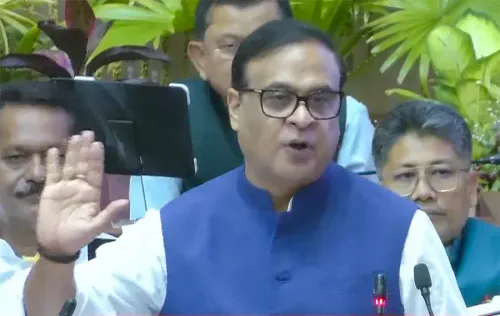
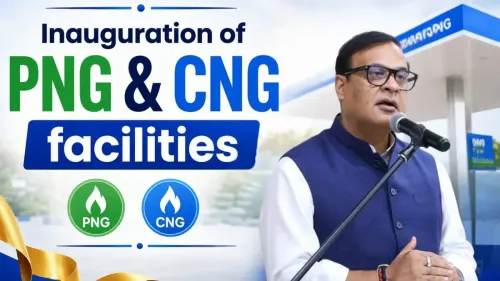
Assam Chief Minister Himanta Biswa Sarma on Sunday, 13 July 2026 announced that the state government has slashed the Value Added Tax (VAT) on Piped Natural Gas (PNG) to 5 per cent, a move aimed at accelerating the adoption of cleaner fuels across Assam.
Context
In his post, CM Sarma stated that the VAT reduction would 'make PNG more affordable for consumers, improve supplier viability, support industrial growth and strengthen our journey towards Energy Atmanirbharta.' The announcement signals a direct use of state fiscal powers to drive the transition from conventional liquid fuels and LPG to cleaner pipeline-delivered gas.
Piped Natural Gas is supplied through a fixed pipeline network to domestic households, commercial establishments, and industrial units. It is widely regarded as a cleaner and more cost-efficient alternative to LPG cylinders and liquid fuels, producing lower carbon emissions per unit of energy.
Policy Backdrop
The move aligns with a decade-long central government push to raise natural gas's share in India's overall energy mix. The Petroleum and Natural Gas Regulatory Board (PNGRB) has progressively expanded the City Gas Distribution (CGD) network across the country, including in northeastern states, to bring piped gas to more consumers and industries.
Assam has a longstanding oil and natural gas production infrastructure, making it a natural candidate for deeper gas utilisation. The state's decision to reduce VAT on PNG is consistent with the broader national objective of Energy Atmanirbharta — a state-level articulation of the Atmanirbhar Bharat self-reliance framework — by encouraging domestic gas consumption over imported or more polluting alternatives.
Similar VAT rationalisation measures on natural gas have been undertaken by other states seeking to expand their CGD footprints, reflecting a growing consensus that fiscal incentives are essential to make pipeline infrastructure commercially viable for both suppliers and end-users.
Stakeholders and Impact
PNG consumers — including households and small businesses — stand to benefit most directly through lower gas bills once the revised tax rate is passed on by City Gas Distribution entities. For industrial units in Assam, cheaper piped gas can reduce input costs and improve competitiveness, particularly in energy-intensive sectors.
Gas suppliers and CGD operators are expected to gain from improved commercial viability, which could encourage further investment in pipeline expansion within the state. A broader distribution network would, in turn, bring PNG connectivity to more households, reinforcing the environmental and economic rationale behind the policy.
The reduction also carries an environmental dividend: wider PNG adoption reduces dependence on dirtier fuels, contributing to Assam's air quality goals and the country's climate commitments.
What's Next
The formal gazette notification of the 5 per cent VAT rate and subsequent price revisions by CGD entities will be closely watched to assess the timeline and magnitude of consumer savings. Industry bodies and gas distributors are expected to respond to the announcement with revised tariff structures for domestic and industrial consumers in Assam.
The move could also prompt parallel fiscal reviews by other North-East Democratic Alliance (NEDA) states on gas taxation, as the region collectively looks to leverage its hydrocarbon resources for energy self-sufficiency. If uptake accelerates, the policy may serve as a template for other BJP-governed states aiming to expand clean fuel penetration through targeted VAT relief.
Point of View
The PNGRB's CGD network rollout. By reducing the tax burden on a cleaner fuel, Assam is simultaneously addressing consumer affordability, supplier economics, and industrial competitiveness in a single fiscal move. The framing around 'Energy Atmanirbharta' also serves a political purpose, tethering a state-level fiscal decision to the Narendra Modi government's broader Atmanirbhar Bharat narrative. If the rate cut delivers measurable PNG uptake, it could become a reference point for other northeastern and BJP-governed states weighing similar interventions.
NationPress
12 Jul 2026
Frequently Asked Questions
What is the new VAT rate on Piped Natural Gas in Assam?
Assam has reduced VAT on Piped Natural Gas to 5 per cent , as announced by Chief Minister Himanta Biswa Sarma on 13 July 2026.
How will the PNG VAT cut benefit consumers in Assam?
The lower VAT rate is intended to reduce the end-consumer price of Piped Natural Gas , making it a more affordable alternative to LPG cylinders and liquid fuels for households and businesses.
What is Energy Atmanirbharta mentioned by CM Himanta?
Energy Atmanirbharta is a state-level framing of energy self-reliance goals, aligned with the national Atmanirbhar Bharat initiative, focusing on greater use of domestic energy resources such as natural gas.
Will the PNG VAT cut help industries in Assam?
Yes, cheaper piped gas reduces energy input costs for industrial units in Assam, potentially improving their competitiveness and encouraging investment in the state's manufacturing sector.
What happens next after Assam cuts PNG VAT?
The government is expected to issue a formal gazette notification of the 5 per cent VAT rate , after which City Gas Distribution entities will revise consumer tariffs to reflect the reduction.