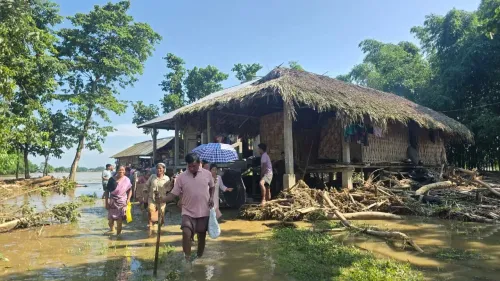
CM Himanta Monitors Dhemaji Floods, Deploys Ministers
Synopsis
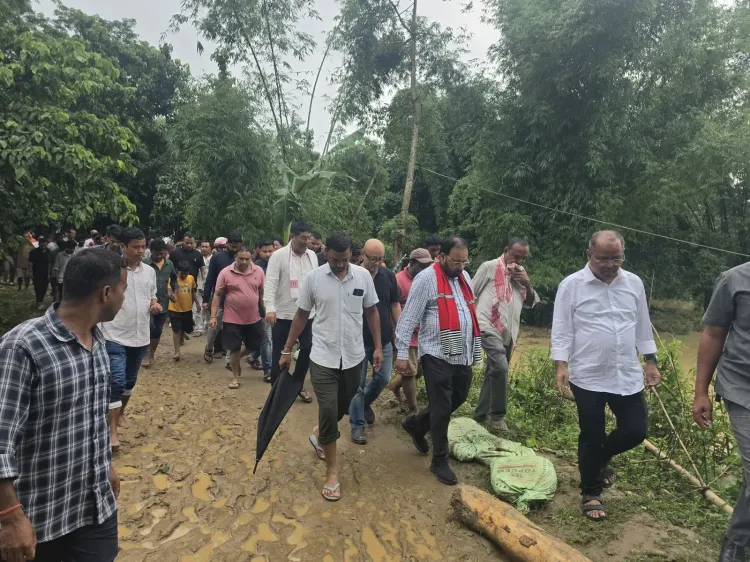
Assam CM Himanta Biswa Sarma on 29 June 2026 announced that state ministers and legislators have been deployed to flood-hit Dhemaji district to inspect relief camps, ensure aid distribution, and restore disrupted transport, as the government monitors the worsening monsoon situation.
Key Takeaways
Assam CM Himanta Biswa Sarma posted on 29 June 2026 assuring flood-affected residents of Dhemaji of government support.
State ministers and legislators have been dispatched to flood-affected zones as official representatives of the Assam government .
The government is prioritising delivery of relief supplies to residents in relief camps across Dhemaji.
Efforts are ongoing to restore transport connectivity disrupted by floodwaters at multiple locations in the district.
The deployment reflects the administration's approach of ensuring ministerial accountability on the ground during flood crises.
Assam Chief Minister Himanta Biswa Sarma on Monday, 29 June 2026, declared that the state government is standing by flood-affected residents of Dhemaji, with ministers and legislators already deployed to the region to oversee relief operations and restore disrupted transport links.
Context
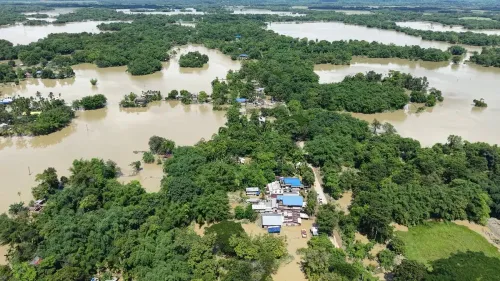
Dhemaji district in northern Assam is among the most flood-prone areas in the state, lying at the confluence of the Brahmaputra and its tributaries. Annual monsoon flooding regularly inundates large swathes of the district, displacing thousands of residents and damaging roads, embankments, and agricultural land. The 2026 monsoon season has brought fresh inundation to the district, prompting the Chief Minister to post a public assurance of government presence on the ground.
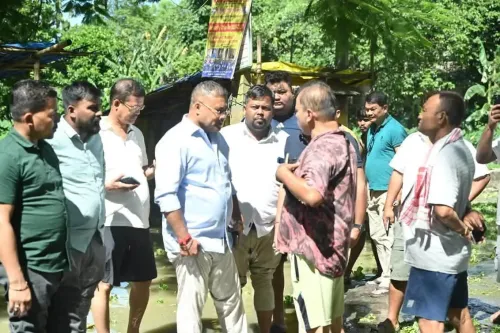
In the post, written in Assamese, CM Sarma stated: 'পৰিস্থিতিৰ নিৰীক্ষণেৰে বান প্ৰভাৱিত ধেমাজিবাসীৰ কাষত আমি আছোঁ' — 'We are with the flood-affected people of Dhemaji, monitoring the situation.' He added that ministers and legislators, acting as representatives of the Assam government, have visited the flood-affected areas to conduct field inspections.
Policy Backdrop
Flood management in Assam is a perennial governance challenge. The state has historically relied on a combination of embankment maintenance, relief camps, and ex-gratia disbursements under the State Disaster Response Fund (SDRF) and the National Disaster Response Fund (NDRF). The Assam State Disaster Management Authority (ASDMA) coordinates real-time monitoring and relief logistics during the monsoon months.
CM Sarma's administration has in recent years emphasised on-ground ministerial presence during flood crises as a visible accountability measure. Deploying elected representatives directly to relief camps is intended to ensure that aid materials — food, drinking water, medicines, and tarpaulins — reach displaced residents without administrative delays.
Stakeholders and Impact
Residents sheltering in relief camps across Dhemaji are the immediate beneficiaries of the government's stated intervention. The Chief Minister specifically noted that ensuring all relief supplies reach camp residents is a priority, alongside restoring connectivity on roads and bridges disrupted by floodwaters.
Farmers, daily-wage workers, and riverine communities in Dhemaji face the heaviest economic impact from seasonal flooding, with crop loss and livestock deaths compounding displacement hardship. Restored transport links are critical not only for relief delivery but also for allowing residents to return home once waters recede.
What's Next
The Assam government is expected to continue field-level monitoring as the monsoon season progresses through July and August, traditionally the peak flood months in the Brahmaputra valley. Sustained ministerial oversight, timely SDRF disbursements, and emergency repair of breached embankments will be key indicators of the administration's flood-response effectiveness this season.
If floodwaters continue to rise or spread to adjacent districts, the state may escalate its response by requisitioning additional NDRF teams and coordinating with the Indian Army and Indian Air Force for aerial relief operations — a standard protocol in severe Assam flood events.
Point of View
Written in Assamese and directed at Dhemaji residents, follows an established pattern of using social media to signal administrative responsiveness during Assam's annual flood crisis — a politically sensitive period given the state's recurring disaster vulnerability. Deploying ministers and MLAs as on-ground monitors serves a dual purpose: it operationalises accountability within the relief chain and projects visible governance to a constituency that has long demanded faster state response to flood displacement. The emphasis on restoring transport links alongside relief distribution suggests the administration is aware that connectivity failures have historically been a bottleneck in Assam flood response. How quickly supplies reach camps and roads are repaired will be the real test of whether this mobilisation translates into measurable relief outcomes.
NationPress
28 Sept 2026
Frequently Asked Questions
Which district in Assam is affected by floods in June 2026?
Dhemaji district in northern Assam is among the areas affected by floods as of June 2026 , with residents displaced to relief camps and transport links disrupted.
What has Assam CM Himanta Biswa Sarma said about the Dhemaji floods?
CM Himanta Biswa Sarma stated on 29 June 2026 that the government is monitoring the situation and standing with flood-affected people of Dhemaji, with ministers and MLAs deployed for field inspections and relief oversight.
What relief measures is the Assam government taking for flood victims?
The Assam government has deployed ministers and legislators to flood-hit zones to inspect relief camps, ensure aid supplies reach displaced residents, and work on restoring disrupted roads and transport links in Dhemaji .
Why does Dhemaji flood every year?
Dhemaji district is one of Assam's most flood-prone areas due to its location near the Brahmaputra river and its tributaries, which overflow their banks during the annual monsoon season from June to September.
What funds are used for flood relief in Assam?
Assam uses the State Disaster Response Fund (SDRF) and the National Disaster Response Fund (NDRF) , coordinated through the Assam State Disaster Management Authority (ASDMA) , to fund flood relief, ex-gratia payments, and emergency repairs.