CM Himanta Doubles Down on Assam Child Marriage Crackdown
Synopsis
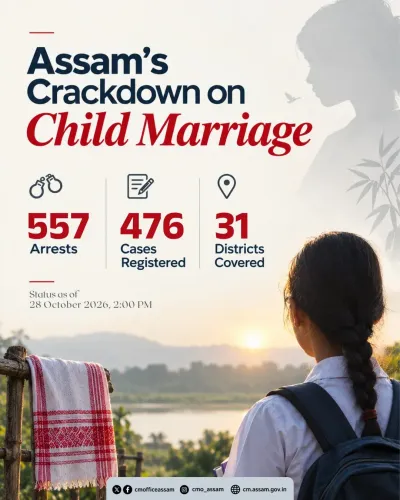
Assam Chief Minister Himanta Biswa Sarma on November 5, 2026, reaffirmed his government's child marriage crackdown, declaring offenders are 'firmly in the hands of law,' continuing a campaign launched since 2021 under the Prohibition of Child Marriage Act.
Key Takeaways
CM Himanta Biswa Sarma posted on November 5, 2026 asserting child marriage offenders in Assam remain in jail and under law.
The Assam government has run repeated child marriage enforcement drives since 2021 under the Prohibition of Child Marriage Act .
Assam historically records among India's highest child marriage rates, particularly in several rural districts.
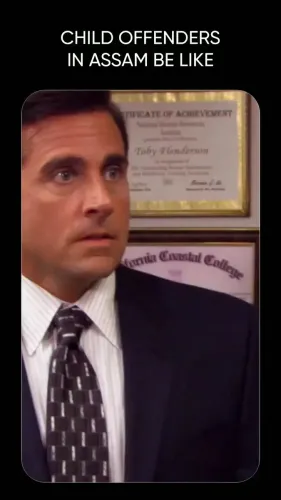
The post uses an AI comparison as a rhetorical device to emphasise state control over the child marriage enforcement machinery.
Updated conviction statistics from the Assam Home Department and potential new legislative proposals remain key indicators to watch.
While artificial intelligence dominates global headlines for moving too fast to control, Assam Chief Minister Himanta Biswa Sarma had a pointed counter-image in mind on Thursday, November 5, 2026: child marriage offenders in Assam are very firmly in custody. The remark, sharp and deliberate, signals that the state's multi-year enforcement campaign against child marriage remains active — and that the Chief Minister intends to keep it visible.
The Punchline with a Policy Record Behind It
Sarma's post reads: 'AI is getting out of hands but child marriage culprits are not, they are firmly in the hands of law, being given the right treatment in our jails.' The wordplay is intentional — 'out of hands' versus 'firmly in the hands of law' — but the message beneath it is substantive. Since 2021, the BJP-led Assam government has conducted repeated enforcement drives under the Prohibition of Child Marriage Act, resulting in waves of arrests that made national headlines and drew both praise from child-rights advocates and scrutiny from civil liberties groups.
Assam has historically recorded some of the highest child marriage rates in India, particularly concentrated in certain districts. The state's approach — aggressive policing, mass arrests, and prosecutorial follow-through — marked a significant departure from the more administrative, awareness-based responses seen elsewhere in the Northeast.
Law-and-Order Messaging as Governance Brand
The post is not just a status update. It fits a consistent pattern of communication from Sarma's office: pairing a sharp rhetorical frame with a law-enforcement signal. Child marriage crackdowns have become a defining pillar of the administration's identity, one it returns to regularly in public messaging. The AI comparison adds a contemporary hook — positioning Assam's enforcement machinery as something that, unlike fast-moving technology, is fully within the state's grip.
What to watch next: the Assam Home Department has periodically released arrest and prosecution figures from these campaigns. Updated conviction or case-closure statistics, and any new legislative proposals in the state assembly on child marriage, would give sharper shape to the broader outcome the Chief Minister is pointing toward.
Sarma governs a state where the stakes for girls in rural communities are real and immediate. Whether the enforcement numbers translate into lasting behavioural change — or simply high headcounts — is the question that will define this campaign's legacy.
Point of View
Generating both strong public approval among reform-minded constituencies and ongoing legal scrutiny. By returning to this theme in late 2026, Sarma signals continuity of purpose ahead of any potential assembly session or electoral cycle in the Northeast. The broader arc is one of an administration that has consistently chosen high-visibility enforcement over quieter, structural interventions — a bet whose long-term impact on Assam's child marriage statistics will ultimately determine its legacy.
NationPress
5 Nov 2026
Frequently Asked Questions
What is Assam's child marriage crackdown about?
Since 2021, the Assam government under Chief Minister Himanta Biswa Sarma has conducted large-scale enforcement drives under the Prohibition of Child Marriage Act, arresting individuals accused of facilitating or participating in child marriages across the state.
What did CM Himanta Biswa Sarma say about child marriage on November 5, 2026?
CM Sarma posted that while AI is 'getting out of hands,' child marriage culprits in Assam are not — they are 'firmly in the hands of law, being given the right treatment in our jails,' reaffirming ongoing enforcement.
Why does Assam have high child marriage rates?
Certain districts in Assam, particularly in rural areas, have historically recorded elevated child marriage rates due to socioeconomic factors, limited access to education, and entrenched community practices — making it a focus area for state policy.
What law governs child marriage arrests in Assam?
Arrests in Assam's child marriage drives are made under the Prohibition of Child Marriage Act, a central legislation that criminalises child marriages and penalises those who facilitate them.
What should we watch for next in Assam's child marriage enforcement?
Key indicators include updated conviction and case-closure statistics from the Assam Home Department and any new legislative proposals in the Assam state assembly targeting child marriage.