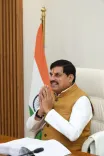
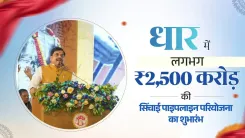
CM Bhajan Lal joins 'Loktantra Bachao' padyatra in Jaipur
Synopsis
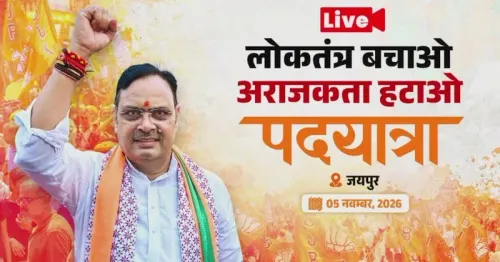
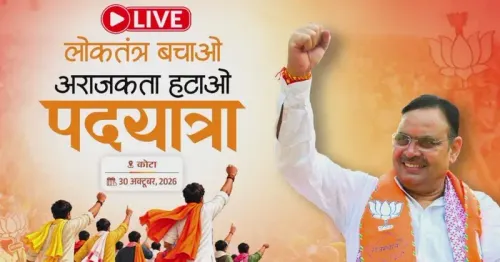
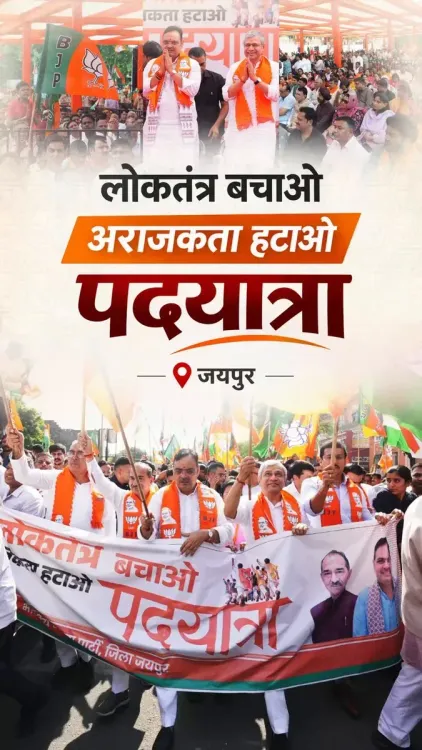
Rajasthan Chief Minister Bhajan Lal Sharma participated in the 'Loktantra Bachao–Arajakta Hatao' padyatra in Jaipur on November 5, 2026, reaffirming his government's commitment to democratic institutions, constitutional values, and the development mandate of the 2023 assembly elections.
Key Takeaways
Bhajan Lal Sharma personally participated in the 'Loktantra Bachao–Arajakta Hatao' padyatra in Jaipur on November 5, 2026 .
The march's name translates to 'Save Democracy–Remove Anarchy,' positioning the BJP government as a defender of constitutional order.
Sharma invoked the December 2023 Rajasthan assembly election mandate as the foundation for his government's development and governance agenda.
He called on citizens and officials to maintain the dignity of democratic institutions and strengthen public trust in constitutional values.
The event follows a pattern of BJP-led state governments using public marches and mass outreach to consolidate political messaging between election cycles.
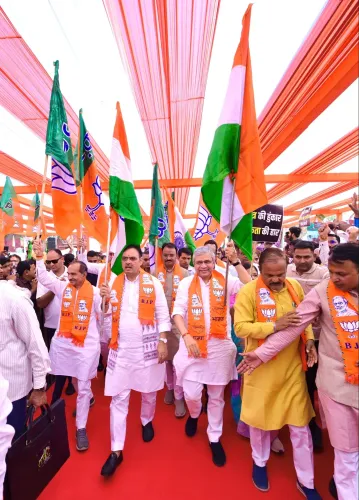
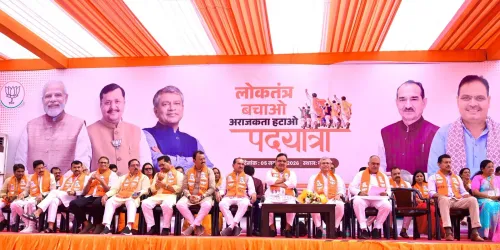
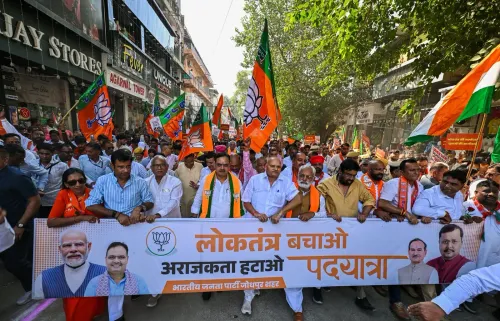
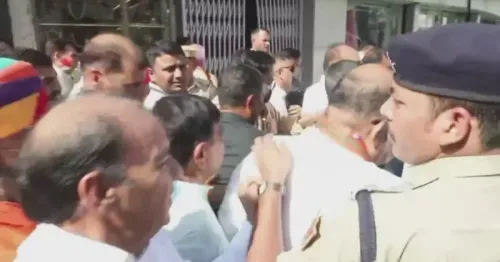
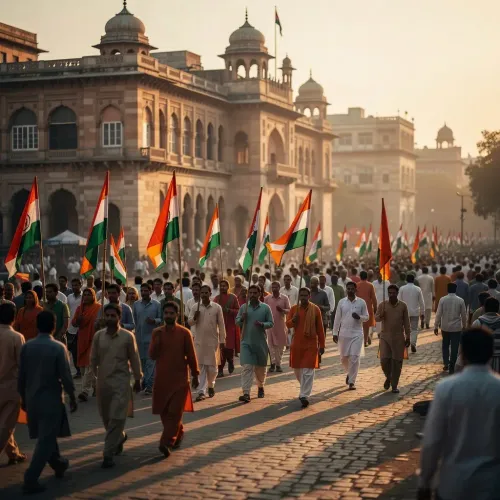
In the heart of Jaipur on Thursday, November 5, 2026, Rajasthan Chief Minister Bhajan Lal Sharma stepped into a street march to make a point — that democratic values and constitutional dignity are not abstract ideals but active commitments worth walking for. The march, titled 'Loktantra Bachao–Arajakta Hatao' ('Save Democracy–Remove Anarchy'), drew the Chief Minister out of Secretariat corridors and onto the city's streets to personally affirm the mandate his government carries.
'Save Democracy, Remove Anarchy' — What the March Declared
Sharma expressed his commitment through participation in the Jaipur padyatra, stating that 'the real strength of democracy lies in the trust of the people and their decision.' The march's title is itself a pointed political statement — framing the ruling party's governance as a bulwark against disorder, and positioning the BJP's December 2023 electoral mandate as a popular endorsement of development and constitutional order.
In his post, Sharma called on all to 'strengthen public trust and constitutional values while maintaining the dignity of democratic institutions' — language that is simultaneously a governing philosophy and a rebuttal to unnamed critics. The phrasing is deliberate: 'jannvishwas aur samvidhanik mulyon ko aur sashakt karen' — strengthen public trust and constitutional values further.
The 2023 Mandate That Sharma Keeps Invoking
Bhajan Lal Sharma took charge as Chief Minister following the BJP's majority victory in the December 2023 Rajasthan Legislative Assembly elections, ending the Congress government's term. His administration has consistently framed its governance around three pillars he reiterated at the march: development, good governance (sushasan), and national interest (rashtrahit).
Marches of this kind — where a sitting Chief Minister joins a padyatra centred on democratic themes — are a recurring feature of Indian state politics. They serve as mass-mobilisation tools that reassert a government's connect with voters, particularly in the mid-term phase when early electoral energy begins to settle into routine governance.
Rajasthan's Political Temperature in 2026
Rajasthan remains a fiercely contested state — historically swinging between the BJP and Congress every five years. With the state roughly three years into its current BJP government, public events like this padyatra signal that the party is actively working to consolidate its base and counter any opposition narrative around institutional credibility.
Opposition responses to the march, and whether rival parties frame the event as political theatre or genuine governance outreach, will shape the next phase of Rajasthan's political conversation.
A Chief Minister who marches for democracy sends a message that governance is not just administered — it is earned, repeatedly, on the ground.
Point of View
'Remove Anarchy,' signals that the BJP is actively constructing an opposition contrast narrative ahead of the next electoral cycle. In a state with Rajasthan's near-clockwork alternation pattern, such visible mobilisation efforts are rarely spontaneous — they are early positioning. How opposition parties respond, and whether they can credibly contest the 'anarchy' framing, will define the next phase of the state's political contest.
NationPress
5 Nov 2026
Frequently Asked Questions
What is the 'Loktantra Bachao–Arajakta Hatao' padyatra in Jaipur?
It is a public foot-march ('padyatra') organised in Jaipur on November 5, 2026 , with the theme of saving democracy and removing anarchy. Rajasthan Chief Minister Bhajan Lal Sharma participated in it to affirm his government's commitment to constitutional values and the 2023 electoral mandate.
Who is Bhajan Lal Sharma and when did he become Rajasthan Chief Minister?
Bhajan Lal Sharma is a BJP leader who was sworn in as Chief Minister of Rajasthan in December 2023 after his party won a majority in the state assembly elections.
What did Bhajan Lal Sharma say at the democracy march?
Sharma stated that the real strength of democracy lies in the trust and decisions of the people. He called on everyone to strengthen public trust and constitutional values while maintaining the dignity of democratic institutions, citing the 2023 mandate as a commitment to development and good governance.
Why is the BJP holding democracy-themed marches in Rajasthan?
Such marches are part of standard mid-term political communication in India's federal system. For the BJP in Rajasthan , they serve to consolidate the base, reaffirm the government's narrative around constitutional order, and contrast with opposition parties — particularly in a state historically known for alternating between parties at each election.
What is the political significance of Rajasthan's 2023 assembly election mandate?
The December 2023 Rajasthan assembly elections returned the BJP to power with a majority, ending the previous Congress government. CM Bhajan Lal Sharma regularly invokes this mandate as public endorsement of a development, good governance, and national interest agenda.