CM Himanta Eases Business Rules for Small Firms in Assam
Synopsis
Assam Chief Minister Himanta Biswa Sarma has announced that small, non-polluting enterprises can begin operations without government approvals for their first three years, cutting red tape for MSMEs and signalling a shift to post-compliance monitoring for low-risk businesses in the state.
Key Takeaways
Assam CM Himanta Biswa Sarma announced on 8 July 2026 that small, non-polluting enterprises need no government approvals to start operations for their first three years .
The reform targets first-generation entrepreneurs who previously faced multi-agency clearances before legally commencing business.
The exemption applies only to non-polluting, small enterprises ; larger firms and those in environmentally sensitive sectors remain under existing approval rules.
The move aligns with India's national Ease of Doing Business framework, which has directed states to reduce regulatory burdens since 2014 .
The policy reflects a broader national shift from ex-ante licensing to ex-post compliance for low-risk business activities.
The rollout's effectiveness will be measured by changes in new enterprise registrations and possible sector extensions in Assam's next industrial policy revision.
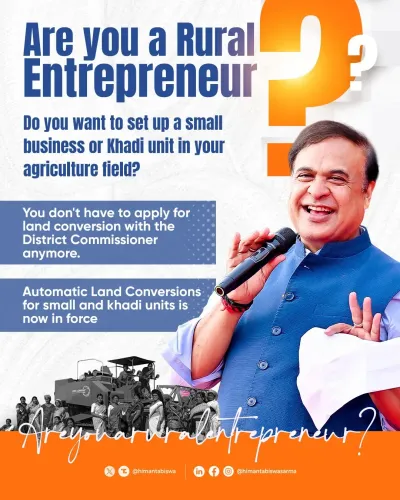
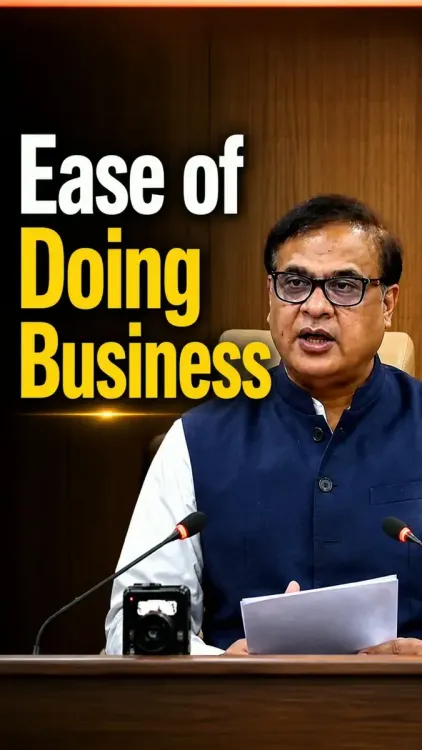
Assam Chief Minister Himanta Biswa Sarma announced on Wednesday, 8 July 2026 that small, non-polluting enterprises in the state will no longer need government approvals to begin operations for their first three years, a significant regulatory relief aimed at boosting entrepreneurship across the northeastern state.
Context
Posting on X, CM Sarma framed the reform in direct terms: 'Small, non-polluting enterprises can now commence operations without government approvals for the first three years. I want my entrepreneurs to focus on creating value, not chasing approvals.' The announcement signals a deliberate shift from pre-entry licensing to post-compliance monitoring for low-risk businesses in Assam.
The move targets a long-standing pain point for first-generation entrepreneurs in the state, who have historically faced multi-agency clearance requirements before they could legally begin work — a process that often stretched months and deterred early-stage investment.
Policy Backdrop
The reform sits within the national Ease of Doing Business framework launched by the Government of India in 2014, which directed states to simplify approvals, build single-window systems, and reduce compliance burdens, particularly for micro, small, and medium enterprises (MSMEs).
Since 2014, Indian states have competed actively to improve their rankings under this framework by offering time-bound regulatory exemptions, especially for low-risk and non-polluting activities. Assam, under the BJP-led government, has linked such state-level reforms to broader national goals including Atmanirbhar Bharat, positioning the Northeast as an emerging investment destination rather than a regulatory outlier.
The three-year approval holiday reflects a wider policy trend across Indian states of treating ex-post compliance — checking that businesses meet standards after they begin operating — as sufficient for activities that pose minimal environmental or public-safety risk.
Stakeholders and Impact
The primary beneficiaries are small entrepreneurs and non-polluting MSMEs in Assam who have until now been required to secure government clearances before opening their doors. By removing this barrier for an initial three-year window, the state government aims to reduce the time and cost of starting a business, particularly for first-time founders with limited resources to navigate bureaucratic processes.
Larger enterprises and those in polluting or environmentally sensitive sectors are not covered by this exemption and will continue to operate under existing approval regimes. The distinction underscores the reform's targeted design: lowering friction for low-risk economic activity without diluting environmental oversight.
CM Sarma, who also serves as convenor of the North-East Democratic Alliance (NEDA), has consistently positioned Assam as a model for governance reform in the region, and this announcement extends that narrative into industrial policy.
What's Next
Attention will now turn to the operational rollout of the three-year exemption — specifically which categories of enterprise qualify as 'non-polluting,' how compliance will be monitored after the exemption period ends, and whether new enterprise registrations in the state rise measurably in the months ahead.
Observers will also watch whether Assam's next budget or industrial policy revision extends similar relief to additional sectors or increases the exemption window further, building on the momentum of this announcement.
Point of View
With the Northeast's reform story now acquiring a concrete, entrepreneur-facing policy hook. By carving out a three-year approval-free window specifically for non-polluting small enterprises, the Assam government signals a preference for risk-calibrated regulation over blanket licensing — a design choice that mirrors successful models elsewhere in India. The reform also serves a political purpose: it reinforces the BJP's Atmanirbhar Bharat narrative at the state level, presenting Assam as a proactive reformer rather than a recipient of central largesse. The real test will be implementation — whether the exemption translates into measurable growth in new enterprise registrations or remains a headline without administrative follow-through.
NationPress
8 Jul 2026
Frequently Asked Questions
What is the new business approval rule in Assam announced in July 2026?
Assam Chief Minister Himanta Biswa Sarma announced on 8 July 2026 that small, non-polluting enterprises can commence operations without obtaining government approvals for their first three years, reducing the regulatory burden on early-stage businesses.
Which businesses qualify for the three-year approval exemption in Assam?
The exemption applies to small, non-polluting enterprises. Larger businesses and those in polluting or environmentally sensitive sectors are not covered and must continue to follow existing approval requirements.
How does this reform relate to India's Ease of Doing Business programme?
India's national Ease of Doing Business framework, launched in 2014, directed states to simplify approvals and reduce compliance burdens for businesses. Assam's three-year exemption is a state-level implementation of that broader national push to cut red tape for low-risk enterprises.
What is Himanta Biswa Sarma's role in Assam?
Himanta Biswa Sarma is the Chief Minister of Assam since May 2021 and a senior BJP leader. He also serves as convenor of the North-East Democratic Alliance (NEDA), giving him a significant political footprint across the northeastern region.
Will this policy be extended to other sectors in Assam?
That has not been announced yet. Observers are watching whether Assam's next budget or industrial policy revision will extend similar relief to additional sectors or increase the duration of the exemption window beyond three years.