CM Himanta eases private entry into Assam higher education

Synopsis
The Assam Cabinet has eased entry norms for private players in higher education, Chief Minister Himanta Biswa Sarma announced on 2 July 2026. The move aims to expand quality education access across the state and aligns with the National Education Policy 2020's push for greater private sector participation.
Key Takeaways
The Assam Cabinet approved measures on 2 July 2026 to simplify private sector entry into the state's higher education sector.
Chief Minister Himanta Biswa Sarma described higher education as a 'priority sector' and expressed intent to partner with 'reputed private players'.
The decision aligns with the National Education Policy 2020 , which encouraged greater private participation in higher education nationwide.
The move is expected to benefit Assam's students by expanding local institutional choices and potentially reducing the outflow of students to other states.
Formal government notifications detailing the specific regulatory changes are awaited, along with potential MoUs with private educational institutions.
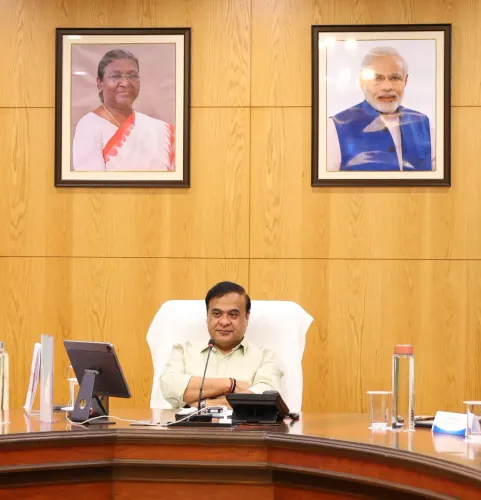
Assam Chief Minister Himanta Biswa Sarma announced on Thursday, 2 July 2026, that the Assam Cabinet has approved measures to simplify the process for private players to invest in the state's higher education sector, framing the move as central to unlocking the state's full development potential.
Posting on X, CM Sarma stated: 'To harness Assam's fullest potential we aim to expand access to quality higher education and are keen to partner with reputed private players. #AssamCabinet has now made it easier for those interested to be a part of this priority sector.'
Context
Assam has long grappled with limited higher education infrastructure relative to its population and aspirations. The state's government, led by Sarma since 2021, has consistently positioned human capital development as a pillar of its growth agenda. Describing higher education as a 'priority sector' signals that the cabinet views private institutional investment on par with infrastructure and industry in terms of policy urgency.
The announcement comes against the backdrop of rising student enrolment demand across northeastern India, where public universities have historically been stretched thin. Attracting 'reputed private players' is seen as a way to bridge quality and capacity gaps without placing the full burden on state finances.
Policy Backdrop
The National Education Policy 2020, adopted by the Union government, explicitly encouraged greater private sector participation in higher education and set ambitious gross enrolment ratio targets for India by 2035. Several states have since revised their regulatory frameworks to align with these goals, and Assam's latest cabinet decision follows that national trajectory.
Indian states have progressively amended approval norms, land-allocation rules, and fee-regulation guidelines since 2020 to lower entry barriers for private universities. Assam's move mirrors similar regulatory easing seen in other northeastern states seeking to modernise their education ecosystems without sole reliance on public funding.
Stakeholders and Impact
The most immediate beneficiaries of an expanded private higher education landscape would be Assam's students, who currently face limited choices for quality undergraduate and postgraduate programmes within the state. Easier access to local institutions could reduce the outflow of students — and associated spending — to colleges in Bengaluru, Pune, Delhi, and other metros.
Private educational groups and universities eyeing expansion in northeastern India would find a clearer regulatory pathway under the revised cabinet norms. The state government, in turn, stands to gain through increased institutional capacity, employment generation for faculty and staff, and a stronger talent pipeline for local industry.
What's Next
Formal government notifications detailing the specific regulatory changes approved by the Assam Cabinet are expected to be issued in the coming weeks. Observers will watch closely for any memoranda of understanding signed between the state and private educational institutions, as well as the timelines set for new campuses or programmes to become operational.
The broader test will be whether simplified entry norms translate into tangible improvements in enrolment figures and institutional quality — benchmarks that CM Sarma's government will likely use to measure the policy's success ahead of future electoral cycles.
Point of View
' the government is signalling that human capital development is no longer a residual policy concern but a headline electoral commitment. The alignment with NEP 2020 also gives the state political cover to pursue what has historically been a contested move, since private university expansion often draws scrutiny over fee regulation and equity of access. The real measure of success will be whether the eased norms attract institutions of genuine repute or simply open the door to low-quality entrants — a distinction that will define the policy's legacy.
NationPress
2 Jul 2026
Frequently Asked Questions
What did the Assam Cabinet decide about private higher education?
The Assam Cabinet approved measures on 2 July 2026 to make it easier for private players to enter and invest in the state's higher education sector, as announced by Chief Minister Himanta Biswa Sarma .
Why is Assam encouraging private universities?
Assam aims to expand access to quality higher education and bridge infrastructure gaps without relying solely on public funding, in line with the goals of the National Education Policy 2020 .
How does this affect students in Assam?
Students in Assam could benefit from a wider range of quality local institutions, potentially reducing the need to migrate to cities like Bengaluru or Delhi for higher education.
What is the National Education Policy 2020 and how is it relevant?
The National Education Policy 2020 is a Union government framework that encourages private sector participation in higher education and sets ambitious enrolment targets; Assam's cabinet move aligns with this national direction.
What should we watch for next regarding Assam's higher education policy?
Key developments to watch include formal government notifications on the revised norms, any memoranda of understanding with private educational institutions, and announcements of new campuses or programmes in Assam .